
 •
Rating:
•
Rating: THE REVIEW
In composing my modest review, I am aware of exposing myself to the harsh criticism of the audience, to whom I therefore ask for an act of clemency and a small effort in commenting, even with their utmost effort, in a constructive way the work in question.
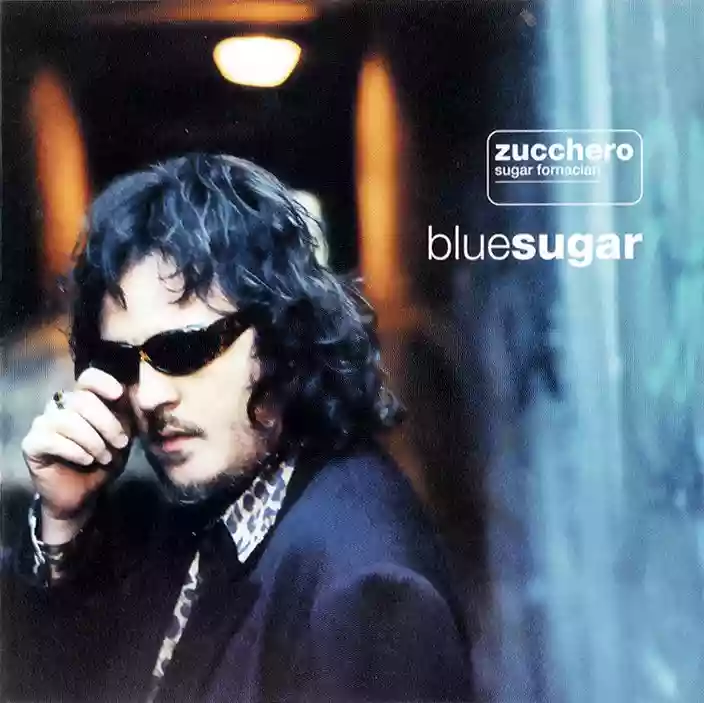
Zucchero is always a thorny topic because the artistic skills and abilities of the individual are mixed with other, mostly misleading, accessory characteristics of various kinds. If I were among the most devoted apostles of Adelmo Fornaciari, I certainly couldn't assert that “Bluesugar” is the best work from Emilia. This album represents, in fact, a decidedly experimental milestone, a tried Rock drift, a happy deviation in Zucchero’s far too linear career, not always recognized by those closest to the singer-songwriter. From the very first approach, this album contains some surprises, some innovative elements that set the work apart from previous ones and make it a cameo of discreet interest. According to the modest opinion of the writer, the true, small treasure contained in this album is the lyrics, which are sparser and more charming, Zucchero’s bucolic poetry becomes less rustic, more rarefied, but without relinquishing its distinctly passionate and fiery traits, in some cases violent.
Running a finger over the lyrics reported in the booklet, one notices some snippets of an almost literary flair, more elegant and composed compared to other previous statements, lyrics written with an attitude of greater synthesis and, consequently, a broader evocative spectrum. The mildness of the words, warm but no longer hot, and the aforementioned evocative ability, make "Bluesugar" an exercise in good style, whose starting material is a frugal yet elegant Italian that adds value even where the note results in being melodious and slightly falling. The sounds sail towards more northern shores, a clear Anglo-Saxon matrix is noticeable behind every track and the most attentive critics and detractors will not fail to highlight the usual similarities with some other tracks coming from the British Isles and the latest Scandinavian crop. Therefore, sounds that are more cold and austere, mixing brit-pop, rock, and, in some ways, even astonishing electronic contaminations within the context they are placed, accompany Zucchero in the journey of “warming up” his work. There are small experiments in a continuum ranging from the idyllic “Blu” to the techno “(Temporarily) Forever Yours”, passing through a poetry of destroyed love like “After Us” or a letter in song form like “Etc., etc.”. An ambitious and noteworthy experiment, even if only partially successful, is the dreamy “Karma, Stay Calm”, a visionary, nocturnal, and metropolitan dream, which sees the vocal debut of Irene Fornaciari. It is always the human material that gives shape to Zucchero's song, lived experience and thus the landscape too. In moments of greater lucidity and inspiration, Zucchero has been a bearer of the landscape song which, although in Italy lately hasn’t enjoyed many followers and supporters. Zucchero’s notes have been inseparably tied to landscape traits, a landscape not necessarily geographical, but perceived, ideal, and idealized, that “Lunisiana” he colored, an ideal bridge between Lunigiana, the native land where Zucchero resides, and the longed-for Louisiana overseas. The album closes with “The Times Will Change”, friendship treated with that hint of rhetoric that allows the song to not be a product of the moment but to be inscribed among songs outside a specific temporal location.
The title of this last track carries something prophetic, indeed after “Bluesugar” Zucchero abandons this happy path of moderate experimentation, returning to the fold, to certainties, and it is sad to report, to easy money. The album, in conclusion, is something good, not unmissable, not exactly singer-songwriter material, but of a certain consideration in the Italian light music scene. It will open in its engaging transport only to those who still harbor a little of that capacity for naive abandonment in music which certain hedgehogs, on the paths of notes, have lost over time, unfortunately forsaking a large piece of the pie.
Loading comments slowly
Summary by Bot
Bluesugar represents a distinct experimental chapter in Zucchero’s career, blending British and Scandinavian rock influences with poetic and refined lyrics. The album diverges from his earlier work with a colder, more austere sound, incorporating electronic elements and varied moods from dreamy to techno. While not universally acclaimed, it stands as a noteworthy, if partially successful, artistic exploration. Bluesugar is recommended for listeners open to a nuanced and less conventional Zucchero.Tracklist Lyrics Videos
Zucchero
Adelmo Fornaciari (born 1955, Roncocesi) is an Italian singer-songwriter known by his stage name Zucchero. He rose to prominence in the 1980s with blues‑influenced pop, major albums such as Blue's and Oro, incenso & birra, and numerous international collaborations.35 Reviews
Other reviews
By GustavoTanz
"Bluesugar is no exception to the challenge of making an experimental album both innovative and of quality."
"The refrain 'Do the donkey, donkey tonkey' is capable of getting on the nerves with just the first listen."
