
 •
Rating:
•
Rating:
THE REVIEW
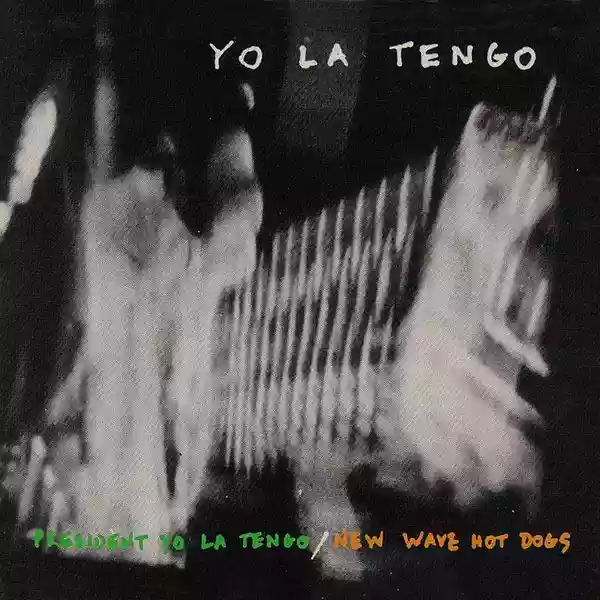
The Cd format from Matador gathers the second, New Wave Hot Dogs (Coyote/Twin Tone, 1987) and the third work, President Yo La Tengo (Twin Tone, 1989) from our band, plus the single The Asparagus Song (Coyote, 1987).
The band based in Hoboken, New Jersey, built on the marital and artistic partnership of Ira Kaplan and Georgia Hubley, who make each of the two “half of a larger unit”, features Stephan Wichnewski on bass instead of Mike Lewis, but on President also Gene Holder, while Dave Schramm, the second guitarist, exits the scene to reappear only episodically, but not accidentally, in Fakebook (in 1990) and in Stuff Like That There (in 2015, in a sort of paradoxical commuting). James McNew, the third of a perfectly artistic pair, is not present yet.
Thus freed from Schramm, Kaplan's songwriting, already solid at debut, develops and elaborates, on one hand, the passion and Velvet-like affinities, on the other, perfects its own Folk inclination, innate and unpredictable in its outcomes. Everything hence originates from Kaplan's guitar, from the tightrope walking between Neil Young (urban and rural, electric and acoustic) and Tom Verlaine (cursed poet of Television and the New Wave), but on this side and beyond both, and to the side, in a personal, versatile, and multifaceted idiom. Hubley's percussion, inspired by Maureen Tucker, progresses compelling and incisive, while denying pointless virtuosity, deserves attention in every song. Instead, her soft voice, for the time being, is only in the background, relegated to the choirs. Kaplan's baritone singing results in being understated, reserved, lazy, as opposed to his guitar, ironic and more unyielding than at debut, but also lyrical.
If New Wave Hot Dog, “The new wave of hot dogs”, subtracts from the debut's Country-Rock its very Country, in favor of Folk (nervous but controlled), President, for its part, abounds in sonicism and libertarian dissonances and also shows the psychedelic attitude of YLT.
In NWHD we can encounter:
-Did I Tell You, an intense elegy, fragrant, dog-days, alive and elusive, marked by continuous ascents and descents (do you know how it is to ride a bike along a river's banks, let's say the Piovego, and then descend them at speed, the air void in your belly and not knowing where and when the chorus you are listening to will end... well, add a sultry afternoon in July, a bit of carefree joy, your twenties, and it is this: simply marvelous).
-Clunk, a rowdy rock'n'roll, between jingle jungle and feedback, up-tempo and Ericksonian non-directive hypnosis;
- A Shy Dog, a piece near “Ride the Tiger”, admirable, fast and insistent. It sounds like a peaceful showdown, with any “Stupid Dog”, even an internal one;
- The Story of Jazz, a Tsunami of distortions concentrated in three minutes;
-It's Alright (The Way That You Live), a cover of a “circa” unreleased Velvet Underground track, for guitar buzz and semi-spoken singing.
President then offers: the Acid Rock of Drug Test and Barnaby, Hardly Working (based on a repetitive feedback); the covers of The Evil That Men Do, from the debut LP, in the beautiful Craig's Version, remade with the sounds of the desert, and in Pablo's Version, live, extended, swollen with sonicism and free dissonances, in a stinging feedback free-form freakout. Then there’s Alyda, a Psychedelic Country-Folk ballad and, finally, I Threw It All Away, a disciplined and charming cover from Bob Dylan's Nashville.
The YLT, even at their debut, are already a group capable of coining their own personal language, their own stylistic signature. There is no syncretism, no plagiarism in their references, allusions, and digressions; creative and original, intellectual and eclectic, straightforward and credible, passionate and authentic, capable of novelty based on tradition and contemporaneity itself, they revive, in everyone who loves them, their best inclinations and, why not, their work attitude. They are a way of being in music, a “modus vivendi et operandi”, capable of breaking and challenging genres, of changing and remaining faithful to themselves. They have made and, even today, continue to make, after over thirty years of career, a refined art from Indie Rock. You either ignore them or love them. Deeply. Impossible to hate them.
Loading comments slowly
Summary by Bot
This review highlights Yo La Tengo’s compilation of their second and third albums, showcasing the band’s evolution from country-rock to a unique fusion of folk, psychedelic, and indie rock. It praises Ira Kaplan's songwriting, Georgia Hubley’s percussion, and the band’s original sound that defies genre conventions, emphasizing their artistic and creative authenticity. The review affirms the band's significant place in indie rock history and their lasting influence.Tracklist Lyrics Videos
03 The Evil That Men Do (Craig's version) (02:42)
04 Orange Song (03:22)
06 The Evil That Men Do (Pablo's version) (10:36)
11 Lewis (02:32)
12 Lost in Bessemer (01:22)
13 It's Alright (The Way That You Live) (04:12)
14 3 Blocks from Groove Street (02:24)
15 Let's Compromise (01:52)
20 The Asparagus Song (04:43)
Yo La Tengo
Yo La Tengo are an American indie rock band associated with Hoboken, New Jersey, widely described in the reviews as an institution of alternative/indie rock defined by expressive freedom and eclectic range from feedback-heavy noise to quiet folk-leaning intimacy. The long-running core is the trio of Ira Kaplan, Georgia Hubley, and (since 1992) James McNew.21 Reviews
