
 •
Rating:
•
Rating: THE REVIEW
An unknown drummer... rumors say he learned the repertoire in 3 days. A little man with a golden voice behind the microphone, a former session keyboardist with hair down to his butt and a sparkling cape, the usual lanky joker on the Rickenbaker, and the other one on the guitar, in his best days. People screaming, impatience in their hearts, in their whistles of approval. Applause to acclaim and energize them and then... the enchanted keyboard of Rick The Magician Wakeman, with the glorious Opening (Excerpt from the “Firebird Suite”), and the crowd erupts, just as the band bursts in with a great version of Siberian Khatru, similar to the record, but perhaps more thrilling because it's live, indeed. Here we savor the perfect harmony between the voices of Jon Anderson, Chris Squire, and occasionally Steve Howe, the legendary Bach-like solo by Rick Wakeman, and we welcome Alan White, a great drummer destined to never leave the band, thus completing what many consider to be the classic lineup.
By now Yes are consecrated into legend... that's what this is about. And every note of this Yessongs is imbued with magical legend, like a diadem studded with gems and precious pearls, sealing the golden trilogy of Yes, whose career has already reached one of the highest points. Only a band in such fine form can indeed deliver such a version of Heart Of The Sunrise, from the hardprog intro, to the singing with highly impactful lyrics (Sharp distance / How can the wind with its arms all round me...), up to the spine-tingling piano at the end, all supported by the prominently featured bass of Chris Squire.
The sleeve notes tell us that Perpetual Change is still played with Bill Bruford behind the drums (oh, what a drum solo!), just like the good old times, and indeed nothing denies the greatness of the piece: Steve Howe dazzles, extending the duration of the track with his solo. The intro of And You And I begins with Wakeman's synthesizer accompanied by Howe's slide guitar and ties back to the old guitar chord intro. Perhaps the only flaw in this track is the voice, recorded in not quite optimal fashion.
Mood For A Day, which opens the second LP, makes us forget everything, in its atmosphere halfway between classical and Spanish influence. Taking the opportunity, Wakeman promotes his first solo album, playing us pieces like Catherine of Argon, Jane Seymour, and Catherine Howard from The Six Wives Of Henry VIII, which culminate in one of his extravagant and wonderful solos that mix classical pieces with the purest progressive. Roundabout is as fantastic as on the record, with that indescribable organ from Wakeman... I’ve Seen All Good People is placed there specifically to move us, with that sort of mandolin, in Your Move, which Steve Howe plays divinely and the perfect choral parts, then explodes with rock in the homonymous part of the song. Long Distance Runaround connected to The Fish, also sees the presence of Bill Bruford. Is it still necessary to add that the execution is more than perfect?
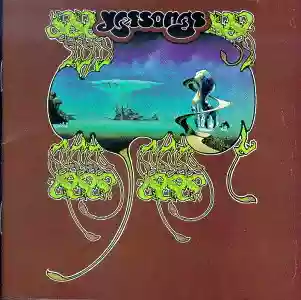
Third LP: one side solely for Close To The Edge, as if to emphasize the importance of the track and the band’s majesty when performing it live. Could it have ended like this? No, not without the varied and super-extended version of Yours Is No Disgrace and then that stroke of genius of Starship Trooper: Life Seeker is the legendary main theme, then the super-fast arpeggio of Disillusion and finally the triumph with Würm, three chords of pure genius, with the flange of the guitar, the subsequent solo, and the great choice to introduce a part of synthesizer. Witnessing such a show live must have been something sublime. If we then add the great courage of this band to release a live performance on a triple vinyl, which was no small feat for those times (1973), all packaged in one of the most splendid works Roger Dean has ever illustrated, we can elect this live album to one of the most important in Progressive. Some, perhaps the pickiest, have elected it as a prelude to those two subsequent albums, which managed to divide the opinions of audiences and critics so much. But we don't care. To the fateful question: “Was it true glory then?”, we will answer without hesitation: “Yes, undoubtedly.”
Loading comments slowly
Summary by Bot
Yessongs captures the legendary Yes live experience with flawless musicianship and thrilling performances. The album highlights the synergy of the classic lineup, featuring memorable solos and rich harmonies. Its triple vinyl release and Roger Dean's artwork enhance the album's iconic status. This live album is widely regarded as a pinnacle of progressive rock history.Tracklist Lyrics Videos
Other reviews
By R13569920
Yessongs is a stunning live album and a real manifesto of the period, among the best live albums of all time.
Steve Howe is practically always soloing, but he also plays all the chords, making him the absolute champion in the progressive field.
