
 •
Rating:
•
Rating: THE REVIEW
How much we adore Yes! Green experienced the thrill of talking about them with the beautiful live "Yessongs"; Pibroch came close with the ABWH of 1987, but - his own words - "a precious piece was missing, an irreplaceable piece: a lanky guy with enviable hair, an ichthyological nickname, medieval costumes, and a long Rickenbacker, as pure as his art." Talking about Yes implies talking, among others, especially about Chris Squire; describing one of their albums - together - finally makes us satisfied.
"Yesshows": this marked the beginning of the times of the horrid yet original rotating circular stages, microphones hanging from the ceiling, guitars in the hands of singer Jon Anderson, Swiss keyboardists; here began the Yes that divided the audience but managed to maintain more than decent levels. A live album that for many was the catalyst that made the painful digestion of the incorporation of the proponents of "Bubblegum Music" within the band less difficult.
It was in fact shortly after the release of the excellent "Drama" that "Yesshows" was published, the second official live album by Yes, which gathers the best of live performances from the second half of the seventies. Of Horn and Downes, there is not even a shadow, unfortunately or fortunately, and many classicists saw this move as a relief, a mere but welcome commercial operation. Live in Rotterdam, Wembley, Frankfurt, and Detroit, Yes present here a collection of various dates taken from the support tours of the last Seventies trilogy, namely "Relayer," "Going For The One," and "Tormato," between 1976 and 1978.
"Firebird Suite" by master Igor Stravinsky starts the dance as in the previous live chapter, this time blending much more harmoniously with a track of the caliber of "Parallels," which seems to be the spitting image of the studio version, were it not for the enthusiastic chatter of the audience at the end.
We then dive with a somersault into the crystal-clear waters of the past, where the sweetness and more romantic side of Yes resurfaces to take a breath with "Time And A Word," from the eponymous album, this time enriched by the keys skillfully maneuvered by Wizard Wakeman, together with the harmonious electric patterns of Howe. It's just a pity about the small whistle that can be heard, but this too is part of the live adventures.
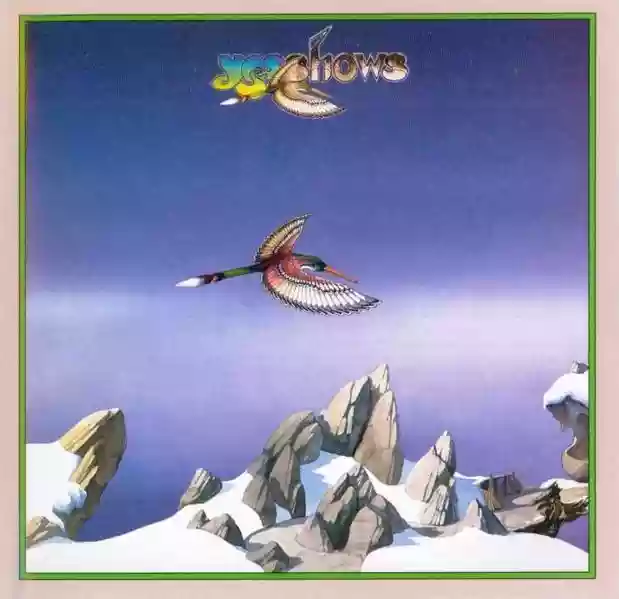
Jon Anderson and Chris Squire form the usual winning vocal team, especially if the work in question is "Going For The One," where they practically scream themselves hoarse to overpower the slide guitar. We then arrive at fantastic landscapes and bizarre shapes designed by Roger Dean towards the Gates of Delirium, "The Gates Of Delirium" for those who chew English, amidst rock spurs victims of strange erosions and fantastic creatures, where the Yes spirit is incarnated by the Swiss Moraz, who seems to actually replace Wakeman in a more fitting way. Heavenly as in the studio, were it not for some slight vocal smudges from Jon Anderson, not much supported in the initial choruses by Chris Squire, who is in fact busy fiddling with the bass to the best of his abilities, until the central battle rages across every front of the stage, difficult to recreate live, but for Yes it is ordinary administration. It is no surprise that the due and enthusiastic applause is full of admiration when the violin part of "Soon" starts, with its pure progression to the end of the track, where Steve Howe moves the "Concert Hall" in Detroit, not to mention the sumptuous vocal performance of Jon Anderson.
I delight in the second LP, then; it encloses a trio of masterpieces that also saw the light over a five-year period. The first track is a little jewel, often unjustly underestimated: it is "Don't Kill The Whale," a cornerstone of the controversial "Tormato," a long-playing from 1978 that has been dividing fans of the English group for thirty years and sees me absolutely among the supporters.
The track is a splendid hard rock of great intensity, supported by Steve Howe's piercing guitar and Jon Anderson's high-pitched, yet solid voice; always in tune, the great singer is however penalized live by the strong volume of the instruments set and, in my opinion, does not achieve the perfect result that characterizes Yes' studio works, also due to some smudges.
Dragged by the masterful work of Squire's bass, the true pulsating heart of the group, and culminating in Wakeman's irresistible solo and the splendid choral finale, the track (recorded during the "Tormato" tour, moreover the last studio album with the blonde at the keyboards) fades into a few minutes of frankly avoidable goofing around, in which Jon Anderson, in a purely "Yesstyle" pseudo-jam, introduces the impending suite that will be. Or, rather, that was, two years before.
"Ritual (Nous Sommes Du Soleil)" is the fourth of the Tales from the Topographic Oceans, certainly the best, often the only one appreciated by a large share of fans who see the colossal double as a degenerate and degenerative monster. In my opinion, and good Green will agree, perhaps the "Tales" are the summa of the entire progressive movement, a sort of masterful point of no return.
The track present on "Yesshows" dates back to the 1976 tour and therefore features the very valid Patrick Moraz on keyboards: the Swiss's imprint is evident in his accelerations and instrumental fury, which have rendered the then-recent "Relayer" immortal. The suite, perfect in its initially delicate and gentle then thunderous crescendo structure, is rendered on stage with incredible mastery, albeit unfortunately penalized by the ill-fated - although inevitable - vinyl split. In particular, the second part, based on the wonderful noise pillar (where Alan White's peremptory drumming joins Anderson's percussion and timpani beaten by that genius Squire), on the resplendent reprise of the singing and Howe's final solo, is a moment of musical ecstasy of rare and unheard-of intensity, a lucid jolt of the soul.
The fourth and last side of the excellent live is finally concluded with a pearl. "Wonderous Stories," written by Anderson, is often the least considered of the excellent "Going For The One" compositions, yet its incredible melody and instrument plot construct a little jewel of musical art. The rendition from the stage (the recording dates back to the "Tormato" tour) does not betray expectations at all: Wakeman is a slinger, Squire's counter-chant is enveloping, Anderson sails on the shields of his crystalline voice, brushing in a shiver the now goosebumpy skin of the mute listener.
Progressive was a brief, intense, visceral experience in its evolution and peremptory in its implosion. A handful of wonderful artists - more than anyone else - faithfully represent its phases, its emotions, its very soul over the years, from ecstasy to purgatory and even beyond to magnificence.
They are Yes.
Loading comments slowly
Summary by Bot
Yesshows is a compelling live album showcasing Yes's late 70s era with superb renditions of progressive rock classics. The album reflects key lineups and the band's evolving sound on tour. Highlights include powerful vocals and instrumental mastery, despite minor live imperfections. It remains a favorite among fans who appreciate Yes's complex compositions and stage presence. Overall, Yesshows is praised as an essential live document of a legendary progressive rock band.Tracklist Lyrics
Other reviews
By sarced
It catapulted me directly into 1976, among the stands of Cobo Hall in Detroit.
The 23.05-minute journey of 'The Gates Of Delirium' perfectly concludes the first CD.
