
 •
Rating:
•
Rating:
THE REVIEW
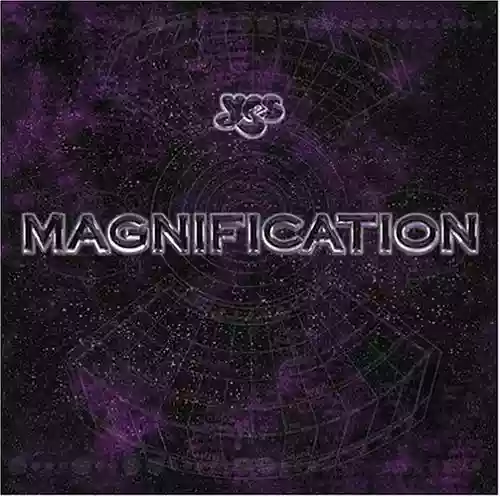
There is already a magnificent review of this magnificent album on the site, therefore this one of mine aims to further highlight the work to those group enthusiasts who remain skeptical about its listening, as well as to others who deep down think like me but have not yet fully realized it: I believe this to be, and by far, the best Yes album since "Going For The One".
That's not a small thing. . . in between these two works lies twenty-five years, during which Yes have done everything and more: musicians coming and going, quarrels and reconciliations, stage cram sessions, a good portion of official albums and a deluge of compilations, live concerts, unplugged, solo albums. . . all or almost all interesting enough, good enough, varied enough to provoke feelings of pleasant familiarity, affectionate reunion, renewed esteem but. . . nothing on the level of the glorious past.
This time, however, we're there. . . what happened? Changed the music? No, it's still the same (in the sense: the incisive one when the banalizer Trevor Rabin isn't involved). . . the orchestra instead of the wizard Wakeman's keyboards? Well, perhaps the advantage was "managerial," in the sense of one fewer rooster in the coop (easier and faster decisions) and then the orchestra works very well but even Wakeman doesn't joke when he's on a good day. . . Jon Anderson sings better? But how can anyone sing better than this man, who has always sung this way?!? What a voice eternally full, strong, unreachably high, so beautiful that it can be showcased even without reverbs, naked (it happens a couple of times on this album)!
Alan White also seems on his usual standard, clean and effective. . . and so are, for example, the two gentlemen who stand at the front stage with Anderson giving more this time? Yes!!! The now wizened Master Steve Howe is here in full form in his role as sublime carver, gracefully entering and exiting the stage, pressing the pedal only for a couple of lap steel rides, skillfully lingering to change sounds and instruments, bring riffs, arpeggios, and counterpoints while keeping a distance, just like the orchestra, from the sound's core to give it breath, dynamics, expectation, taste.
And here it is, the sound's core, the driving center of everything! Chris Squire's white Rickenbacker returns strikingly to shake the very fibers of the Yes animal. Majestically high in the mix as it should be for this group's music to work, it unfolds all its immense melodic and structural strength, as well as the incisive house repertoire of nuances (vibratos, octave jumps, harmonics. . . ). Inexhaustible and generous, it tirelessly feeds the "belly" of the most ambitious and successful pieces, giving them propulsion, unpredictability, direction! After several listens to fully absorb the work in its entirety, one truly loses oneself in focusing on his instrument, a real volcano of four-string expressiveness, and it is equally exciting to also hear this bassist's voice prominently, here often upfront to accompany and intertwine with Anderson's, because the blend of these two voices is one of prog's homes and if Anderson is its inimitable constant, the bassist's equally distinctive tone is the perfect complement for Yes.
The album contains in my opinion two masterpieces, two ample compositions worthy of henceforth being alternated with the group's old classics in all upcoming concerts. In position four is "Give Love Each Day", with a "cinematic" intro of only orchestra that then remains to bind the cuts and carvings of the instruments under the verses. When the choral refrain arrives. . . it is wonderful!
In the other peak of the album, the suite placed in the penultimate position "In The Presence Of", Anderson begins singing over a "pastoral" piano played by Alan White with beautiful inversions. Then Howe contributes to the piece with one of his textbook double-note solos; Anderson returns to sing the second movement and does so in a touching way, with researched harmonizations that flow into an fiery lap steel work, with well-placed instrumental and vocal breaks. It's on the levels of "Awaken" for sure. . . even in the atmospheric interlude, with Howe on the volume pedal and then cranking it up to the super highs and Squire's strong hands giving expression to every note of his bass. . . you end it with your heart in your hands!
As they say at Ferrari, it's the details that make performances great. . . For example, the brief closing ballad "Time To Time", comfortably dry and sunny, if proposed at the center of the line-up would have had the effect of a filler. . . placed at the disk's end, it constitutes a revitalizing signature, after the triumphant and unsettling entwining of choruses and lap steel at the end of the previous track. It is listened to relievedly and one relaxes, unwinding from the intense musical moments just experienced. . . meaning to say that a strength of this album, among many and not secondary, is the cleverly arranged sequence of tracks: they are positioned precisely to inspire the next and to be enhanced by the previous one.
You judge it, in my heart, this "Magnification" has nestled among the bridesmaids of the sacred trilogy "Yes Album/Fragile/Close To The Edge", to accompany "Relayer" and "Going. . . ". This is not the usual "survival" album of these veterans of good music, it is one of their peaks.
Loading comments slowly
Summary by Bot
This review praises Yes' album Magnification as their best work since Going For The One. The orchestral elements successfully replace keyboards, while the core band members deliver outstanding performances. The reviewer highlights two standout tracks, 'Give Love Each Day' and 'In The Presence Of', and applauds the album's carefully crafted sequence. Overall, the album is deemed a high point in Yes' career, blending classic prog rock with fresh depth.Tracklist Lyrics Videos
Other reviews
By Joe Cavalli
An excellent four-star Yes production that gives a kick to the 90125-Talk period, reviving the career from where many hoped it would restart.
Perhaps the best track. Twelve well-spent minutes.
