
 •
Rating:
•
Rating:
THE REVIEW
And at a certain point, Darkness will surround us... all.
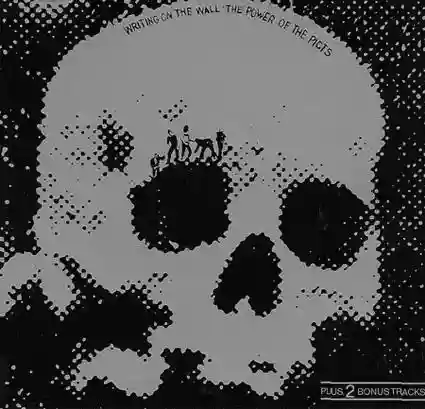
Perhaps these few and simple words would be enough to decipher the message of the Scottish quintet. But why not venture into the ninth circle of Hell...? Writing On The Wall (a name taken directly from the Book of Daniel from the Old Testament, and the "writing on the wall" is the one that prophesizes the destruction of Babel...) are bearers of a gloomy hard-prog-psych-blues, even though the group of the Scott brothers and vocalist Linnie Patterson never managed to break beyond the borders of modest success at home. They had the (mis)fortune of releasing a single work, following the path of many groups that ventured into these territories in the darkest year of the sixties... 1969.
Groups like Sam Gopal, Andromeda, Arcadium burned out within the span of a long playing record, perfectly capturing the dark slope that popular music was taking. Typically prog rhythmic constructions unfold through territories infested with dark presences, where demonic keyboards perfectly converse with the brutal fuzz of the guitars and the voice is a sublime compendium of theatricality; anguish, fear, and lucid madness ooze from the grooves of this forgotten black pearl. There are no concessions to melodies of any kind, but everything is a sick swamp, a marsh overshadowed by fog, where even just the humidity becomes a terrible enemy to fight against. An exceptional example is the concluding "Aries", just over eight minutes in which the five grind everything grindable, a long blues suite that spills into jazz territories (perhaps this is prog...?), taking Traffic and sending them directly before the Devil... "Do You believe in God?" Patterson repeats hauntingly... or the initial "Bogeyman", where the boogeyman materializes before our eyes and penetrates through our ears in a sick hyper-blues, a sort of shapeshifting monster born from a sorcery that forced into a single body the Doors, Arthur Brown and his Crazy World, and the Mark I Deep Purple. The worst prophecies are gifted to us by "Shadow Of Man"... a sort of "Homburg" by Procol Harum seen through the eyes of Edgar Allan Poe and staged by the darkest Alfred Hitchcock. "Ladybird" is the perfect fusion of the literary prog of King Crimson's Crimson King and the fairy-tale psychedelia of Gong's Flying Teapot, while the hard-blues of "Virginia Water" definitively clarifies from what sick seed heavy metal saw the light.
In the meantime, Darkness has surrounded us, but in our Babel of blinding lights, we continue to dance and sing....
Loading comments slowly
Summary by Bot
Writing On The Wall's sole 1969 album 'The Power of the Picts' is a dark, theatrical blend of prog, psychedelic, and blues music. Despite modest success, the Scottish band created a haunting, intense record full of foggy atmospheres and complex musical explorations. With standout tracks like 'Aries' and 'Bogeyman,' this album captures the darker turn of late '60s rock. The band's unique fusion and theatrical delivery make this overlooked gem a must-listen for prog and psychedelic enthusiasts.Tracklist
Writing on the Wall
A Scottish quintet, described in the available review as a gloomy hard-prog-psych-blues outfit; the review notes a single released work in 1969, The Power of the Picts, and mentions the Scott brothers and vocalist Linnie Patterson.01 Reviews
