
 •
Rating:
•
Rating:
THE REVIEW
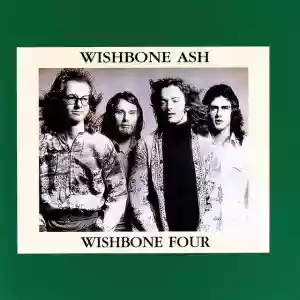
Underrated. The fate of many in England between the '60s and '70s. Yet Wishbone Ash managed to carve out a space for themselves, especially with the release of their third work, "Argus" (1972). Considered by many as the pinnacle of their career, "Argus" is the work that launched them internationally, making them known and whose resonance perhaps "overshadowed" the following album, "Wishbone Four" (1973).
Fourth studio work that reiterates the essential characteristic of the Ash: that of having forged a hyper-guitar rock, essentially based on the exchanges between the two axemen, Ted Turner and Andy Powell (also vocalist). "Wishbone Four" is classic hard rock, indebted to the greats of the genre and to whom Wishbone Ash perhaps pay a "stylistic" subordination, although compared to "giants" like Led Zeppelin and Deep Purple, the Ash have a decidedly drier and less "baroque" style, with the exception of the already mentioned "Argus," which also from a compositional point of view is probably their most complex work.
The album in question is a work of pure and simple rock, devoid of particular frills and technicalities. It ranges from the solid hard rock of the opening "So Many Things To Say" to the more relaxed rhythms of tracks like "Ballad Of The Beacon", "Sorrel", and the long and melancholic "Everybody Needs A Friend". More lively flair for "No Easy Road" and "Rock 'n' Roll Widow". A work not entirely homogeneous, sometimes also in search of not too sophisticated melodic lines, but that fully fulfills its task.
You can feel the breeze of the innocent rock of the seventies, the less cerebral and "committed" one. Good music, good musicians. 40 minutes of reconciliation with the past.
1. "So Many Things To Say" (5:04)
2. "Ballad Of The Beacon" (5:05)
3. "No Easy Road" (3:48)
4. "Everybody Needs A Friend" (8:23)
5. "Doctor" (5:53)
6. "Sorrel" (5:02)
7. "Sing Out The Song" (4:24)
8. "Rock 'n' Roll Widow" (5:50)
Loading comments slowly
Summary by Bot
Wishbone Ash’s fourth album, 'Wishbone Four,' delivers straightforward and earnest 70s hard rock with the signature twin guitar interplay between Ted Turner and Andy Powell. While overshadowed by the acclaimed 'Argus,' this album remains a solid work that captures the essence of classic rock. The record offers a mix of energetic and mellow songs, showing the band’s commitment to accessible music without excessive complexity. It’s a nostalgic 40-minute journey into genuine rock craftsmanship.Tracklist Lyrics Videos
Wishbone Ash
Wishbone Ash are an English rock band formed in 1969, widely associated with twin-lead guitar harmonies and melodic hard rock with blues, folk, and progressive elements. They broke through internationally with the 1972 album "Argus" and have continued to record and tour for decades, with guitarist Andy Powell as the long-standing central member.23 Reviews
