
 •
Rating:
•
Rating: THE REVIEW
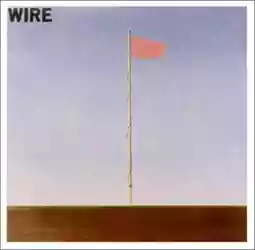
1977: Wire, born in art school a year before the advent of Punk (1976), debuted with Pink Flag. What was one of the most important albums of British punk, was also one of the most unusual and modern at the same time, ahead of its time as rarely happens with a debut album. In small bursts, over the span of a minute or two, Wire composed a type of deviant song that transcends the furious immediacy of punk, always hiding a dark side, not instantly decipherable; it's as if the necessity for revolt and emancipation now transforms into a greater desire for intimacy, without completely erasing the sound themes of the English '77 generation. An intimacy, however, that does not yet reveal itself in the darkening of sounds but is expressed rather by the labyrinthine nature of the song, which despite its short duration, amazes with incoherence, surprising the listener by never giving what is expected, creating a sense of ungraspability, a sense of unease, not stemming from atmospheres as in Dark, but directly evoked by the structural setup of the piece.
Each track is as frantic and brief as it is rich in nuances, never completing the canonical structure only hinted at, yet almost always allowing variations on theme. This holds true for lengthier pieces like “Reuters” or “Pink Flag”, as well as for the numerous fragments, distorted songform sketches (though no less fascinating for it) like the various “Three Girl Rhumba”, “It’s So Obvious”, and the near entirety of the 21 episodes that make up the album. Incompleteness is also a fundamental component of early Wire, and it's part of that same destabilizing intent for which nothing ever arrives at the moment you expect it. So, each piece ends where you would expect it to have much more to say, and it's as if every time the main melody, reduced to the minimum of allowable expression, is fundamentally something negligible, less important than the formal distortion to which the piece is constantly subjected.
For this reason, in music first before lyrics, Wire proved to be the first to anticipate the disillusionment that followed the '77 enthusiasm. The world that emerges from their music is a world without points of reference, where sound violence is more a disillusioned white rage than anarchic, already postmodern and directed towards the next decade, rather than tied to the past. Pink Flag may not be definable as a masterpiece as its frenzy makes it excessively, albeit deliberately fragmentary, yet it represents one of those insights so strong it influences an entire era to come, the British New Wave, and does not sound outdated even almost 30 years after its release.
Loading comments slowly
Summary by Bot
Wire's Pink Flag is a groundbreaking 1977 punk album that transcended its era with short, intense tracks full of nuance and unexpected structure. The album’s fragmented and innovative approach anticipated post-punk and influenced the British New Wave for decades. Despite its deliberate incompleteness, Pink Flag remains a crucial and influential work in punk history.Tracklist Lyrics Videos
Wire
Wire are an English rock band formed in London in 1976, widely associated with punk’s late-1970s moment and with the development of post-punk and new wave through albums such as Pink Flag, Chairs Missing and 154; the band later returned with new material in the 2000s, including Send.11 Reviews
