 •
Rating:
•
Rating:
THE REVIEW
THE MUSIC OF THE GHETTO, ON THE SEATS OF A 'LIMO'
Born in Philadelphia in 1968, from a wealthy family, Will Smith is one of the most prominent actors in Hollywood. He became most famous for playing the protagonist of the very funny TV series 'The Fresh Prince of Bel-Air'; in which he played the role of an irresistible and irreverent character. Certainly the role that suited him best, in which he was truly phenomenal, because he wore a mask not unlike who he really was.
Perhaps not everyone knows, however, that Will first gained fame thanks to rap. In the recording studio from the age of 12 under the name 'Fresh Prince' and assisted by his friend DJ 'Jazzy Jeff' (who also collaborates on this album), at 18 he was already a star (with 2 platinum records in his pocket).
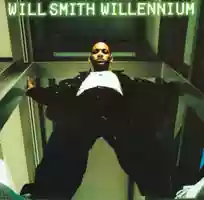
"Willennium" is from 1999, an album containing 15 tracks, all more or less extremely catchy and light. It all seems perfect as a soundtrack for a lavish 'Hollywood' star party. Among the festive and cheerful atmospheres 'Willone' luxuriates in an elegant and luxurious rap sound, with first-class mixing that many other rappers wouldn't even dream of. But what's missing from the work is that explosive musical inspirational force that has characterized this music since its inception and made it great. Indeed, Smith's music has always lacked this.
Where is the anger? Where is the desire for the much-acclaimed equality that unites the black people? Where are the desperate cries for the hardships of life in the ghetto? Certainly not among the tracks of Mr. Smith's works, nor among those of many of his colleagues who, once they became 'Scrooges' thanks to music and show business, lost their inspirational 'movens', which drove their compositions towards a winning direction. On the other hand, our 'Big Willy' never knew this energy deriving from the hardship of the slums.
The leading song is "Wild Wild West" (soundtrack of the film of the same name), which uses as a base the notes of the famous "I Wish" by Stevie Wonder. Thus, what was a overwhelming and energetic soul piece is transformed into a flat and repetitive rap. The rest of the album doesn't depart much from this standard, offering very cheerful and easy tracks that are not unpleasant, but are quickly forgotten: "Will 2k", "Freakin' It", "La Fiesta", "Pump Me Up". While recognizing the vocal abilities and the likeable charisma of Willy, whom I must acknowledge as being very capable and at ease in interpreting this type of music, as expected from a 'seasoned entertainer'. Not everything is to be dismissed, for I point out "No More", a slow and soft track, a sweet, delicate, and strangely (given the atmosphere of extreme gaiety permeating the album) melancholic rap.
Worse than the previous "Big Willie Style" (1997), but more representative of what this musical genre is becoming for many black artists. The carefree and joyful soundtrack of a lavish and idyllic life, in which Smith has fully found himself for a long time. But certainly where the majority of 'brothers of American metropolises' cannot find themselves, accustomed to living among problems far removed from parties and 'Hollywood' scripts.
Loading comments slowly
Summary by Bot
Willennium, released in 1999, showcases Will Smith's polished and catchy rap style, suitable for a Hollywood party soundtrack. While the production and charisma impress, the album lacks the raw energy and social commentary typical of deeper rap roots. Tracks like "Wild Wild West" and "No More" stand out, but overall, the album feels light and quickly forgettable. It reflects Smith's persona and lifestyle, contrasting with the harsher realities often expressed in rap.Tracklist Lyrics Videos
Will Smith
Will Smith (born 1968 in Philadelphia) is an American actor and rapper who first gained fame as the Fresh Prince in the duo with DJ Jazzy Jeff and as the star of the TV series The Fresh Prince of Bel-Air before becoming a major Hollywood actor and recording artist.02 Reviews
