
 •
Rating:
•
Rating:
THE REVIEW
A heart-wrenching, deep, desperate scream rises from the ominous corridors of the music-biz: Whitney Houston, not even 49 years old, vanishes in a hotel room in Beverly Hills. Alone, desperate, intoxicated by too many "material" substances and an equally heavy moral weight that tormented one of the finest voices in pop for more than a decade. Leaving social networks and general audiovisual media the usual pedantic rituals normally offered to the moved and tearful masses—a mix of lotus, hypocritical and false media opium doled out with TV programming dedicated to the newly deceased (forgive the expression) and other techniques of post-mortem exploitative scavenging—I intend to dedicate to another star that departs a simple review, not exactly a literary epitaph, long, pedantic, and didactic.
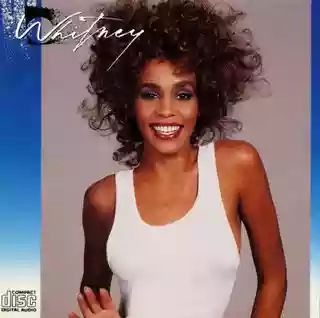
The death of Houston further diminishes the relic, although still shining, of the mythical eighties: loved or hated passionately, terribly contrasting or damnably anonymous, rich in ideas or poor in creativity, the decade of the Eighties has always represented (and continues to represent) a remarkable baggage of sounds, colors, and moods. Within a mainstream context still immature when compared to today's marketing circus, amidst Michael Jackson's Moonwalk steps and Madonna's still "innocent" scandals, Whitney rapidly established herself with her pleasant musical dialectic between tear-jerking romantic ballads and funky dance tunes, all inscribed in a perfectly '80s background. And her second studio work, simply baptized Whitney, elevated in unison this '80s intoxication of broken hearts and dance floor shoes.
Far from the irreversible crisis of the end of the millennium, just a little more than a young girl freshly out of the typical Christmas gospel concert, Houston was about to temper the extremes of her more established colleagues, offering an ethereal and virginal image, moderate and relaxed (perhaps a bit too much, to be honest), audiovisually materialized in the most genuine pop spirit, free of excesses, extravagances akin to MTV. And thus, here is the hilarious funky-dance theater of the famous I Wanna Dance With Somebody (Who Loves Me), the almost adolescent nostalgic carefreeness of Love Will Save The Day, the danceable pop-rock combination of So Emotional, the cabaret doo-wop atmosphere in Love Is A Contact Sport. But also the ascending pathos of a soundtrack in Didin't We Almost Have It All, the soft lightness of Where You Are, the (lost) innocence in Where Do Broken Hearts Go, the slow and dense soul of Just The Lonely Talking Again. Exquisitely pop tracks, packaged to be absorbed by a potential crowd of die-hard fans, without too many pretensions of musical and/or literary depth, yet simple, pure, genuine, "well-made," excellent in their (often overstated) genre.
What will remain of these '80s, sang a known little character of ours, probably saddened by the end of his favorite decade. Twenty/thirty years after those years, too much and too little remain. The frivolous and disenchanted spirit of the charts of the time, with sequins and bright colors, the disco revival, the artists of today who feed (and overindulge) on the '80s mood, often distorting it and hybridizing it with the aberrations of the 2000s and post-2000s. But the true protagonists depart, suddenly masters of style and music, unfit to bridge the gap between yesterday and today, lost in a past glory that is thought uselessly to be recaptured, reborn like a Phoenix, packaged in an IV drip of ideas useful to a self-referential, arid, and empty mainstream context.
Requiem.
Whitney Houston, Whitney
I Wanna Dance With Somebody (Who Loves Me) - Just The Lonely Talking Again - Love Will Save The Day - Didn't We Almost Have It All - So Emotional - Where You Are - Love Is A Contact Sport - You're Still My Man - For The Love Of You - Where Do Broken Hearts Go - I Know Him So Well
Loading comments slowly
Summary by Bot
The review reflects on Whitney Houston's second album, 'Whitney,' highlighting its role as a vibrant example of 1980s pop music. It illustrates how the album balances emotional ballads with energetic dance tracks, showcasing Houston's unique voice and purity. The tragic passing of Houston is acknowledged, connecting the album to a poignant musical era. The review praises the record’s genuine, well-crafted pop spirit despite its commercial nature. Ultimately, it underscores the enduring impact of Houston and the 80s sound in today’s music landscape.Tracklist Lyrics Videos
Whitney Houston
Whitney Houston (born August 9, 1963, Newark, New Jersey; died February 11, 2012, Beverly Hills) was an American singer and actress. Her debut Whitney Houston (1985) and follow-up Whitney (1987) produced multiple number-one singles. She starred in The Bodyguard (1992) and recorded the global hit I Will Always Love You.05 Reviews
