
 •
Rating:
•
Rating:
THE REVIEW
A few days ago, the English guitarist, singer, and composer John Sykes passed away. Cancer took him at 65. I liked this musician, and to write a few lines of farewell, I lean on the song that made him most known in his career, probably the one that best represents him.
Sykes attracted me because, despite the standard flashy look common to thousands of hard rock and metal guitarists like him, mostly musically insignificant, he had his heart well connected to his instrument and played with the right and proper passion, infusing melody as well as grit, measure along with the usual rock sceneries, passion alongside virtuosity.
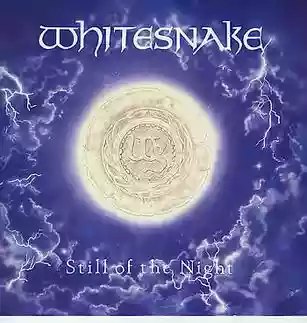
Listening to "Still of the Night" 38 years after its release allows one to focus on the excellent aspects and baubles, putting in a definitive context the strokes of genius and frills that characterize it. The riff remains imperial, carved in marble, earth-shaking, gratifying; among the best of the last century. And yes, the inspiration comes from "Black Dog" by Zeppelin, who, in turn, leaned on "Oh Well" by Fleetwood Mac, which first imposed that kind of brilliant a cappella voice/guitar phrase alternation in a rock blues track. The riff is by Sykes, while the vocal structure and thus its descent from the Zepp comes from singer David Coverdale, so...
Just as it is the frontman's idea, rightly, to move the long instrumental break in crescendo, which characterizes the song, to the central interlude, expanding it to nearly seven minutes and making it thus a true anthem, one of the most famous in the melodic hard rock and metal field. Sykes had conceived it first as an extended beginning of the song, only later finding that fantastic riff as its culmination. Credit to Coverdale for imposing the superb guitar riff in the foreground, almost from the start, but his fault, however, was indulging too long, with his invaluable but boastful voice, in the central crescendo of Sykes (well-supported by Don Airey's atmospheric keyboards), vulgarizing it somewhat.
Let's forget the lyrics too, the usual testosteronic piece, but who cares, here you must listen to the guitar, Sykes' guitars, which give us a perfect performance with a perfect sound, set as they are in that hard area on the borders with metal that allows both respective factions of fans to derive complete enjoyment. And there's also Coverdale's voice, of course: cunning as one may want, but with a disarming blues base and above all with his way of rising up the throat starting from very low, from deep inside, from the guts, from the intestines, from the stomach like no one else. A voice that many find unpleasant, but a magnificent voice... Vibrant with narcissism, sure, like that (though different) of Freddie Mercury.
People like Sykes, thoughtful and innovative metalheads, attentive and intelligent instrumentalists, are not that common, but not too rare either. Wrong to pass them all as damn virtuosos; Sykes wasn't, just like Bettencourt, Kotzen, Jackie Lee, Danny Stag, Ty Tabor... many others aren't either.
And thank you for everything then, John Sykes, tall, handsome, flashy, and... talented. You wore that black Les Paul like a god.
Loading comments slowly
Summary by Bot
This review honors the late John Sykes, highlighting his passionate and skillful guitar work on Whitesnake’s 'Still of the Night.' It praises the iconic riff, the interplay with David Coverdale's vocals, and situates the song in rock history. The reviewer admires Sykes' unique blend of melody and grit, calling the song a timeless anthem of melodic hard rock. Despite some vocal indulgence, the track remains a powerful example of innovative musicianship.
Whitesnake
Whitesnake were a British rock band formed by singer David Coverdale after his tenure in Deep Purple, moving from blues-influenced hard rock into mainstream ’80s arena hard rock and heavy metal, with frequent lineup changes across their history.21 Reviews
