
 •
Rating:
•
Rating: THE REVIEW
In the (recent and not) history of rock, there exist albums that represent a "white fly" in the careers of certain artists, albums that escape tedious interpretations and convenient labels stuck by those who sell, review, and even those who listen, "suspicious relatives" presented under the guise of apparent commercial suicides, but that in many cases gain, over the years and through the words of fans, completely unforeseen and unexpected prestige and reevaluation.
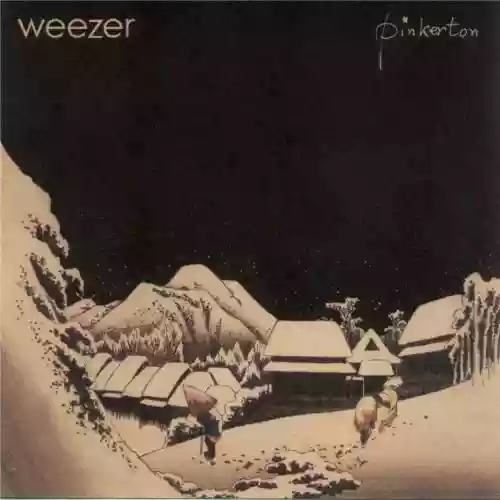
This is the case with "Pinkerton," the second album by Weezer, an American guitar-oriented band now very famous for its catchy singles based on immediate melodies and roaring guitars, which became, several years after the release of this work, one of the most well-known rock bands in the world, with videos regularly in heavy rotation on MTV.
To be honest, Rivers Cuomo and his band already experienced their first wave of popularity at the beginning of their career with the debut "Blue Album," which, driven by the memorable hit "Buddy Holly," established them as the revelation band of 1995, while parallelly another band member (bassist Matt Sharp) achieved similar results with the side project The Rentals and the single "Friends Of P."
However, the following year a profoundly different Weezer reappeared to the audience who were still humming the amusing choruses of their debut record: a neglected if not even shabby look, low-budget videos, scarce and enigmatic promotion. The sonic equivalent, on the other hand, fully resonated with this new guise: yes, because if the "Blue Album" was a cheerful, ironic, goofy album played upon the interaction between the band and the listener through carefree power pop and adolescent lyrics, "Pinkerton" was instead a dead, dark album, sometimes depressed and certainly schizophrenic, completely at the mercy of Cuomo’s mood swings, who, as he himself tells, was living a delicate personal moment. Cuomo didn’t care much about writing lyrics that could empathize with American college students (who until that moment represented the primary target of their audience) choosing to throw his inner anxieties into the pieces, often referring to specific vicissitudes of his private life, indifferent to the idea and understanding that the viewers might develop about the themes discussed.
Cuomo here unleashes his entire catalog of obsessions without regard to metaphors or rhetorical devices: Japanese girls, his high school nerd complexes as in "The Good Life" ("when I look in the mirror I can't believe what I see/ tell me who's that funky dude staring back at me… i ain’t no Mr. Cool/ i’m a pig i’m a dog"), the constant doubt of being a "pathetic failure," and other mental spins in an emotional crescendo that reaches its peak when "Pink Triangle" starts, a song centered on having madly fallen for a lesbian who obviously does not reciprocate his feeling… the menu of "Pinkerton" offers this and much more, all of it, as described years later by the frontman himself, thrown in your face in the manner of someone who gets drunk one evening, climbs onto a table, and starts shouting what he thinks of himself and life in general.
Cuomo rants, slobbers, rages, torments, raves, spits on the microphone, gently whispers and then suddenly lets out a desperate scream completely out of sync as in the opening "Tired Of Sex", the album’s manifesto track characterized by a hallucinatory nonsense text, an obsessive riff, and a sick synth completing the whole: the powerful "Getchoo" and the chaotic ballad "No Other One" illustrate how the main theme of the record is the frustration over the inability to communicate with the opposite sex and the obvious symptoms of a "midlife crisis" (even though the singer was 26 at the time), exclusively narrated (and often supported by almost tavern-like choruses) in first person in a direct sound mess, dry and distorted in the manner of the Pixies and Pavement.
The sound of "Pinkerton" is in any case compact and homogeneous: dark atmospheres (despite being predominantly major chords), rough and dissonant guitars, unstable melodic structures subject to constant time changes ("Across The Sea") that in a certain sense betray Cuomo's progressive metal roots, who seasons all the tracks with a suffering, bitter, and angry singing: the only concessions to the style of the debut album are the "Buddy Holly-like" "Why Bother?" and the single "El Scorcho", a lopsided and dazed version of "The Joker" by the Steve Miller Band (complete with a furious mid-song acceleration that compromises its commercial potential).
This album was, at the time, a huge flop, it almost immediately left the charts, and led to the consequent breakup of the band, which reunited several years later without Matt Sharp (who was probably the real mastermind behind the dizzying arrangements present here): moreover, it seems that Weezer no longer played any tracks from the album live, confirming the negative vibes that still compromise Cuomo’s judgment, always reluctant to talk about it except with clear embarrassment. Yet, 10 years later, "Pinkerton" enjoyed a happy rehabilitation by critics and audience, becoming a highly appreciated cult album, so much so that despite the very poor sales upon its release in stores, it has now reached "gold record" status and is seen on the web at the 7th position in the '96 album ranking on RateYourMusic, and in 2002 it appeared 16th in the all-time best albums list compiled by Rolling Stone readers, besides being generally recognized as one of the fundamental works to understand the rock of the '90s.
Speaking of Rolling Stone, at its release it was marked with one star and the infamous sentence "worst record of '96"… in 2004, following its remarkable "posthumous" recognition, a new review was published, this time enthusiastic, with 5 stars awarded, the same I give now, well-deserved.
Loading comments slowly
Summary by Bot
Weezer's Pinkerton initially flopped commercially and faced harsh criticism but gained legendary status over time. The album showcases Rivers Cuomo's raw emotional turmoil with dark, complex rock, contrasting their debut's playful tone. Its evolving critical appreciation highlights its importance in 90s rock history. Today, Pinkerton is a cult favorite known for its intense personal lyrics and innovative sound.
Weezer
Weezer are an American rock band known for hook-heavy pop-rock and alternative rock, frequently balancing crunchy guitars with melodic, often self-aware writing. Their catalog includes multiple self-titled “color” albums and a famously re-evaluated cult favorite, Pinkerton.17 Reviews
