
 •
Rating:
•
Rating: THE REVIEW
For those unfamiliar with Waltari, it would undoubtedly be useful to reference the character with whom the project in question shares its name and other important analogies: Mika Waltari, a writer with an adventurous spirit, hailing from the icy Finland. A chill that does not seem to prevent them from unleashing energy for two decades, led by the acrobatic singer-bassist Kartsy Hatakka, a composer with schizophrenic tendencies (musically speaking, of course) and countless resources, counting among the various line-up changes over time the presence of skilled musicians including members of Kreator, Stone, and Children Of Bodom.
Over the years, the band's work includes countless and commendable experiments and more or less crazy projects, all converging into the crumbling structure, dear to the Nineties, of a gritty and exaggerated cross-over, with a fanciful avant-garde streak, as only Faith No More and a few others had accustomed us; this is the first name that comes to mind, although the comparison is valid more at the conceptual level. The warm atmospheres and the musical melting-pot of the Californians, as well as the brazenness of the Patton that was, are far away; instead, we are faced with more compact, cohesive, tempered, solid songwriting, which certainly justifies the Finnish origin, and in some cases an almost soundtrack-like atmosphere (an experience already undertaken by Hatakka).
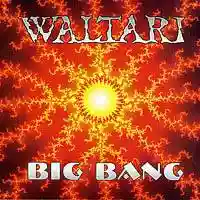
Among punk, rap, techno, and other contaminations, death metal symphonies, electronic hard rock and Scandinavian folk fusions, there are works of notable personality and a sound as original as unmistakable like "Big Bang", dated 1995. This work is characterized by a very valid level of composition, despite the overflowing variety of content: more heavy and direct moments ("Sensitive Touch", "Showtime", which as with other tracks features the collaboration of the then Amorphis singer, Tomi Koivusaari) alternate with others with a more pop taste, as well exemplified by the well-crafted arrangements, catchy melody, and ear-friendly choruses of songs such as "Atmosfear", very electronic-flavored, "The Stage", the peculiar "On My Ice", introduced by a melancholic piano and supported by powerful riffs and the versatile vocalist's voice, here with particularly poignant tones. There are definitely more experimental episodes, like the death metal-funk of "Color TV", or the hardcore pace that spills into the "yoik" choirs of "Jankha", and sometimes more progressive, as in the case of "One In The Line". All of this, it is worth repeating, unleashes remarkable energy and is characterized by considerable dynamism.
It is certainly not an immediate or easy album: the proposal is truly peculiar and yet, once assimilated, pleasant and entertaining, although initially the feeling is that the fun was more of those who composed the work, who have not spared their creative madness here as throughout their career. One might reasonably ask why Waltari's material was then and remains unknown to most when it would undoubtedly have deserved a wider space in the "alternative" musical territory, as demonstrated by the over an hour of genius, unruliness, and great music that is this "Big Bang".
Loading comments slowly
Summary by Bot
Waltari's 1995 album Big Bang is a bold and original work that blends metal with punk, techno, death metal, and Scandinavian folk. The album showcases strong songwriting and creative experimentation led by Kartsy Hatakka. Though eclectic and not immediately accessible, it offers considerable energy and dynamism that reward patient listeners. Big Bang stands as a significant but underrated milestone in alternative metal history.Tracklist Lyrics Videos
01 Big Bang (Dream Avenue) (04:31)
04 Sensitive Touch (03:13)
05 On My Ice (05:15)
06 Showtime (04:28)
07 Color TV (03:08)
09 Jänkhä (04:19)
10 One in the Line (Your Nature Is Wild, Part II) (05:51)
11 Feel! (04:45)
12 Connection (04:50)
13 Real One (04:08)
14 Let's Get Crucified (01:39)
15 Slow Thinking Street (07:10)
Waltari
Waltari are a Finnish avant‑garde metal band formed in 1986 in Helsinki, led by vocalist/bassist Kärtsy Hatakka. They are known for blending metal with electronic, punk, folk and other styles.01 Reviews
