
 •
Rating:
•
Rating:
THE REVIEW
IL TAGLIO DEL BOSCO (1963) 7/10
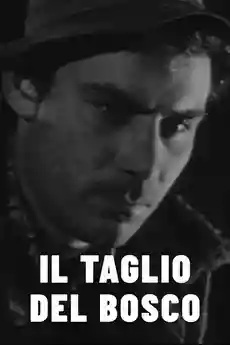
Those with a few years under their belts will surely remember the era of TV serials that Rai (a Christian-democratic Rai, but a true Lady Rai) aired in prime time between the '60s and the '70s. Perhaps the name Vittorio Cottafavi is less remembered, a native of Modena but Roman by adoption, director of films that (alas) quickly went out of fashion (his best is "I cento cavalieri", 1964) and of several of the aforementioned TV serials, including "I racconti di Padre Brown", 1970-1971 and "A come Andromeda", 1972. Now, the point here isn't to bore the reader by detailing Cottafavi’s biography (a splendid, albeit a bit dated, monograph exists, published by that treasure mine that was Edizioni Castoro). Rather, the aim is to discuss one of his lesser-known television works: "Il taglio del bosco", 1963, starring Gian Maria Volontè, adapted from a (fine) novel by Carlo Cassola. It's a short work, a medium-length feature: 53 minutes long, easily found on RaiPlay or Youtube. Dimenticassimo, in the most literal sense.
In the small village of Tirli, province of Grosseto, Alta Maremma, 35-year-old Guglielmo (Volontè, the only professional actor in a cast made up of non-professional actors), recently widowed, struggles to process his grief after losing his wife. His sister cares for the little children, while Guglielmo, in the meantime, purchases the "taglio del bosco" of the title (meaning a small wooded area) and works himself to the bone alongside other diligent woodcutters. The idea is to channel pain into labor, and consequently into a new, presumably happier, life.
Rai had devised a television project titled "Racconti dell’Italia di oggi" (a sort of collective snapshot of Italian society, suspended between the economic boom and the depopulation of the countryside, and those who, stubbornly, didn’t want to escape from those regions or even—as in the case of the work’s protagonist—chose to go there of their own free will). A project composed of 9 cycles, into which Cottafavi’s work rightly fit, broadcast on September 19, 1963. The initiative, coordinated by Raffaele La Capria, featured many historic names of Italian cinema and a few unknowns who would become prominent in the following years (the screenwriter of "Il taglio del bosco", besides Giuseppe Lazzari, was a certain Marcello Fondato, who would later direct the cult film "...Altrimenti ci arrabbiamo", 1973). Cottafavi’s idea was certainly not to “ape” neorealism (the use of non-professional actors), which by 1963 was already thoroughly dead and buried, but rather to narrate, with as much truth as possible, a story that is as tragic as it is, ultimately, about emotional redemption. It’s not a documentary (like those made in those years by Vittorio De Seta, another giant with a capital G, now completely forgotten), nor is it an anthropological investigation; let’s say it lies somewhere between the two: it’s more a film that aims to tell, through images (often almost epic), the inner torment of a man torn between the desire to give up and the awareness that, at least out of love for his children, he cannot do anything reckless. And the scenes of sweat and toil among the woodcutters ooze exhaustion from every frame.
An overly zealous critic once called it excellent craftsmanship; certainly, it’s not a work in which the technical aspect (except for the direction) is paramount, even if the landscape (often elevated to the role of protagonist here, almost as if it were one with the people living in it) is depicted with painstaking detail, and some stylistic choices (especially the more didactic ones) are not far from what Roberto Rossellini was already doing—and would do even better later—with his TV serials. Cottafavi shoots with ease and directs the non-professional actors gracefully, despite Volontè, who gives it his all, not being completely believable as a Tuscan peasant (let’s say this isn’t one of the performances for which he will, rightly, go down in History), and perhaps the compressed duration required by television constraints doesn’t fully do justice (cutting out many elements) to Cassola’s novel.
Nevertheless, it is a work that, if not fundamental, is at least exemplary within a television world that for too many years has forgotten its original role as a public service.
Loading comments slowly
Summary by Bot
The review covers 'Il taglio del bosco,' directed by Vittorio Cottafavi. It notes the nuanced storytelling and steady direction. Rating is moderate, suggesting strengths and drawbacks. The analysis highlights the series' artistic and thematic elements. Overall, it's a balanced take for drama enthusiasts.
Vittorio Cottafavi
Italian film and television director from Modena (Roman by adoption), known for blending cinematic rigor with television storytelling, and for works across the 1960s–1970s including films and acclaimed Rai serials.00 Reviews
