
 •
Rating:
•
Rating:
THE REVIEW
Since their inception in the now distant 1981, the American band Virgin Steele has represented one of the most interesting metal realities on the entire global scene, first gaining attention for some episodes close to classic hard rock and then for a formidable blend of power, aggressiveness, and melody, which led them to success (though not too much) with the two "Marriage of heaven and hell." Before all this, there was the band's fundamentally rock beginning with their self-titled debut album, which didn't particularly excite. A troubled career, always grappling with budget problems and internal divisions, so much so that after the album "Guardians of the flame," the group replaced guitarist Jack Starr with Edward Pursino, who remains a permanent member of the band today.
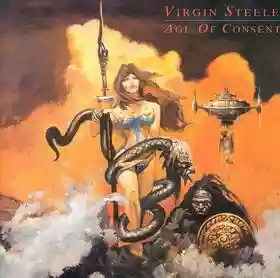
Wanting to delve into the group's extensive career, I decided to rediscover Age of Consent, the band's fourth studio album, released in 1988. An album that was born and developed in the vein of the previous three: a style not fully matured yet, sometimes veering towards hard rock, although one begins to perceive a veiled taste for melody that would become predominant in subsequent works. The result is an excellent blend of hard/heavy through songs that range from speed to aggressiveness, not forgetting sweetness and particularly the pathos, the fundamental element of epic metal in which the band would soon fully immerse themselves. In this sense, Age of Consent is the most successful album in attempting to bring together all those small influences into a single guise. Indeed, in the group's "first phase," it is undoubtedly the work that manages to be the most accomplished, thanks to compositions that are never too complex and partly also due to an easy listening undertone that, in this case, is fully justifiable. All these elements are prominently highlighted by the splendid opener "On the Wings of the Night": a well-constructed track, easily assimilated, and with a chorus to sing aloud live. In my opinion, it is the highlight of the album, followed by the pleasant "Seventeen", with a rockish flavor and "Tragedy", more in Virgin Steele's style, as emphasized by the title itself: a way of playing more tragic, pompous yet still far from the future grandiosity. Next comes "Stay on Top", a cover of Uriah Heep, well-played and engaging, even though I didn't quite understand its utility within a studio album.
Age of Consent continues in this vein, but "The Burning of Rome" shows us the band's true face, the epic one that knows how to set in motion real spirals of solutions full of pathos, generating the most varied composition of the album, both musically and thematically. "Let it Roar" is, however, completely unnecessary and stands as the only episode in the entire work below par, while the remaining songs confirm once again the validity of the work. Worth mentioning is "Cry Forever", a ballad with a seventies flavor paired with another truly noteworthy ballad, "A Cry in the Night," contained in the second work, "Guardians of the Flame."
Summing up, one can only praise the band for creating an album worth noting while using a simple and innovative style in the freshness of the fusion of various influences. Age of Consent is one of those underground albums from the golden age of American epic metal, with other bands such as Manilla Road and Omen as further examples of sparkling classic heavy metal, played with an uncommon passion. Get it.
P.S. A reissue was made in 1997, containing several bonus tracks and other songs added later. An operation wanted by Noise Records, which on that occasion also adopted another cover. The one reviewed here is the first version of the album.
1. "On The Wings Of The Night" (4:41)
2. "Seventeen" (4:22)
3. "Tragedy" (4:23)
4. "Stay On Top" (3:37)
5. "Chains Of Fire" (3:35)
6. "The Burning Of Rome (Cry For Pompeii)" (6:41)
7. "Let It Roar" (3:46)
8. "Lion In Winter" (5:32)
9. "Cry Forever" (4:33)
10. "We Are Eternal" (4:08)
Loading comments slowly
Summary by Bot
Virgin Steele's 1988 album Age Of Consent showcases the band's evolving style from hard rock to epic metal, balancing aggression with melody. Highlights include the standout opener "On The Wings Of The Night" and the epic "The Burning Of Rome." Despite minor flaws, the album remains a notable work in American power metal's golden age and is recommended for fans of classic epic metal.Tracklist Lyrics Videos
Virgin Steele
Virgin Steele is an American heavy/epic metal band formed in 1981, led by vocalist/keyboardist David DeFeis. Reviews emphasize their blend of metal with symphonic/keyboard elements and a strong focus on concept albums, with particular acclaim for their 1990s peak.16 Reviews
