 •
Rating:
•
Rating:
THE REVIEW
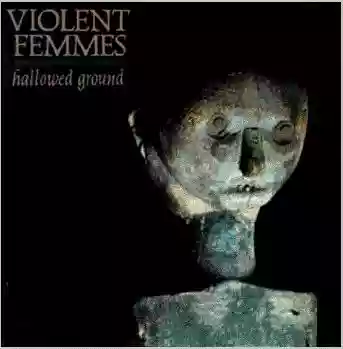
When speaking of them, it's natural to think immediately of that monumental debut, the violent females were already catapulted into legend for that first album, condemned to associate their identities with that album, despite "Hallowed Ground," 1984, and despite Gano, who collected new stories (which were, in fact, the same as that eponymous one), to create another collection of sparse songs of rage through the blend of blues, voodoo, country, and that rustic, pagan, and bare folk that heavily influenced the roots scene of folk revival through punk attitudes and consciousness-raising in American indie of the '80s.
Gano with this record pushes everything into the mystical religious recesses that permeated his life, his love/hate towards religion is well represented by the opening track, the deadly "Country Death Song." This first track marks an important turning point in their music, you can indeed notice a distinctively country touch led by the banjo, moving between Appalachian traditions and ritual child killings (in honor of the Dead Kennedys?), but its country rhythm seems more of a lugubrious march that evokes visions of desperados, with Gano's voice repeating "I started making plans to kill my own kind. I started making plans to kill my own kind" and "Kiss your mother goodnight and remember that God saves. Kiss your mother goodnight and remember that God save." "I Hear The Rain," a brief track with almost obsessive repetitiveness leads us to "Never Tell," where another strange instrument for rock tradition, the marimba, is present: "Never Tell" alone is worth the entire album, here comes the restless vein, the nervous vein, the punk vein after all, the refrain is monumental (and also very famous), the ride is contagious on the desert highlands of northern Mexico and the far south of the USA, the bastards born from the crossing of equally bastard races are losers who animate sacrificial rites, ignite spirits and the gasoline-sprinkled crosses that crowd the highways.
"Jesus Walking On The Water" is a ballad, very melodic, that blends touches of gospel and folk. You never know if the tone is serious or a mockery, America sounds like fiction, maybe a cinematic fiction, or in its primordial essence, a dream-like fiction. I once walked in an unhealthy corner of New Mexico, certain things now remain to be thought of only by cadaverous ones who have seen death in the face like me. Sergio Leone is far, there are no sepia-colored cowboys around, there are no rifles, the blonde waitress of the saloon is just a pathetic simulacrum of an extinct scenario (just like me).
"I Know It's True (But I'm Sorry To Say)" is a sweet ballad, a song to sing around the fire, tear-jerking if it weren't for Gano's lyrics containing explicit sexual references and perhaps even more. The title track is dark and swampy, yet another high-class number, Voodoo ignites, the same that permeated the rituals of the Doors and the Gun Club, one of the meanings of the term "voodoo," "being in a trance," derives in part from the fact that slaves were not granted proper burial, which, it was said, gave rise to tormented souls and the living dead, also known as zombies. In New Orleans, the souls of deceased ancestors are carefully preserved through customary rites such as jazz funerals, with brass bands and top hats and umbrella parades. The dichotomy Voodoo/Christianity should not be misleading, Voodoo is a religious practice that mixes Christianity with elements of African origin, imported by black slaves, about three-quarters of Haiti's eight million inhabitants identify with this religion. Vodun, like Christianity, is a religion of many traditions, Voodoo is thus a fusion between Christianity and the spiritism of tribes forcefully taken from Africa and brought to America as slaves.
A quick shift in style and here "Sweet Misery Blues" bows to us, a spaced-out blues infected by Lou Reed in the voice and the very music. It sounds like this, raw, off-key, and dirty like the very soul of the Violent Femmes. The politically incorrect "Black Girls," memorable drum overture before giving way to the free jazz of the sax, listen up, John Zorn, the genius himself also making a racket with crazy fretters along with a combo of horns let loose, a raucous orgy.
The album ends with "It's Gonna Rain," a mix of gospel and harmonica blues, a kind of biblical prophecy, who knows how ironic in its intentions, narrating the story of Noah's Ark: "Now who, who, who do you think I am? Well, I built this ark with Japheth, Shem, and Ham" sings Gano and honestly a laugh escapes too, because, according to them, what it takes to rid the world of sickness and suffering is the great flood.
A manifesto to the courage of this street trio, the courage of Gano's speeches against Catholics and Calvinists who killed in the name of God, I believe their strength was in talking about very serious and very sad things (religion, death, youth unrest, lack of ideals) with a strong ironic, even self-ironic, and boisterous vein.
This record represents the epic of the new southern gothic: because believe it or not there are ghosts and specters that have always swum in the Mississippi.
Loading comments slowly
Summary by Bot
The review praises Violent Femmes' 1984 album 'Hallowed Ground' as a powerful and distinct work overshadowed by their debut. It explores dark southern gothic themes through a unique blend of punk, folk, blues, and voodoo spirituality. The review highlights the album's courageous and ironic approach to heavy subjects like religion, death, and youth unrest, emphasizing the album's influential and epic nature within indie rock's folk revival.Tracklist Lyrics Videos
Violent Femmes
Violent Femmes are an American folk-punk band formed in Milwaukee, Wisconsin in 1980 by Gordon Gano, Brian Ritchie, and Victor DeLorenzo. Known for an acoustic, busking-rooted bite, they issued a landmark self‑titled debut in 1983 and followed with Hallowed Ground (1984). Their catalog spans decades, including Why Do Birds Sing? (1991) and a later return with We Can Do Anything (2016).07 Reviews
