
 •
Rating:
•
Rating:
THE REVIEW
Everything was changing in 1991. And who knows why we have to look at decades…
Yet that's how it is…: the sixties were very different from the (wonderfully) seventies, and the eighties are a separate and highly underrated island. The nineties were often overly optimistic, unnecessarily neo-hippie, and very, very overrated. With very few exceptions. One from across the sea…? Sure: Dave Matthews. One from this side…? Our Vinicio. Who, certainly, has quite a few debts around. But, you know… with the Smurfs, life is good, and it's impossible to come out so late without having debts with anyone. And so it can be readily said that without Waits, our Vinicio certainly wouldn't be there. Just as without Conte, even though the debt with Conte has always been somewhat exaggerated. Just as his literary references are evident and numerous, and a thesis wouldn't suffice to describe them all, and something would undoubtedly be left out.
But it's not debts we want to talk about. It's an album. A beautiful album. A very important test as are, essentially, all second works. Tests often not passed, and other times very illustrative of what the artist is truly worth. Because the second work cannot be inspired and “on-the-fly” like the first. And often it faces certain common risks: if the first album was very successful, the second bears the evident fruit of some big contract, or the easily detectable leftovers of the first. If instead the first was noticed by few, often the second still stems from the desire to be recognized and that wonderful mother of all wonders that is Hunger. In the case of this second Caposselian work, we are quite halfway between the two realities.
The beautiful debut from the year before reached the ears of many Italians, but not of many. Some appreciated what appeared, in the first single, as an easy, nocturnal swing from bars, close to Conte and Waits but less complex, less “demanding,” and, apparently, even a little snobby (well yes, gentlemen, back then Vinicio was also almost handsome). Nothing more misleading, even then…: one only had to listen to the whole first album to understand what caliber this young lad was at, halfway between north and south, between songwriter music, jazz, and Latin rhythms. And the same formula is repeated here, though partially evolved.
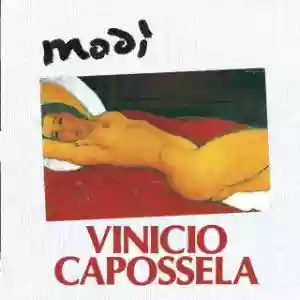
“Modì,” the splendid piano ballad that opens the album, is a perfect autobiographical, identifying, and bohemian manifesto. A beautiful, sad, and deep song, that seemed to set the tone for the album. Instead, here are the amusements of “Regina Del Florida” and the pure Waitsian “Notte Newyorkese”. In the album, some other gems (above all “Ultimo Amore”) and other amusements (the lovely “E Allora Mambo,” made famous also by a rather modest film). Throughout, still present, and perhaps invasive and a bit depersonalizing, although excellently realized, the arrangements and production of Renzo Fantini's Contian clan. After the subsequent and still very worthy “Camera A Sud,” Marangolo and the team were let go to make room for musicians and arrangements much more in line with the deep and sometimes more pleasantly obscure soul of Ours. So, in 1991, what conclusions were we legitimately to draw…? I remember that of Vinicio, we die-hard Contians, devoted to Waits and every singer-songwriter school, spoke with a little less diffidence and a bit more sympathy.
In short, he was breaking through even in our young and therefore hard hearts. Of course, however, none of us could yet imagine that from there would come i balli di san vito, le canzoni a manovella, and gli ovunque proteggi. Just as those who enjoyed back then with “Blue Valentines” could not even dream of the bone machines. It's useless, guys: comparisons must be made, for the simple reason that it's right to make them, approaching masters and very good pupils, and keeping in mind that the existence of Dylan will never make that of De Gregori useless, just as that of the great Tom overseas will never detract from the great developments of the Italian “pupil” Vinicio.
Loading comments slowly
Summary by Bot
Vinicio Capossela’s second album, ‘Modì’, is a beautiful and significant work that builds on his debut's promise. The album blends jazz, Latin rhythms, and literary influences with evocative tracks like its title ballad and 'Ultimo Amore.' Though the production can feel a bit imposing, it remains an important step in Capossela’s artistic evolution, marking him as a unique voice within Italian music. The review thoughtfully positions Capossela among notable influences while appreciating his distinct style.Tracklist Lyrics Videos
Vinicio Capossela
Italian singer-songwriter and performer, born in 1965 in Hannover, Germany, known for theatrical, eclectic albums and live shows that mix folk, Mediterranean and world influences. Active since the early 1990s.42 Reviews
