 •
Rating:
•
Rating:
THE REVIEW
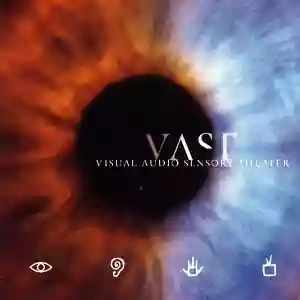
"VAST" is an acronym that stands for Visual Audio Sensory Theater, "The audio/visual sensory theater," referring to a vision of music as a multimedia art that, through images and sounds, evokes in the listener's mind new images or those from one's past. "Vast" is also an English word that stands for "broad, boundless, infinite," like all that is unknown. "VAST" is primarily the name of Jon Crosby's group, a "one-man band" with the American enfant prodige as the mind and jack-of-all-trades, around which various musicians revolve from time to time. The concept is somewhat similar to the base of other musical projects created by artists with an overflowing compositional vein, like in the case of the Nine Inch Nails by Trent Reznor. Consequently, the music appears in a very original form, and above all, personal and intimate, whether it's a track with a strong energetic charge or an intimate episode. The idea behind the entire work is to synthesize traditional melodic rock, Reznorian pop-industrial influences, and elements from the dawn of music, such as the use of samples of Gregorian or Indian chants. The search for pure melody and stylistic cleanliness is the primary goal of the project, right from this debut in '98, and the production quality is extremely high.
Once the CD is inserted into the player, the dreamlike journey begins with an ambient intro with string samples preceding "Here," one of the most aggressive tracks in Crosby's catalog, primarily a declaration of intent. NIN's influence is present and noticeable, even though the airy opening of the refrain is all "Vastian," supported by an ethereal, clean, and powerful voice at the same time, even if assisted by technologies leading to infinite prolongations of some vocalizations, in a perpetual echo effect. After the first fury, a slightly dissonant acoustic guitar caresses the listener's ear, then a choir of angelic voices and a piano: it is "Touched", also chosen as a single, which immediately opens to a drum burst. The splendid melody is both melancholic and gutsy. Crosby's voice makes a difference in a context where few elements, clearly distinguished from each other, are assembled to create a masterpiece of simplicity. The ending recalls the East and seems like a clean version of the tail that accompanied "Mr. Self Destruct" on The Downward Spiral. The Nine Inch Nails return in "Dirty Hole" (the lyrics and piano recall "Closer") before an Indian chant takes the main part of the scene, then serves as a backdrop to the melodic rage of Crosby's singing, a voice so powerful and fragile at the same time. The idea of using chants as instruments is a characteristic of many songs and is perhaps the distinguishing element of Vast's music. The ending suggests the triumph of the wounded man over the woman tormentor. Here Crosby shows the multiplicity of his soul: furious and almost merry at seeing the woman's suffering, while elsewhere a tender and romantic lover. Track 4 is perhaps the most emblematic text: "Pretty When You Cry", another single from the album. The lover enjoys making his woman suffer, just because he finds her much prettier when she cries. The track is a masterpiece for its simple melody, electronic beats, and raging guitars combined with angelic-diabolical choirs. The music video of the song, featuring quotes from the Divine Comedy, is also beautiful.
Desperation accompanies the religious crisis of "I'm Dying" before the outburst of anger halfway through the track. Then time stops: here comes "Flames", a poetic ballad with only voice, strings, guitar, and cello. We are together with the two lovers in their bedroom, in the dark, with only a few candles illuminating everything. A tear begins to fall as Crosby performs in falsetto before the strings accompany us towards the continuation of the dream. A dream abruptly interrupted by "Temptation", a harsh rocking desert ride, and the oriental explosion of "Three Doors." As the lyrics say, "there are three doors to cross, but only one leads to you." Maybe the choice made is not the right one, and the sense of desperation grips us with "The Nile's Edge", desperate pathos in Crosby's vocal explosion, vocally certainly his apex. The fairy tale flavor of the East returns with "Somewhere Else To Be", which takes us on a flying carpet through the desert, continuing with its untitled instrumental continuation until reaching an oasis of love, "You".
The journey is over, and our soul is finally satisfied.
Loading comments slowly
Summary by Bot
VAST's debut album, Visual Audio Sensory Theater, is an original and intimate project led by Jon Crosby blending melodic rock, industrial influences, and ethnic chants. The album offers a high production quality and a dreamlike journey that combines aggression and tenderness. Standout tracks incorporate unique vocal effects and multi-layered instrumentation, evoking strong emotions and storytelling. The review praises the artistic vision of music as multimedia sensory theater.
VAST
VAST is the American alternative rock project led by Jon Crosby. Blending melodic rock with industrial/electronic textures and sampled choral elements (Gregorian and Indian chants), the project debuted with Visual Audio Sensory Theater (1998), followed by Music for People (2000), Nude (2004), Turquoise & Crimson (2006), and the acoustic-leaning April (2006).05 Reviews
