 •
Rating:
•
Rating:
THE REVIEW
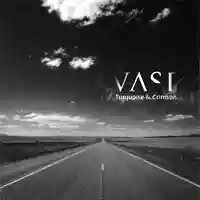
Jon Crosby sourced the material for the release of "Nude," Vast's third work dating back to 2004, through a selection of tracks from two unofficial albums, "Turquoise" and "Crimson," initially available only online.
In 2006, the two albums were published in full, and if the operation might seem redundant or purely commercial, the value of the "double album" ensures that "Nude" is entirely reevaluated. The third album, although containing some memorable episodes and an enviable overall quality, seemed to lack that "something" that made "Visual Audio Sensory Theater" and "Music For People" unique. The deeply melancholic and intimate nature of that album seemed indicative of a departure from the more aggressive sounds that characterized Crosby's early work.
This "Turquoise & Crimson" returns to us a band, and an artist, at the height of their potential and diverse personality. Clearly, "Nude" was intended as a double album, and having to discard tracks made it imperfect. It is also true that Crosby’s choice favored sad and musically subdued songs, with only a few more aggressive tracks included. In the two albums, besides hearing demo versions of known tracks, you can also listen to unreleased pieces, some of which are splendid, causing us to wonder why they were rejected in favor of others. The first album, "Turquoise," opens with the track from which it takes its title, a nearly faithful rendition of the very energetic one that opened "Nude." This is followed by "Ecstasy" and "Be With Me", produced slightly differently from that album. The known version of "Thrown Away" is preferred here, with acoustic parts more in the foreground, and its splendid instrumental beginning still appears in an approximate guise. "Don't Take Your Love Away" is identical to what was already heard on "Nude," and being a perfectly crafted track, it would have been a travesty to alter it (I will never tire of saying how beautiful this song is). With "Falling From The Sky" the novelties begin, and they are certainly not unwelcome: the roughness of the guitars introduces us to a powerful piece that explodes in an epic and vigorous chorus. So, Crosby’s rougher edge was not lost, he just kept it hidden from us!
"Candle" is slightly different from the version we know, but its "Cure-like" flavor remains intact. "I Woke Up LA" is another intense track, with a very industrial aesthetic, that is compelling to listen to. And then there is Crosby's voice, which never stops moving us. "I Can't Say No To You" is supported by an even more powerful bass, while the concluding "Desert Garden," although remaining an acoustic and sparse track, benefits here from a hint of production that makes it more velvety. "Turquoise" contains nearly all the significant episodes from "Nude," opening and closing in the same way. It is thus a sort of proto-version with some modifications.
"Crimson," on the other hand, offers the most enticing novelties. It opens with a much more electronic version of "I Need To Say Goodbye", which sounds more aggressive, continuing with some still somewhat sketched-out versions of "Lost" and "Winter In My Heart". "All I Found Was You" is instead a transformation of "Japanese Fantasy", where the electronics become massive and steadily batter the listener's ear. Certainly, an interesting variant compared to the original. "That’s My Boy" is the first entirely unreleased track of this second album, and we find in our ears one of the best pieces in Vast's entire discography. A melodic and melancholic intro, progressive musical evolution, vocal and instrumental power of the chorus, white choirs wavering throughout the track: we've been transported back to 1998, to milestones like "Here" and "Pretty When You Cry". A song that was really unfortunate to neglect for "Nude". "Evil Little Girl" is instead a very delicate piece, with strings and an instrumental accompaniment treading lightly, but slowly filling our hearts with its wonderful notes. "Beautiful" is one of the closest things to "pop" that Crosby has ever conceived, always using this three-letter expletive in its noblest sense. But perhaps the most interesting novelty is "Senorita": a continuous and cutting progression of violins accompanies a syncopated rhythm over which Crosby disserts his verses with energetic nonchalance. "Where It Never Rains" is the most painful and heartfelt moment of the entire work and manages to move us after having rejoiced previously. The farewell is entrusted to a splendid semi-instrumental track, using only some choirs for the vocal parts: "Goodbye", yet another masterpiece.
A remarkable double work draws to a close that, probably, if it had been released when it should have been in the complete version, would not have gone unnoticed. For stylistic and tonal variety, "Turquoise & Crimson" rejuvenates the glory of "Visual Audio Sensory Theater," even if through two albums instead of one. Maintaining a high standard in a double album is not easy, but Crosby has fully succeeded in it. The only problem is that listening to this album after becoming familiar with "Nude" certainly deprives it of some of its charm.
Loading comments slowly
Summary by Bot
The review explores Vast's double album 'Turquoise & Crimson,' showcasing its role in re-evaluating the 'Nude' album by restoring stripped demo tracks and unreleased songs. It praises the return of Jon Crosby's varied and raw musical edge, highlighting standout tracks and production qualities. The work is described as a remarkable double album maintaining high standards and rejuvenating the band's earlier acclaimed style. Although some charm is lost when compared to 'Nude,' the new release offers a rich, compelling listening experience.Tracklist Lyrics
VAST
VAST is the American alternative rock project led by Jon Crosby. Blending melodic rock with industrial/electronic textures and sampled choral elements (Gregorian and Indian chants), the project debuted with Visual Audio Sensory Theater (1998), followed by Music for People (2000), Nude (2004), Turquoise & Crimson (2006), and the acoustic-leaning April (2006).05 Reviews
