
 •
Rating:
•
Rating: THE REVIEW
I love Vangelis. I love almost all of his albums, perhaps I've listened to some of them a bit less, but in general the Greek artist has always evoked great emotions in me. Yes, because in my opinion, Vangelis's music is music that tends to convey emotions and magic.
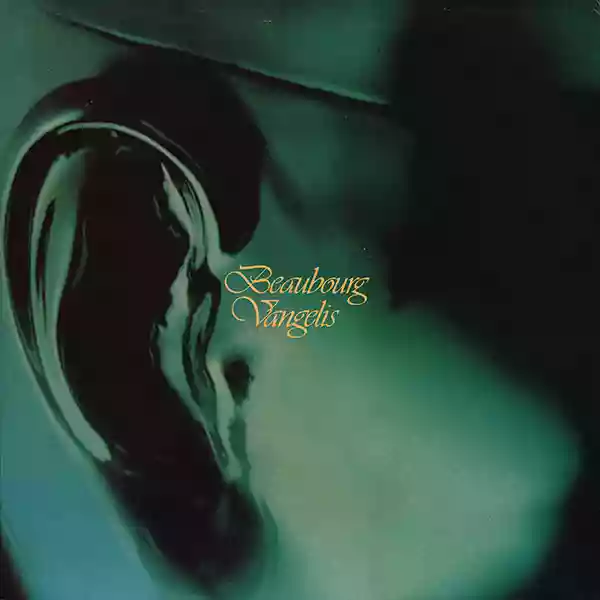
But now let's talk about one of his less "accessible" albums and, due to its complexity, less commercial and less known, "Beaubourg", a hallucinated and complex work. Forget the atmospheres of "Voices" or "Oceanic" or "China". The album was composed and performed entirely with synthesizers. The synthesizer is definitely the flagship instrument for the Greek artist, but in this album, he uses it in a distinctly different way. By listening to it, we realize we are faced with a dark, mysterious work, which I dare say is "unsettling." Many critics and reviewers have associated this work with another very complex piece by the same Vangelis, "Invisible Connections," but it must be said that "Invisible Connections" was based on experimentation but with a classical music background. I remember indeed that the cover of "Invisible Connections" had the "Deutsche Grammophon" label on top, a label specialized in classical music.
I challenge anyone to find a meaning, or to define the style of "Beaubourg". After many years of listening, I have never managed to figure it out, but today, listening to it again, one of the many great things that the immense Carmelo Bene said came to mind: "Art is great when it is incomprehensible, God is incomprehensible...you cannot talk to God with God." Thinking about this phrase makes me say that most probably Vangelis in this album does not seek meanings and does not hide them either, he simply lets himself go to his experimentation and allows the listener to feel his emotions, which can be understood as vibrations, positive or negative vibrations. I can certainly experience different emotions than you; listening to this album, I might feel paranoid (for example) while you might close your eyes and fly somewhere. Here, the discourse is subjective.
Unfortunately, I have never delved into Jazz, so I don't know much about that musical genre; I will have to remedy this as soon as possible. I say this because I've noticed that many people report having detected some traces of Jazz. I can't say whether this information is true or not; personally, it didn't seem that way to me, but I repeat, not being an expert in Jazz, I can't express myself more than that.
Did I like "Beaubourg"? Even today, I can't say for sure; I've certainly always been fascinated by "extreme" works. I remember the first time I listened to "Metal Machine Music" by Lou Reed, I thought I was going crazy, that "music" was driving me out of my mind, the stereo system was about to explode along with my head...it was just an impression, but for a moment I was truly afraid. "Beaubourg" did not "scare" me like Lou Reed's album, but in any case, it conveyed negative vibrations to me, which does not mean that the album is bad or unsuccessful. Who knows...maybe that's exactly what Vangelis wanted?!?
It is certainly not the Vangelis that can be appreciated by those who are accustomed to listening to decidedly less complex works. I listen to music and choose what to listen to based on my mood. I listen to "Beaubourg" when I want to explore darkness, when I want to be scared, when I want to feel trapped inside a sound that doesn’t reassure me but that I know is just a simple sound, hence, harmless.
VinnySparrow
Loading comments slowly
Summary by Bot
Beaubourg is one of Vangelis' most complex and experimental albums, composed entirely with synthesizers. This dark and mysterious work challenges typical musical boundaries and defies easy classification. The reviewer appreciates its emotional depth despite its unsettling nature. Beaubourg is suited for listeners who enjoy exploring avant-garde and extreme sonic experiences.
Vangelis
Vangelis (Vangelis Papathanassiou) was a Greek composer and multi-instrumentalist known for electronic music and influential film soundtracks, including Blade Runner and Chariots of Fire.11 Reviews
