
 •
Rating:
•
Rating:
THE REVIEW
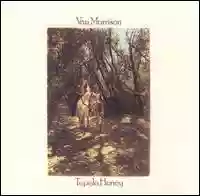
It is always a great pleasure to listen again to important albums after some years, maybe not so famous and acclaimed but that somehow bring to mind distant memories of past times, pleasant and essential events of your life. This happened to me by listening again to an album by the great Van Morrison, famous Northern Irish singer-songwriter and musician, released back in 1971, a rich and important period for the artist in question, "Tupelo Honey", the "Tupelo honey," a plant common in the southeastern United States, from whose flowers the sweet nectar is born.
At the time, Morrison was in Woodstock, where he led a serene and peaceful life with his then-wife, Janet "Planet" Rigsbee, a model and actress, married in '67 during the period of the great commercial success of "Brown Eyed Girl" which opened a cycle of great work satisfactions for the artist. Pressured by his record label (Warner Bros), Morrison had to release at least a couple of albums and some singles in a short time and decided to make some demos of country songs, which were supposed to form the backbone of his upcoming album. To complicate matters, the Irish artist had to move from the New York countryside due to the expiration of the rental contract of his house in Woodstock; the owner had decided to take back the property and, also pressured by his wife who wanted to get closer to her parents, the couple moved to Marin County, in the hills near San Francisco, a rural and quiet place, in a house surrounded by redwood forests, fields, ponds, and farmlands.
After moving to California, the singer-songwriter contacted various musicians to start the recordings; some had already collaborated with him in the past like percussionists Connie Kay (already in Astral Weeks) and Gary Mallaber (already a drummer in Moondance, where he also played the vibraphone). Other old collaborators joined, like saxophonist Jack Schroer and his wife Ellen on backing vocals, while more musicians were hired for the first time, given the difficulty of finding other members of the old band after the move to San Francisco.
Some songs already created in Woodstock made it into the album, others were born in a few days, while others had been written in previous years but had not found a place in his albums before. The record presents a blend of various musical genres, from country to soul, from pop to R 'n B; a "collage" of sounds and colors that highlight the great work done by Morrison and his extraordinary band. The album opens with one of his most appreciated tracks, "Wild Night," a mix of R 'n B, soul, and country, very sparkling and fun, which also achieved great commercial success in the States. Characterizing the song, already written some years before, is the rock 'n roll riff of guitarist Ronnie Montrose, which immediately gives liveliness and vitality to the track, which was theoretically supposed to be a slow folk ballad, later transformed by the band's work.
"(Straight to Your Heart) Like a Cannonball" became another successful single from the album, a mix between waltz and soul where Morrison highlights his extraordinary singing ability and "Old Old Woodstock," a jazzy track, a tribute to his life before the move, where the author highlights in the lyrics the theme of domestic happiness and the serene life that characterized him in that period. Following are the romantic and long ballads "You're My Woman" and the title track "Tupelo Honey," songs where Morrison somehow "shouts" his great love for his wife, thanking her for making him happy. "Tupelo Honey" is very reminiscent in rhythm and melody of "Crazy Love," another very successful track contained in "Moondance," but here the singer emphasizes with an even more energetic vocal performance all the happiness he feels at that time.
The beautiful "I Wanna Roo You (Scottish Derivative)" follows, a brilliant and engaging track, characterized by a nice interplay between McFee's steel guitar and Montrose's mandolin and the honky-tonk "When That Evening Sun Goes Down." The finale with a bang with "Moonshine Whiskey," a country rock song that speeds up at the end, probably dedicated to fellow artist Janis Joplin. On the album cover, Morrison is seen leading on foot the young wife sitting on a horse, on a country lane near their estate, while on the back cover the couple is leaning against the horse fence, with a black and white cat accompanying them, all of which testify to the very happy period they were going through, a period of serene life and family satisfactions.
The album was very successful but only in the United States, the adopted country of the Northern Irish singer-songwriter. A bit spoiling the harmony of the time were the stage fright, as Morrison could no longer find the calm and strength to be on stage. In front of so many people he felt uncomfortable and many tour dates were canceled because of this annoying problem, later resolved over time with smaller and quieter concerts in clubs and in front of a few people (the "Stage Fright" already described by other greats of American music of the period, "The Band"). The record is very compact and enjoyable, maybe it never reached the level of "Moondance" or "Astral Weeks" but the great voice of Van Morrison and the extraordinary skill of the musicians make it still fresh and fun today...
Loading comments slowly
Summary by Bot
Tupelo Honey, Van Morrison’s 1971 album, offers a rich mix of country, soul, and pop reflecting a peaceful phase in his life. Featuring hits like 'Wild Night' and heartfelt ballads, the album showcases Morrison’s vocal prowess and musical versatility. Though not as acclaimed as some earlier works, it remains fresh and enjoyable. Recorded during a period of personal transition, the album captures themes of love and domestic happiness. Despite stage fright affecting tours, the record found notable success in the U.S.
Van Morrison
Van Morrison (born George Ivan Morrison) is a Northern Irish singer-songwriter and musician known for blending rock, folk, blues, jazz and soul across a long career beginning in the 1960s.34 Reviews
