
 •
Rating:
•
Rating:
THE REVIEW
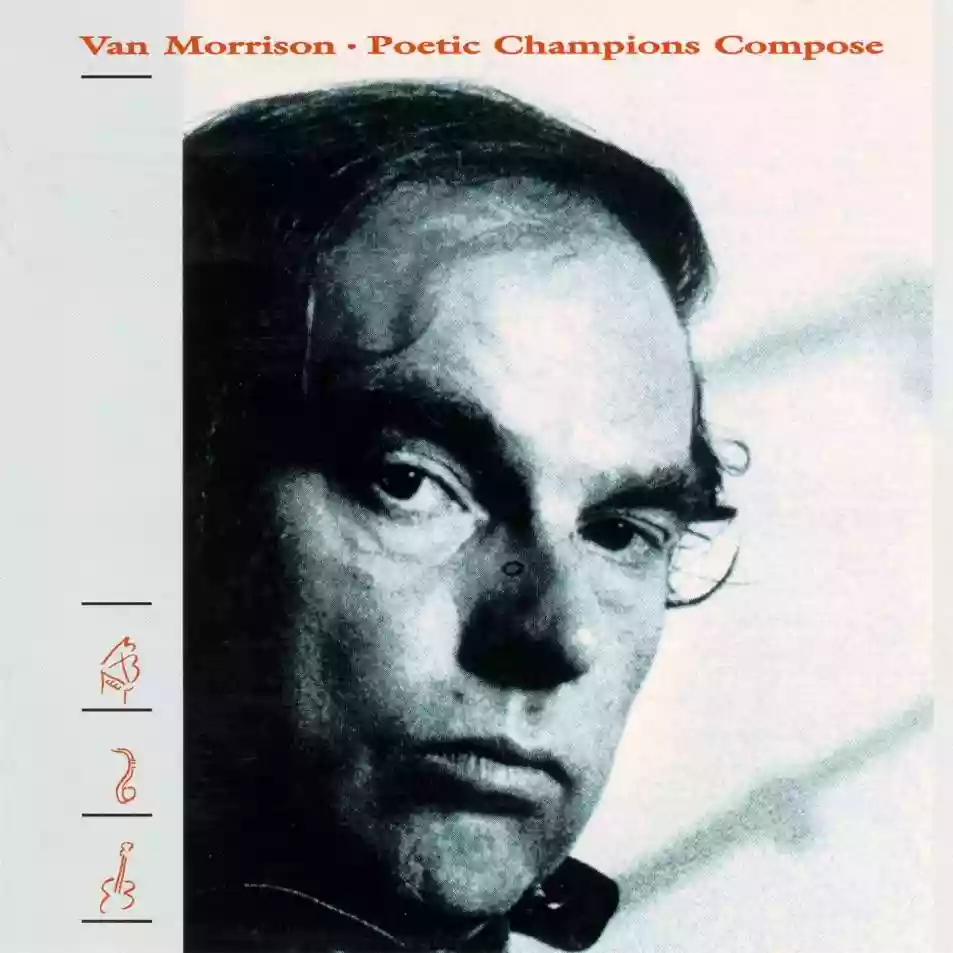
A harsh, sharp, tremendously essential expression reveals - right from the cover - a physically mature man still tormented by endless existential doubts.
Van's face, prominently displayed on almost all the sleeves of his work, cannot help but be familiar to us: starting from the mystical-psychedelic ecstasy of "Astral Weeks," through the intense gaze of "Moondance," the rapture of "St. Dominic's Preview," the poignant nostalgia of "Veedon Fleece," the decisive and perfect cut of "Into The Music" - every melodic piece of this great Irish heart has always been accompanied, sealed, completed by images of incredible communicative power.
It almost seems like we know in advance what awaits us, by intuiting with a single glance which phase of Our man's endless inner search we are about to approach. This is why a certain fear accompanies the first contact with this lesser-known and, as usual, potentially hostile album: never had Van The Man displayed such a dry, impenetrable, ruthless gaze as in "Poetic Champions Compose" (1987).
We are at a decisive moment in the career of the Celtic bard: the Irish phase, rich in its own way of hopes and expectations, generous with lyrically extremely happy moments (one above all: "Cleaning Windows"), has recently found its apogee and concurrent decline in the new mystical-existential exploration of the extraordinary "No Guru, No Method, No Teacher" (1986) - of which "Poetic Champions Compose" is a disconsolate, bitter continuation. We are faced with a man now aware that every truth, every definite point is always subject to discussion and challenge. And these pages, with an intensely explanatory title (subtle, painful irony on the presumed truths wetting the pen of "champions of poetry") are a tremendous accusation of naivety that Van inflicts upon himself and at the same time a ruthless monument to existential doubt.
The instrumental opening of "Spanish Steps," an extraordinary atmospheric jazz song, is the most poignant thing Van has gifted us since "Fairplay," with the only difference that here the words, now empty concepts, are replaced by the vibrant and dramatically romantic cry of an alto sax. If the search for love was in vain, then why not "let ourselves go into the mystery," to rely on the consolation inherent in every indeterminate dimension, our Man suggests in "The Mystery"? Only to then plunge again into the harrowing awareness of what is missing and should be there: "Sometimes I Feel Like A Motherless Child" is the chilling title of a splendid lament of love in which the artist even stops analyzing and simply calls for help. Just as instead the extraordinary "I Forgot That Love Existed" has no equal in exploring the reasons that have led to this absurd heart atrophy, this paralysis of life itself. If the sweet "Queen Of The Slipstream" is another moment of detachment, of hope and renewed dreams of emotional fulfillment, the most incredible piece is surely that "Someone Like You" about which one could easily write a book. Seemingly just a good warm and smoky jazz-pop song (like almost the entire album, one of the artist's most jazz-leaning), it is perhaps the centerpiece of this phase of Van, the perfect synthesis of a disenchanted romanticism that no longer seeks answers in reality, but comfortably slips into mere satisfaction of the imagination; an imagination that is content with the idea of "having searched all my life for someone like you," meaning by "you" not the concreteness of a female figure, but the portrait the man-artist has always had of her.
"Poetic Champions Compose" is an album musically sweet, varied, a friend of atmospheric jazz as well as Celtic folk, but thematically challenging and intensely deep, a portrait of a man perpetually at the edge of alienation, consumed by the sickness of love, always uncertain whether he wants to heal from it or not ("Did Ye Get Healed?").
Loading comments slowly
Summary by Bot
Poetic Champions Compose is a mature, jazz-leaning album by Van Morrison filled with existential reflection and emotional complexity. The review highlights the intense and sometimes harsh themes of doubt and love's disappointments, balanced by musical sweet melodies blending Celtic folk and atmospheric jazz. Key tracks like 'Spanish Steps,' 'Someone Like You,' and 'I Forgot That Love Existed' stand out as profound explorations of the artist's inner landscape. The album marks a pivotal point in Van Morrison’s career, emphasizing spiritual depth and poetic irony.Tracklist Lyrics Videos
Van Morrison
Van Morrison (born George Ivan Morrison) is a Northern Irish singer-songwriter and musician known for blending rock, folk, blues, jazz and soul across a long career beginning in the 1960s.34 Reviews
