
 •
Rating:
•
Rating:
THE REVIEW
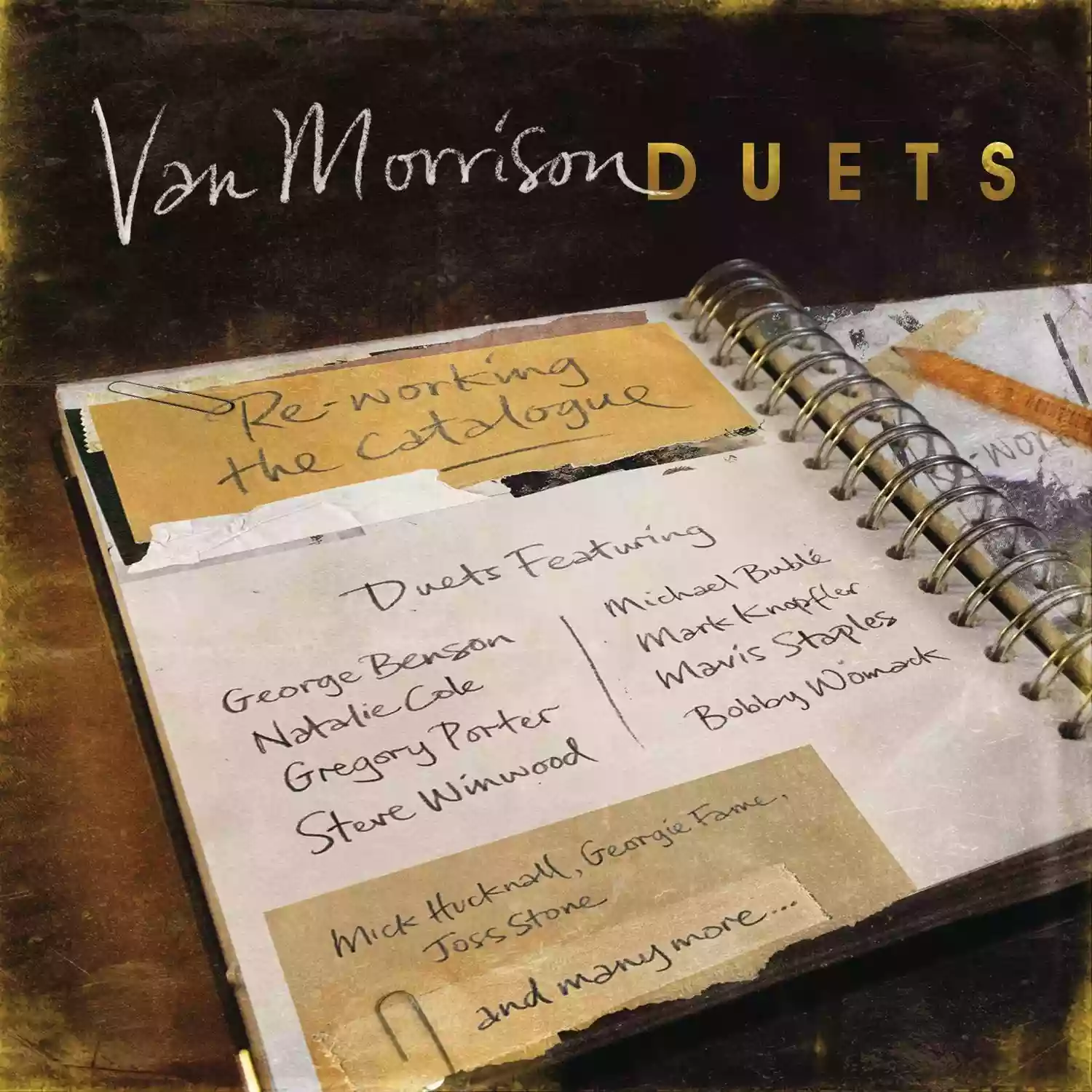
If you're Van Morrison and you make an album like «Duets: Re-working The Catalogue», you're taking quite a risk, and you're aware of it.
One, because nowadays the noble art of the duet is prey to the worst chancers ever to have graced a stage.
Two, because you decide to revisit your less acclaimed repertoire, so no «Brown Eyed Girl», no «Astral Weeks», skipping over «Moondance», «Listen To The Lion» as if it didn't exist.
Three, because if I read on the cover that Joss Stone, Mick Hucknall, and Michael Bublé are also duetting with The Man, I do the math and tell myself that in recent years the redhead hasn't accomplished much, actually, and this lineup is a sign that the phase of decomposition has begun and I'd better stay away.
But I've never been good at drawing conclusions, and since I have a great affection for Van, in the end, I bought «Duets» and I'm glad I did. Now I'll explain why.
Because in «Duets» almost everything works, and what doesn't work you can already imagine.
It doesn't work – it never has – Joss Stone. «Wild Honey» seems to be a minor track of Van's, and certainly, Stone is not the one to lift its fate. On the contrary, I fear it ends up sinking it, resulting in me wanting to listen to the original that I don't know, so I rush to YouTube, listen to it, and it confirms my fear. Joss Stone: failed.
The same fate for Mick Hucknall, even if «Streets Of Arklow» is a beautiful piece, but only thanks to Van; poor Mick, whether he's there or not, doesn't change the essence, and his presence compared to Morrison is thinner than tissue paper. Mick Hucknall: failed.
That's where what doesn't work ends: two tracks out of sixteen, not bad.
Now comes the beautiful part. In these cases, the beautiful part is when a track that I've never liked or always left me indifferent is transformed into a gem; or a track that I already appreciated ends up being appreciated even more.
Going in order …
There are surprises inside «Duets».
Let's put it this way: euphemistically, «Born To Sing: No Plan B» disgusts me moderately, I've listened to it a few times, never bought it, and Van will understand me. However, the current version of the title track in the company of Chris Farlowe isn't half bad. I might even listen to that album again and perhaps change my mind!
There are many beautiful songs inside «Duets».
Above all, «Higher Than The World» with George Benson and «Fire In The Belly» with a superb Steve Winwood, and when it's said that class isn't water, it's not always a cliché; just as it's not a cliché that good blood doesn't lie, so «Rough God Goes Riding» with his daughter Shana has its own reasoning, and even more than one.
There is healthy fun inside «Duets».
«Whatever Happened To PJ Proby» (guess with whom), «The Eternal Kansas City» with Gregory Porter, and especially «Get On With The Show» with Georgie Fame – someone who long ago could have been as famous as Van but didn't make it though he would have deserved it – are bits of carefree blue-eyed soul as only Van can make, and it makes one wonder what could have happened if Jackie Wilson were still among us: there would have certainly been an electrifying «Jackie Wilson Said» Van and Jackie wouldn't have spared us, and even St. Peter would have temporarily closed the gate to let loose on any dance floor up there.
There are beautiful songs inside «Duets».
For example, «Some Peace Of Mind» with Bobby Womack and «If I Ever Needed Someone» with Mavis Staples.
Let's put it this way, Bobby and Mavis are so good they don't look out of place next to Van, and it feels like listening to some outtake from the good Marvin Gaye or the entire Staples family, with many greetings and affection to the late Roebuck “Pops”.
There are more than beautiful songs inside «Duets».
«Irish Heartbeat» was a marvel from the first collaboration with the Chieftains, but the rereading, moreover faithful, together with Mark Knopfler leaves one speechless. Van is always Van; then it will be Mark's touch or the sensitivity for the green hills of Ireland that over recent years has nurtured him with unsuspected inspiration; be it what it may, listening to it is enough to leave one speechless.
Then Taj Mahal arrives and starts «How Can A Poor Boy?». A slow, dark blues as murky as the waters of the Mississippi Delta. Van lets his friend take the spotlight, and such a harmonica solo hasn't been heard since the times when Muddy Waters roamed with James Cotton; then Van remembers his past with Them when he was grinding rhythm and blues and pulls out another guitar solo that's worth noting. A stunning piece, and it goes on for about seven minutes of pure and simple pleasure.
Summing it up, inside «Duets», there are plenty of reasons to prompt you to take out your wallet.
Then there's me as well, and I suspect I no longer understand a damn thing.
Because Michael Bublé may be an innocuous fool, but a track like «Real Real Gone» is a burst of life and joy more northern than blue-eyed soul, which could impetuously leak out from the precious grooves of «Tupelo Honey» or «Saint Dominic’s Preview», and thank goodness the soul resonates again as God commands, with a rhythm section that hammers properly and a horn section that pumps and resounds grandly. And when in the end, Van and Michael launch into a brief improvisation, it almost seems to hear the thoughts of the two, so this guy's not bad, I thought he was half-assed but... you thought I was just a fool, right? But I do it only for the money, because if I always had to make music like tonight, there's no way I could afford the limo and the penthouse in Times Square!
Maybe I've never been good at summing things up, but I'm starting to look at Bublé with different eyes.
Great album, «Duets», really.
Loading comments slowly
Summary by Bot
Van Morrison's 'Duets: Re-working The Catalogue' takes the risk of revisiting lesser-known songs with a variety of guest artists. While a few collaborations fall flat, most tracks shine, especially with performances by Steve Winwood, George Benson, and Mavis Staples. The album delivers soulful reinterpretations and fresh energy, making it a rewarding listen for fans and new listeners alike. It’s a bold project that ultimately pays off with moments of genuine musical brilliance.Tracklist Lyrics
01 Some Peace Of Mind (00:00)
02 If I Ever Needed Someone (00:00)
03 Higher Than The World (00:00)
04 Wild Honey (00:00)
05 Whatever Happened To Pj Proby (00:00)
08 Streets Of Arklow (00:00)
09 These Are The Days (00:00)
10 Get On With The Show (00:00)
11 Rough God Goes Riding (00:00)
12 Fire In The Belly (00:00)
13 Born To Sing (00:00)
15 Real Real Gone (00:00)
16 How Can A Poor Boy? (00:00)
Van Morrison
Van Morrison (born George Ivan Morrison) is a Northern Irish singer-songwriter and musician known for blending rock, folk, blues, jazz and soul across a long career beginning in the 1960s.34 Reviews
