
 •
Rating:
•
Rating:
THE REVIEW
Is it still necessary to repeat that Uriah Heep is often forgotten and underestimated in the early '70s hard rock scene? That it's not just a triangle formed by Led Zeppelin, Black Sabbath, and Deep Purple, but a quadrilateral where Uriah Heep holds the same importance as the other three? That they are not mere imitators of Deep Purple, even though their rehearsal room was next to theirs? That Mick Box is not Jimmy Page and Ken Hensley is not Jon Lord but when it comes to composing music, they are unmatched? No, there was no need to repeat it, but reiterating the concept never hurts.
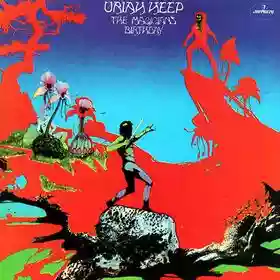
1972: a year of grace for Uriah Heep. After the immense success of the masterpiece Demons And Wizards and a hit like Easy Living, they release the second and last chapter of the so-called "mystical" period. The Magician’s Birthday indeed closes what began with D&W, with a new handful of extraordinary songs. A wonderful album in which you navigate through fantastic and distant worlds, also thanks to a legendary cover designed by the prog super artist Roger Dean.
Sunrise begins with the ear-splitting choruses of the late David Byron, forget New Trolls!!! An exciting piece, followed by the nice rhythm of Spider Woman, which is a taste of those lighter bits that would follow in subsequent albums. The acoustic guitar played by keyboardist Ken Hensley in Blind Eye is magical, with Mick Box's electric guitar creating a unique melody. The version with Ian Anderson's flute in the more recent Acoustically Driven is beautiful, although Bernie Shaw is not half of David Byron. Byron himself moves with his singing in Rain, showing that he was one of the best singers of the '70s. Echoes In The Dark is another great classic from the band and whoever noticed knows the work done by New Zealand bassist Gary Thain in this song, famous for his melodic bass lines. Sweet Lorraine features a nice synthesizer and drummer Lee Kerslake plays like a train. Tales is perhaps the most beautiful track on the album: mystical, mysterious, acoustic, with a simple but perfectly fitting chord change. And how can we forget The Magician’s Birthday? From the verse with that fantastic electric guitar to the chant with Kerslake's kazoo solo in the background, not forgetting the mammoth battle between guitar and drums in the middle section, it's one of the band's most inspired moments. A piece that worthily represents a whole album.
I recommend everyone the 2003 edition, cardboard-cased, with 9 bonus tracks and a well-curated booklet with photos and comments from the band members. After this album, a celebratory live album is released and then Uriah Heep slightly veers towards a lighter rock, while still maintaining respectable levels. But the "mystical" period of 1972 and its two albums remains inimitable!
Loading comments slowly
Summary by Bot
This review highlights the significance of Uriah Heep in the 1970s hard rock scene, emphasizing that they stand alongside iconic bands like Led Zeppelin and Deep Purple. The Magician’s Birthday is praised for its mystical theme, powerful vocal performances by David Byron, and standout tracks featuring intricate guitar and keyboard work. The reviewer also recommends the 2003 edition with bonus content, marking the album as an essential listen. Overall, the mystical period of Uriah Heep remains unmatched in rock history.Tracklist Lyrics Videos
Uriah Heep
English rock band formed in 1969, led by guitarist Mick Box; notable for 1970s hard/progressive albums, Hammond-driven arrangements and close vocal harmonies. Continued recording and touring across decades with multiple lineup changes.32 Reviews
