 •
Rating:
•
Rating:
THE REVIEW
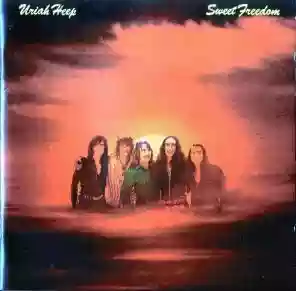
Year of our Lord 1973, the Uriah Heep, despite repeated attempts by critics to bury them, are starting to reap the rewards of intense work (6 albums in 3 years), the '72 has given birth to two true masterpieces, and from the following tour, one of the best live albums in the history of hard rock was drawn. Quite a few bucks begin to circulate, and the tax demands, according to our favorites, become quite hefty, prompting them to cross the Channel and record in France. The chosen studio (Chateau d'Herouville), despite its medieval appearance, seems to be cutting-edge. In reality, as the Jethro Tull would also discover, the futuristic (for the first time, our guys recorded on 24 tracks) machinery mocked the sound engineers by creating a thousand problems. Add to this the discomfort of forced distance from home, the precarious condition of a Hensley recovering from hepatitis, and also the need for a band that hasn't paused for a moment since '70 to catch their breath, and you have all the ingredients: ladies and gentlemen, here comes the decline.
Having exhausted the premises, let's move on to the album. It opens with the beautiful "Dreamer", beautiful and rhythmic, then we have one of the band's classics: "Stealin'", led by a Gary Thain in great shape (when wasn't he?). We reach the central part which is, in my opinion, the weak point of the album: the sequence "One Day", "Sweet Freedom", and "If I Had The Time" results a bit monotonous. The title track is a very beautiful piece, with Thain, as usual, not stopping for a moment, his fingers running up and down the bass churning notes (it's not that the rest of the group does nothing, mind you, but let's give Gary what is Gary's), yet the other 2 tracks follow the same false line without too much imagination, which makes it somewhat boring. We then reach the urgent "Seven Stars", followed by the sweet and melancholic "Circus", which with its simple structure and without too many overdubs (like "One Day" and "If I Had The Time") shows us another side of the Heep. In the latest albums, it was decided to end with a mini-suite, the splendid "The Spell" and "The Magician's Birthday", and here there's no lack of the final piece: "Pilgrim". The attack is dominated by Ken Hensley's gothic keyboards, which then softens to give way to Box's bass and wah-wah, while Byron warms his throat describing us the pilgrim of the title. After 2 verses, a pause is taken, and then Kerslake starts pounding worse than Tyson in one of the hardest passages ever recorded by the band, embellished by a solo from a never-before-so-angry Box. The singing then resumes in a crescendo that only a singer of Byron's level could manage to handle, ending with a final gallop where the guys challenge each other to see who makes the most noise.
In conclusion, it is a very beautiful album (3.5/4 stars) but not at the levels of its predecessors, there's a certain tension that permeates the entire work, and it lacks the freshness and variety that rendered the albums of the previous year immortal. The work on "Demons And Wizards" and "The Magician's Birthday" had already been penalized by the assembly line pace imposed by manager Gerry Bron, but the charge and enthusiasm managed to give that something extra that is still felt today. Unfortunately, however, the miracle did not succeed a third time, the continuous pursuit of success (read dollars) was draining the energy of a group that, managed better, could have gone down in history as the best hard rock band of the '70s. Instead, by now this lineup, definitely the best in the nearly forty-year history of the Heep, was running out of time. Thain was increasingly addicted to heroin and would die a year later; Byron, not to be outdone, had turned to alcohol, which would lead to his expulsion from the group first (1977) and death later (1985). The band has reached the present day with many lineup changes and a discography with many ups and downs, but the magic of the early years is lost, leaving too many regrets.
Loading comments slowly
Summary by Bot
Sweet Freedom, Uriah Heep's 1973 album, presents moments of brilliance like 'Dreamer' and 'Stealin’' amidst some monotony and tension. Recorded under difficult conditions, it signals the beginning of the band’s decline despite the lineup's strong performances. The album captures a band stretched thin by relentless work and personal struggles, producing a solid but less inspired record compared to their previous masterpieces.
Uriah Heep
English rock band formed in 1969, led by guitarist Mick Box; notable for 1970s hard/progressive albums, Hammond-driven arrangements and close vocal harmonies. Continued recording and touring across decades with multiple lineup changes.32 Reviews
