
 •
Rating:
•
Rating:
THE REVIEW
It is a twilight album, the last great album from the Heep, somewhat like "Going For The One" by Yes (which, coincidentally, is from the same year).
1977, Uriah Heep have freed themselves under the pretext of David Byron's alcoholism, a vocalist of immense capacity, perhaps even more skilled than Gillan in handling impossible high notes. To try and repair the gap left by David's absence, Uriah Heep decided to find a new singer, one who does not make them regret the previous one and who pushes the band towards new shores: the bitter task of filling the absence of Byron falls to John Lawton, a "strange object", coming from the German band Lucifer's Friend; strangely enough, Lawton wears makeup when he performs, but even more surprisingly, he has an amazing voice that, for a moment (1977-79), manages to overshadow Byron himself, technically perfect and powerful at just the right level.
The album, which presents weak points as we shall see later, opens with "The Hanging Tree": synthesizer, superlative singing, driving rhythm, the Heep are back in great form. It continues with "Been Away Too Long" which contributes to giving the album that night, epic and twilight atmosphere: a great piece. With "Who Needs Me" comes the first weak point, as it seems a bit of a filler, with that carefree rhythm; however, a nice guitar solo and the usual impeccable singing of Lawton grant it a certain dignity.
The fourth track "Wise Man" is a melodic masterpiece where John’s powerful and dynamic vocals culminate in a final solo that is breathtaking. After such beauty, the three minutes of "Do You Know" are placed, the real weak point of the album, a light rock piece that doesn't really stand out, with lyrics that are strikingly banal: being the only flaw, it can be forgiven, considering that from here on the album literally ramps up.
A synth with glide introduces us to "Rollin On", a very peculiar and watery track that halfway through leads to a beautiful dreamy electric solo, the kind only Uriah Heep can do: the song ends with a reprise of the initial theme. And so it is that we reach "Sympathy", a simple yet fundamental song, the Heep’s trademark with John Lawton: it is in this track that the new vocalist can finally unleash his great skills as a "castrato", offering us another unforgettable moment.
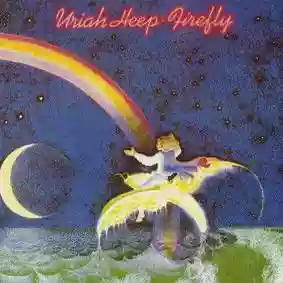
The same String-machine recently purchased by Genesis has the task of weaving the intro of the album's absolute masterpiece: "Firefly". A fantasy narrative often sung in multiple voices and a dreamlike atmosphere that recall exactly the image on the cover are the winning formula: as usual, midway through the song there's the intrusion of a more powerful piece which slowly returns to the enchanting lake of the main theme.
This album is the last erection of Uriah Heep, who shortly thereafter fell into absolute creative impotence, remaining a good band, one album every 2-3 years and nothing more. The Lawton effect lasted for the next two albums, but then with his departure, the Heep deflated on their own seeds, waiting for new seeds to cultivate in that vast field that is rock. We eagerly await their new Ejaculation.
Loading comments slowly
Summary by Bot
Firefly, released in 1977, is considered Uriah Heep's last great album, marked by John Lawton's impressive vocals following David Byron's departure. The album features a mix of epic and melodic tracks with some weak moments, but overall it remains a powerful classic in their catalog. Songs like "The Hanging Tree," "Wise Man," and "Firefly" showcase the band's creative strength. Despite later decline, this album stands as a memorable high point.
Uriah Heep
English rock band formed in 1969, led by guitarist Mick Box; notable for 1970s hard/progressive albums, Hammond-driven arrangements and close vocal harmonies. Continued recording and touring across decades with multiple lineup changes.32 Reviews
