
 •
Rating:
•
Rating:
THE REVIEW
The first time I heard Das Lied Von Der Erde I called myself an idiot.
I liked the title, what can I say. The Song of the Earth.
I go, buy it, put it on the CD. Bernstein edition.
Idiot, idiot, idiot.
Mahler, you've read that he's so good, beautiful, intelligent, comes after Wagner. Wagner pisses me off. This at the first piece.
When - with enormous willpower I got to the last piece, Der Abschied - I decided.
In the following three years, I poured all my energy into acquiring every single thing Mr. Gustav had composed, even just in the bathroom.
Then - one bad day - right around Dobbiaco, I procure a piano concerto, I think (don't make me make the effort to turn around and look, please), written by a fourteen-year-old Mahler. And I sink into the abyss. Because I have everything, absolutely everything that the Lord of Kalischt has written.
And the question - simple and terrible - is: what the hell do I do now?
Years later the simple answer would come: get passionate about jazz (but that's really another story, and of course, I didn't do it on purpose). There you never finish, you can't finish.
But that was many years later.
In the years of despair, instead, I try to get passionate about precursors and followers. I quite like Schoenberg, but I crash on Wozzeck by Alban Berg. I'm sorry and ashamed to say it, but I think of this opera what Fantozzi thought of the battleship Potemkin.
Boh, all this is truly a parenthesis, one of many.
The year is 1999, don't ask me how I know, but I do. I don't go into a record store. I have things to do. My goodness what a struggle, I must stay absolutely neutral and not open a thousand brackets that come to mind (I could even tell you the exact day, but that's enough).
Someone comes, holding a disc. Says it says Gustav Mahler on it and you don't have it.
First reaction: damn the last time you gave me such a gift was in 1984. January 15th. That day the Great Snowfall of Milan began. (My goodness, how hard it is to talk about this record without talking about myself).
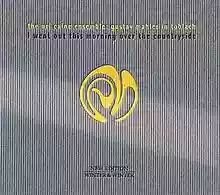
It's a record by Uri Caine (but who the hell is he?) titled Gustav Mahler Live in Dobbiaco.
We get home, I put it on. I hear the first piece. I love it. It IS CLASSICAL MUSIC. It is Mahler, not remade pedantically. It is his soul, his heart speaking. It's very different, and it's exactly what he wanted.
The last piece of this double masterpiece is called The Farewell. And it is Der Abschied. It starts with a long song in Hebrew. Ends with a thank you to a certain DJ Olive.
When I started writing reviews on this damn site I made a rule for myself. Never listen to what I reviewed. Never review things I was listening to.
I broke the rule.
Like every single time, like in every single version of this Wonder I am crying.
It is the song of goodbye.
I feel sorry for you, if you don't know it. In this or any other version.
Go screw yourselves. (at least for half an hour).
Farewell.
Loading comments slowly
Summary by Bot
The reviewer shares a deep, personal journey from initial confusion to profound appreciation of Mahler's work. Uri Caine's album is praised for its soulful reinterpretation that honors Mahler's spirit while introducing jazz elements. The review highlights the emotional power of the music and the unique experience it offers listeners. It’s a heartfelt recommendation to explore this innovative classical-jazz fusion.
Uri Caine
Uri Caine is an American pianist and composer from Philadelphia known for fusing jazz improvisation with classical repertoire and klezmer traditions. Celebrated for bold reimaginings of Bach, Mahler, Beethoven, Wagner, and Schumann, he records widely for Winter & Winter and has collaborated with John Zorn on the Masada ‘Book of Angels’.08 Reviews
