
 •
Rating:
•
Rating:
THE REVIEW
In 1991, Jay Farrar and Jeff Tweedy had not yet learned to dress fashionably or pose properly in promotional photos, in other words, to go with the flow while the wind was strongly blowing in different directions. There were hordes of almost-adult boys fully embracing their sadness while someone else had managed to transfigure it into coolness, but we've told that story many times, and it doesn't seem necessary to repeat it here. What matters are the disheveled faces, those bewildered looks, and those worn-out clothes (not for fashion, but out of necessity) that you can't help but notice when you come across one of their vintage photos. They were out of time, emerged from who knows where. But their misplaced expressions at the wrong time did not denote a lack of awareness of where they were or what they were doing, quite the opposite, there was in their eyes a total devotion to the life they had chosen and the music that would inevitably follow. After all, when you choose such precise icons, though utterly useless in that America, you already know which side of the road you'll continue your journey.
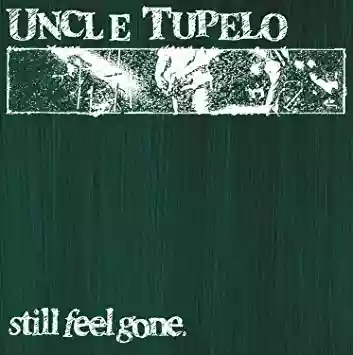
It's only natural, then, that their second album was a solitary journey heedless of what was happening around. Uncle Tupelo had developed a peculiar style from the start: some have described it as "Gram Parsons-meets-Minutemen", and if you’re the type who needs just a few points of reference to frame a band, well, here you go. Still doubtful? The blistering, angry D.Boon, a personal love declaration full of starts and stops and acid guitars, present on this album, should convince even the most skeptical. And who else would have titled a song after an unknown guitarist who died seven years earlier in a broken-down van in the Arizona desert?
But it’s known, Jay and Jeff were honest guys, and above all, they were great friends, practically brothers. They grew up together in the Belleville of the '70s, with the single desire to run away. We can hear them here, as never before and for the last time already, intertwining lives, guitars, and voices in songs that are moments of spiritual confession to cleanse the soul, with a voice coming up scratching and seemingly never enough to say what needs to be said. In their best moments, when the catharsis between the studio and stage was at its peak, these three guys (there was also Mike Heidorn) managed to sublimate that kind of country exercise, what might initially seem like their music - however inlaid with the restless electricity animating their lives - through total immersion in the purest feelings that only a 20, 25-year-old can know, today as then. True to life, really: in hindsight, it is easy to understand why that magnificent adventure could not have continued for long.
Yet, in this album, the sense of dynamics, that alternation of soft and loud so difficult to master, the result of hours in the rehearsal room and even more guzzling two-dollar beers on infamous stages, well this compactness (if we were talking about a jazz combo we would call it interplay) is more present than ever. Manifesting it is the explosive opening of Gun, but also a track like Fall Down Easy, the emotional peak of the album, first electric ballad, sweet mandolins and banjo later, thundering catastrophe in the finale – Mike Heidorn’s drums never so powerful, never so desperate, almost foreshadowing the end that was about to arrive. The dichotomy is nonetheless already quite evident, Jay adopting the role of leader and managing to give a face to that generational malaise that was suffocating the just-born, yet already old, X Generation, but doing so by illuminating its less heroic side: stories of solitude and escape, or perhaps of the usual companies, alcohol and cocaine, told with protagonists who are often young not even and have never been. Only he could have sung “what has this life in this town done for you in fifty years,” with that voice belonging more to an old folk singer with at least 30 more years of life than to a 26-year-old. Jeff instead sings of personal pains and anxieties that sometimes verge on the solipsistic (“this is not written for anyone in particular, it’s about me,” he growls in D.Boon), but when he manages to elevate them to universal reflection, like in If That's Alright - which pairs with the equally sweet Still Be Around from the big brother - here we have Uncle Tupelo traversed by that mystical fluid that united the existences of Gene Clark, Gram Parsons, and Johnny Cash. Certainly, Tweedy’s oblique tightrope walking pales in comparison to Farrar’s overwhelming presence in the long run, although here the album's opener is his, but overall there were few at the time who would have managed to foresee the oblivion in which Jay has fallen today and the commercial and critical success that Jeff has rightly reached over the years. For instance, on Belleville's Wiki page, at the top of the "notable people," you find Jeff Tweedy, certainly not Jay Farrar. Obviously.
Midway through the album, two other gems: Punch Drunk, a furious trio that fully absorbs the Minutemen's lesson and anticipates math rock by a few years, playing in the dust of a railway car in the middle of the Arizona desert, and the impetuous Postcard, a rewrite of Graveyard Shift that unfolds between assault hard rock, guitars stolen from a "Zuma" session, and heavenly harmonies à-la Flying Burrito Brothers.
The album also features Gary Louris of the Jayhawks on a couple of tracks, another old friend of the band. And in the 2003 edition bonuses appears, a bit surprisingly, the cover of I Wanna Destroy You by the Soft Boys: Uncle Tupelo's uniqueness evidently did not lie solely in that original mix of modified country, but in the end, it all comes together.
Not the best album, for that turn to the acoustic minimalism of "March 16-20, 1992" or the rural epicness of "Anodyne"; certainly the most important for this little-known yet legendary trio.
«And the bar clock says three a.m
Fallout shelter sign above the door
In other words, don’t come here anymore»
Loading comments slowly
Summary by Bot
Uncle Tupelo's second album, Still Feel Gone, is a heartfelt and raw exploration of alt-country fused with punk energy. The review highlights the band's honest emotions, distinctive style, and the deep friendship between Jay Farrar and Jeff Tweedy. Noted are the dynamic instrumentation and the thematic depth reflecting a generational malaise. Though not their best work, it remains a crucial, pioneering record in the band's legacy.
Uncle Tupelo
Uncle Tupelo were an American alternative country band from Belleville, Illinois, active from 1987 to 1994. Led by Jay Farrar and Jeff Tweedy, they fused punk energy with country and folk traditions across albums including No Depression (1990), Still Feel Gone (1991), March 16–20, 1992 (1992), and Anodyne (1993). After the split, Farrar formed Son Volt and Tweedy co-founded Wilco.03 Reviews
