
 •
Rating:
•
Rating:
THE REVIEW
Well, one thing we can certainly say, or rather shout, is that Ulver is the most eclectic band in the world. Because we could expect anything, anything but Ulver confronting the cheerful and floral psychedelic season of the legendary sixties, like the Jefferson Airplane, just to name the symbolic band of the period. But even in the “sixties song” format (“song” so to speak, given the historical value of the covered artists), and thus light-years away from the moods they have always professed, even in analog format, Ulver convinces.
“Childhood's End” is therefore a cover album, resulting from two different live recording sessions, one in the fall of 2008 and the other in the summer of 2011, but with a good production job downstream that polishes the voices, blends the sounds, and sets instrumental refinements in a sound mosaic worthy of the artistic maturity achieved over time by the Norwegian combo. Nothing happened in the meantime, except for the release of that half misstep that was “Wars of the Roses”, the first Ulver album that failed to amaze and still does not convince.
Paragraph break, we start again: the Norwegian trio (now no longer a trio) also relies on the contribution of that old fox Daniel O' Sullivan (formerly of Guapo, already a collaborator of people like Coil and Kristoffer Rygg – aka Garm – in the formidable Aethenor of Stephen O'Malley) who is already rumored to be the fourth official member of Ulver.
Ulver changes skin once again, shedding the minimal/electronics mantle that seemed to be the ultimate expressive paradigm and start playing with rock! And if there is electronic, it remains well hidden.
The paradox is that nothing is surprising in this album, even though in theory, there would be much to be surprised about. “Childhood’s End” indeed suffers from a dual sense of déjà-vu: on one hand, “the already heard” brought by sounds that, like it or not, have entered us and are irretrievably part of our DNA; on the other hand, “the already heard” of the Ulver themselves, who remain themselves, with their strengths and weaknesses, as if changing the mask, but the light source behind it projecting different images onto the wall was of the same nature and intensity.
A paradox explained by the fact that Ulver's work clearly does not intend to be a work of transfiguration aimed at transforming the covered material. But not only: the Norwegians execute their nostalgia operation with sobriety and naturalness, but with so much sobriety and naturalness that everything flows very smoothly, in a completely predictable way, and only multiple listens will reveal the secrets hidden, layer after layer, behind the apparent lack of ambitions of this new mission. The pieces, in fact, are not upended, as one well might expect, so much so that it ends up establishing a difficulty of judgment that has the unsettling flavor of subjectivity: seen through the eyes of an enthusiast of certain sounds, “Childhood’s End” will probably appear as an anonymous folding of that vitality and energy that animated the glorious times that were, despite the selection of artists and tracks being done with the taste of a fine connoisseur, leaving the counting of the few known names and titles to the fingers of one hand.
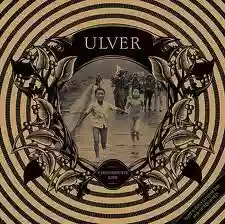
But Ulver’s is and remains a nocturnal music, this alone is enough to jumble the cards in play, because although here pure and healthy rock is played, a rock sprouted and bloomed on the wave of utopia and political protest, freedom, love, transgression, and the revolution of customs, Ulver’s reinterpretation work, so faithful in form yet profane in concept, brings with it themes of disillusionment and regret, themes already anticipated by the drama portrayed on the cover and confirmed by the title of the work. The end of innocence, like that of youth, runs alongside the pounding rhythm of toms struck by bones exhumed from the prehistoric rock, under a melancholic gaze, which is finally the red thread that links the present to the past of the band.
“Childhood’s End” is indeed a path that ends up honoring the past, yet carrying with it the bitterness of those who know what will happen after (the premises and unfulfilled promises of a generation that wanted to change the world; a world that in the meantime has changed, but alas, not in the hoped-for direction); the disenchantment of one, with a carefree step, sinking into the darkness of our collective conscience: a shattered illusion, this “Childhood’s End”, which opens symbolically with the dazzling “LOVE LOVE LOVE” proclaimed at full lungs in the initial “Bracelets of Fingers” to dissolve equally symbolically into the mystical tones and gloomy ecclesiastical warbles that introduce the unsettling question of the concluding “Where is Yesterday.”
In this bizarre experiment, a constant point is Garm’s voice. It’s Garm’s voice, in fact, the “Ulver element” that guides our path and makes everything unmistakable. Garm: an old friend by now, a presence that has accompanied me since the distant 1995, beyond judgment as old friends are, above and beyond any type of analysis. Garm “is” Ulver and his unmistakable timbre, his oblique setting, his inevitable vocal polyphonies are what make us shout: “Damn, I'm listening to an Ulver record!”, something hardly perceptible given the frenetic succession of these sixteen tracks, two, three minutes each, one after the other, drums, guitar, bass, Hammond, relentlessly, like pouring rain, pouring rain at night, rain hammering (just think of the breathtaking triptych “I Had Too Much to Dream (Last Night)” / “Street Song” / “66-5-4-3-2-1”), rain at times gentle (the nocturnal exploration of “Everybody’s Been Burned”, the spring-like and dreamy “Bark is the Dark”, the poignant and visionary “I Can See the Light”), rain gradually softening, when the night gives way to the morning light, before which they lay down their arms to settle into milder tones and embrace the style of the folk ballad (sixties-like, not apocalyptic, eh?).
And in all this, as always measured behind the microphone, proud of a production that enhances his deeds, aided by an execution speed that sometimes brings him back to the glory of Arcturus, Garm is the monochrome chameleon that tinges the multicolored “songs” of the sixties with blue and azure, where the multi-instrumentalism of O’ Sullivan and the performing skills of a classically/jazz-trained musician like Tore Ylwizaker are certainly appreciated, who since the times of “Themes from William Blake’s ...” has managed to imprint a new and surprising artistic direction to the career of our little wolves, after an honorable past in black & folk sauce.
Even though (another paradox), the sound economy rests on the strong arms of anonymous session members, where the permanent members of the project are given the honor of infusing the rock skeleton with solutions, gems, and diamonds that certainly confirm the musicians’ refinement in the art of arrangement.
So? And so, “Childhood’s End” is yet another great work from Ulver, albeit relegated to the status of an interlocutory episode in a multiform career, an episode that could also open new doors for a path that seems to set no limits. Or, why not?, “Childhood’s End” is yet another prank by Houdini-Garm, a simple friendly joke if you will, but in the end a well-executed and professionally packaged joke.
In one word: friends.
Track-list:
“Bracelets of Fingers” (The Pretty Things, 1968)
“Everybody’s Been Burned” (The Byrds, 1967)
“The Trap” (The Music Machine, 1967)
“In the Past” (We The People, 1966 / The Chocolate Watchband, 1968)
“Today” (Jefferson Airplane, 1967)
“Can You Travel in the Dark Alone” (Gandalf, 1969)
“I Had Too Much to Dream (Last Night)” (The Electric Prunes, 1967)
“Street Song” (The 13th Floor Elevators, 1969)
“66-5-4-3-2-1” (The Troggs, 1968)
“Dark is the Bark” (The Left Banke, 1968)
“Magic Hollow” (The Beau Brummels, 1968)
“Soon There’ll Be Thunder” (The Common People, 1969)
“Velvet Sunsets” (The Music Emporium, 1969)
“Lament of the Astral Cowboy” (Curt Boettcher, 1973)
“I Can See the Light” (Les Fleurs De Lys, 1967)
“Where is Yesterday” (The United States of America, 1968)
Loading comments slowly
Summary by Bot
Ulver's 'Childhood's End' is a polished cover album paying homage to sixties psychedelic rock. Despite being a predictable homage, it showcases the band's maturity and Garm's unmistakable vocals. The album reflects themes of nostalgia and disillusionment tied to the era and Ulver's own nocturnal style. Its faithful yet layered interpretation invites multiple listens to uncover its depth. This release stands as a respectable and intriguing interlude in Ulver's diverse career.Tracklist
01 Bracelets Of Fingers (04:12)
02 Dark Is The Bark (04:03)
03 Magic Hollow (03:15)
04 Soon There'll Be Thunder (02:27)
05 Velvet Sunsets (02:44)
06 Lament Of The Astral Cowboy (02:14)
07 I Can See The Light (03:14)
08 Where Is Yesterday (03:58)
09 Everybody's Been Burned (03:25)
10 The Trap (02:33)
11 In The Past (02:54)
12 Today (03:20)
13 Can You Travel In The Dark Alone (04:02)
14 I Had Too Much To Dream (Last Night) (02:54)
15 Street Song (05:14)
16 66-5-4-3-2-1 (03:22)
Ulver
Ulver is a Norwegian band formed in 1993, widely noted (in these reviews and beyond) for moving from early black metal and folk/acoustic music into electronics, ambient and other experimental directions. Kristoffer “Garm” Rygg is repeatedly cited as the central voice and identity across their transformations.24 Reviews
