
 •
Rating:
•
Rating: THE REVIEW
"Lights Out" had crowned UFO as one of the greats. Yet, the much-anticipated big success can have disastrous effects on a band’s fate.
Add "a sprinkling of cocaine, to keep us on edge," as singer Phil Mogg recently admitted, unauthorized car races down the slopes of Laurel Canyon, and finally a band somewhat full of themselves, perhaps rightly so, given that at that moment they were at the peak of their success and artistic abilities, and the stage was set. The omnipotence complex cannot be attributed to the entire band lineup: while UFO had moved to California, after the triumphant "Lights Out" tour, guitarist Michael Schenker had disappeared.
This only worsened matters: Schenker was found after a few months on the beaches of Spain, swimming with his girlfriend. Only the persuasive work of bassist Pete Way managed to bring him back to his bandmates. Schenker felt oppressed by the exhausting live shows which, coupled with a certain alcohol dependency at the time, resulted in a veritable phobia for the stage and a general insecurity for the blonde Teutonic guitarist. Considering the language barrier (Schenker spoke terrible English), more pronounced at the time of "Phenomenon" but still present as an obstacle, especially since his large personality clashed with the equally large personality of singer Phil Mogg, the picture was almost complete: Schenker clarified that he would return, but only to record an album and play live on the final tour with UFO, at least until 1993.
There was also tension in the studio, exacerbated by producer Roy Nevison, who imposed a strict conduct during recording sessions, which on one hand resulted in the excellent outcome of a record the caliber of "Obsession," but on the other hand highlighted the band's personal problems. Nevison particularly targeted Paul Raymond, the keyboardist/rhythm guitarist, who was criticized by the producer as he considered Raymond a great keyboardist but a poor guitarist, perhaps an overly harsh judgment.
Despite these premises, the album was the best UFO managed to produce, as "Obsession" is still considered one of the best studio works by the band by both fans and critics. Perhaps, musically, what strikes the most is the great energy that emanates from the 11 tracks of this album, in songs like Only You Can Rock Me, Pack It Up (And Go), You Don't Fool Me, One More For The Rodeo, and Hot'n'Ready. But perhaps the most significant element, which adds a subtle brilliance to the album, is the presence of orchestral parts in fantastic slow tracks like Born To Lose and Lookin' Out For No.1, which also has a beautiful instrumental reprise, as instrumental is Arbory Hill, where Schenker plays both acoustic and electric guitar, a glimpse of what would become Tales Of Mystery with his MSG. The song Cherry, where the bass of Pete Way takes the lead in the riff, is also magnificent. Finally, a true protest song where UFO lament the fact that their record company, Chrysalis, had just removed UFO posters from their premises in favor of their new discovery, the Babys by John Waite: indeed, the track is titled Ain't No Baby.
"Obsession" belongs to that category of albums that represent a last bastion, a sort of swan song of an era (in this case Schenker's) of the band, perhaps the most glorious, marked by exquisite execution and a high level of song composition, despite all of the band's personal troubles.
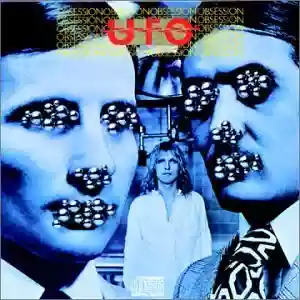
A final word dedicated to the cover, yet another extravagance from Hipgnosis: the band members were taken to an actual operating room, dressed in suits and ties, and asked to tie their long hair into ponytails. Special glue was used to attach metal spheres to their eyes, nose, and mouth, although this version provided by the band has been long doubted and was thought to be more of a photo montage. The sole black sheep of the band is Schenker, who on the cover is depicted without this attire in the middle of Phil Mogg and Pete Way, perhaps symbolizing his imminent departure. On the back are Andy Parker and Paul Raymond. A cover perhaps not aesthetically pleasing at first glance, but certainly impactful, much like the grand "Obsession."
Loading comments slowly
Summary by Bot
UFO’s 1978 album Obsession captures a peak moment marred by internal band tensions, notably Michael Schenker’s struggles and temporary departure. Despite these issues and strict producer oversight, Obsession delivers high energy and powerful compositions, including standout tracks like "Only You Can Rock Me" and "Cherry." The album serves as a poignant swan song for Schenker’s era in the band while featuring memorable orchestral elements and a striking Hipgnosis cover.
UFO
UFO are a British hard rock band formed in London in 1968 by Phil Mogg, Pete Way, Andy Parker and Mick Bolton. Their 1970s run with guitarist Michael Schenker—spanning Phenomenon, Force It and Lights Out—helped bridge space/blues roots to melodic hard rock and influenced the coming heavy metal generation. Signature cuts include “Doctor Doctor” and “Rock Bottom,” and the live Strangers in the Night (1979) is widely acclaimed.10 Reviews
