
 •
Rating:
•
Rating:
THE REVIEW
1984 is a year that must be considered a true turning point in the history of the band from Dublin, mainly for two reasons: it is the year of the Irish quartet's international consecration to the great public, and the second reason is the cause of this success: the release on October 1st of that year of "The Unforgettable Fire".
The immense vocal performance of the band's leader Bono Vox, moving and perfect in singing but at the same time raw and introspective in the lyrics, the guitar at times hard and impactful and at other times delicate and touching of The Edge, the solid and always varied rhythm section formed by Adam Clayton and Larry Mullen Jr. always able to create varied and complex sonic atmospheres, make the album one of the best (if not the best) works of the band. However, one must not forget the added and certainly not secondary component: the immense Brian Eno, who together with Daniel Lanois (in their first collaboration as producers) have a significant impact on the final result.
The Unforgettable Fire opens with the delightful "A Sort of Homecoming" which foreshadows a crescendo of emotions that are realized in probably the most successful piece: "Pride (in the name of love)" which is also the first single extracted from the album. This, together with "MLK" are the two tributes of the band to Martin Luther King. The third track "Wire" is perhaps the hardest and most impactful moment of the entire album, instrumentally driving and with singing consistent with the whole work, intense and predominant; but it is the title track that hits directly to the heart with its incisiveness, inspired by an art exhibition on the victims of the August 6th, 1945 bombing of Hiroshima and Nagasaki.
The two central pieces of the album are instead poignant and enchanting: "Promenade" caresses the listener's imagination with the vocalist's wonderfully fragile singing and the instrumental "4th of July", a concrete demonstration that the other members are not just the background but an integral and fundamental part of the beauty of this work and the well-deserved success of U2, capable of creating a surreal atmosphere that is at the same time melancholic and ethereal. "Bad" is a sad piece about heroin, dedicated to a friend of the singer, which will become one of the most appreciated songs by fans and most played live.
In conclusion, The Unforgettable Fire must be considered the trademark of the band, socially engaged and able to transform thoughts, emotions, and sincere feelings into music. A deep and heartfelt album, without banality and rich in insights, that every good music enthusiast should own in their collection and listen to multiple times to further understand its greatness.
Loading comments slowly
Summary by Bot
The Unforgettable Fire marks a pivotal moment for U2, showcasing emotional depth and musical innovation. Bono's vocals, The Edge's guitar, and a strong rhythm section shine under the expert production of Brian Eno and Daniel Lanois. The album features powerful tributes and ethereal instrumentals, cementing U2's legacy. A must-have for serious music enthusiasts.Tracklist Lyrics Videos
U2
U2 are an Irish rock band formed in Dublin in 1976 by Bono, The Edge, Adam Clayton and Larry Mullen Jr. Rising from post‑punk roots to global fame, they fused atmospheric guitar textures with anthemic songwriting and ambitious tours such as Zoo TV and U2 360°.129 Reviews
Other reviews
By QbProg
In this album, there is more U2 soul than in all the others combined.
The first thing you notice is the evolution of The Edge’s sound — from distortion to a clean, delay-rich tone.
By Alevox
"One of their most beautiful pages is called 'The Unforgettable Fire.'"
"Certainly, the highest moment of the album, and without exaggeration, perhaps also of the band’s entire career."
By Rax
"Spirit of novelty, spirit of stupidity."
"A missed masterpiece that does not reach 'War' in terms of great songs and lacks the care seen in 'Joshua'."
By Brahms
"The unforgettable fire is also this: 'Slide projection, seashore city, Coca Cola, football, radio radio'... the simplicity of small things."
"Few tracks have depicted the dramas of contemporary life like 'Bad'. All supported by a musicality that transmits a mix of epic and dramatic."
By DeArlo
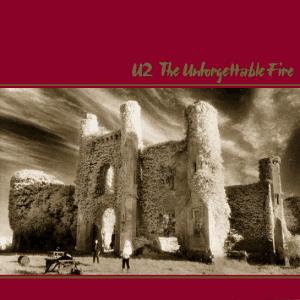
The Unforgettable Fire is a masterpiece, from the melodies to the lyrics to the cover.
Bono himself described the album as 'beautifully blurred,' like an impressionist painting.
