
 •
Rating:
•
Rating:
THE REVIEW
"Black fucking metal" in times of decadence
In the heart of Oslo, in 1993, when Norwegian black metal was at the zenith of its mythical explosion, Tsjuder was born at the hands of Nag (vocals/bass) and Berserk (guitar). The project took shape in the underground demo tape scene and gained notoriety with the arrival of Draugluin, becoming an embryo devoted to the most uncompromising and brutal form of the Scandinavian flame.
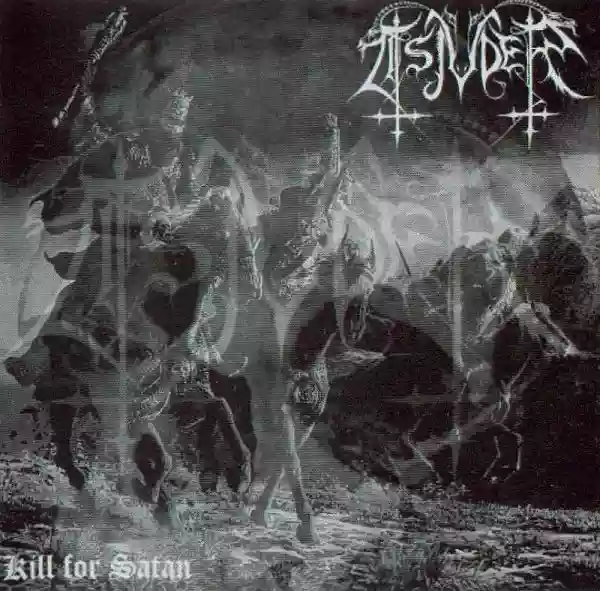
However, Berserk soon left the band, before the recording of the debut album, and the line-up stabilized with Nag, Draugluin, Arak Draconiiz on guitar, and Anti-Christian on drums, with whom they recorded "Kill for Satan", released in January 2000 under the banner of the glorious Drakkar Productions.
When the album came out, the world around had already changed. The golden age of Norwegian black metal was behind: Burzum was on hold due to incarceration; Darkthrone, Immortal, Mayhem, Emperor, Satyricon, Ulver, and Enslaved had already written history between 1992 and 1997. The revolutionary releases and masterpieces had already settled into the memory of the underground. In Sweden, Marduk, Setherial, Dark Funeral, and Dissection had already forged the other face of European black—more technical and, at times, “sharper” in sound. In Finland, Impaled Nazarene and Beherit had done the same, heading in an even more uncompromising direction, and some new second-generation bands had already arisen.
It was a waning phase, marked by symphonic drifts, experimentalism, and the first forms of "mainstream" contamination. But it was also at this stage, precisely in 2000, that Tsjuder decided not to look back, not to “evolve,” and instead to reaffirm—with hatred and blasphemy—the purity of the original gospel.
"Kill for Satan" is a rough, sharp, malignant record: an uncompromising tribute to the most malevolent tradition of Norwegian black, with frenzied rhythms, sparse riffs, and a raw, deliberately unpolished aesthetic, where any form of “modernity” is banned. The tracks are direct, concise, imbued with a warlike spirit, old school monochromatism, and that icy misanthropy that had made the scene great ten years earlier. There is no room for introspection or avant-garde: only hate, ice, and infernal flames.
Nevertheless, the one-way offering—with strong roots in Immortal, Mayhem, Darkthrone, and Ragnarok—of the group sounds inspired and by no means banal, incorporating into their sound a series of rather technical elements which draw—even while adhering to the black flame—from thrash and death metal (including a few touches of growl here and there), enlivening and, as far as possible, making their music even more destructive (the drums are nothing less than a missile).
Undoubtedly, "Kill for Satan" is a historically useless album, presenting a band whose style was already defined—as they would never evolve from these artistic cornerstones—but, beyond being, together with the following two, one of Tsjuder's best platters, it is one of the most spontaneous and violent forms of expression that black metal has ever known.
Loading comments slowly
Summary by Bot
The review discusses Tsjuder's 'Kill for Satan', highlighting its raw, powerful black metal sound. The album is praised for its uncompromising energy and authenticity. The reviewer appreciates the dedication to classic black metal roots. With a 4/5 rating, it is recommended to fans of the genre. The album stands out for its intensity and adherence to the black metal aesthetic.Tracklist
Tsjuder
Norwegian black metal band formed in Oslo, noted for a raw, uncompromising old-school style; key albums include Kill for Satan (2000) and Demonic Possession (2002).02 Reviews
