
 •
Rating:
•
Rating:
THE REVIEW
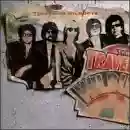
Sometimes it happens that, purely by chance, supergroups are formed. However, supergroups rarely deliver masterpieces; they are a bit like Real Madrid, full of great champions but very poor in team play. In this case, no, the album that resulted may not be remembered as a pure masterpiece, but it will certainly be remembered as one of the most enjoyable and fun rock albums released in the last twenty years.
It happened that George Harrison, riding the wave of good reception for his 1987 album "Cloud Nine," wanted to release a single titled "Handle With Care" and gathered some friends for the occasion, such as Bob Dylan, Jeff Lynne (Electric Light Orchestra), Tom Petty, and Roy Orbison to participate in this single as guest singers and backing vocalists. What came out was a delightful rock-pop song that convinced the five it would be worth insisting and doing something more than just a single. The miracle was that they all committed to writing, and the songs that emerged were among the best work of the period for all five musicians. George himself, prior to the success of "Cloud Nine," had been in an anonymous period where, besides releasing rather mediocre albums, he had turned to film production, not very successfully, to be honest. Roy Orbison had almost been entirely forgotten, despite his fantastic voice. Jeff Lynne had recently dissolved ELO, Tom Petty always maintained the same good levels, while Bob Dylan hadn't published anything good for at least five years ("Infidels," 1983).
"Handle with care," by George, is a beautiful song in which Roy Orbison's splendid voice stands out in the chorus, a piece that talks about reaching middle age, and its title was inspired by a label on a crate in Bob Dylan's garage. "Dirty World," by Dylan, is a sarcastic piece that likely targets Prince. "Rattled" is a kind of rockabilly, and here it's Jeff Lynne's turn. "Last Night" is again by Bob and is surely one of the best pieces to come out of Dylan's pen in that period, with a vocal interlude sung by Orbison.
Roy Orbison then rises to the absolute protagonist in "Not Alone Anymore," a piece in the style of "Pretty Woman," then it's Bob Dylan who dominates again in "Congratulations." "Heading For The Light" is the second single from the album, another airy and sunny song typical of George Harrison's style. "Margarita" is perhaps the least convincing track, perhaps because it is the most elaborate and instrumentally complex on the album.
"Tweeter And The Monkey Man" presents a great Bob Dylan, with a piece that famously mocks one of the idols of the time, Bruce Springsteen, who many considered his heir, with a series of characters and stories written in the Boss's typical style.
The track that closes the album is "End Of The Line," where all five take turns singing, a sunny and optimistic text and airy music like almost the rest of the album.
After this album, all the members of the group regained enthusiasm and the desire to make other good recordings, each enjoying a good career revival, all except one: on December 7, 1988, when it seemed that luck had finally smiled upon him, Roy Orbison passed away from a heart attack. A life marked by misfortunes (in 1966, his house burned down with his family, wife, and children inside) and a career rarely blessed with deserved success. The following album, Volume 3, although it also enjoyed fair success, did not come close to the quality and good humor of this "Volume 1."
Loading comments slowly
Summary by Bot
Traveling Wilburys Volume 1 is celebrated as a rare supergroup success, blending the talents of Bob Dylan, George Harrison, Roy Orbison, Jeff Lynne, and Tom Petty. The album delivers fun, quality rock songs with memorable vocals and clever songwriting. Standout tracks like "Handle With Care" and "End Of The Line" showcase the group's chemistry. Despite Orbison's tragic passing soon after, the album revitalized all members' careers. It remains a beloved rock-pop record from the late 1980s.Tracklist Lyrics Videos
11 Handle With Care (extended version) (05:14)
12 End of the Line (extended version) (05:32)
13 Last Night (demo) (03:48)
14 Congratulations (demo) (03:14)
15 Rattled (demo) (02:58)
16 Heading for the Light (demo) (03:45)
17 End of the Line (demo) (03:20)
18 Handle With Care (demo) (03:17)
19 Dirty World (demo) (02:32)
20 [silence] (00:05)
Traveling Wilburys
A British-American rock supergroup formed in 1988 by George Harrison, Jeff Lynne, Bob Dylan, Roy Orbison and Tom Petty; they released Volume 1 (1988) and Volume 3 (1990) and are best known for songs such as "Handle With Care" and "End Of The Line."02 Reviews
