
 •
Rating:
•
Rating:
THE REVIEW
One of the most beautiful albums of the 60s.
Traffic are remembered for the renowned "John Barleycorn Must Die" (1970), a classic of jazz-rock, but also an album that, personally, I find largely academic and mannerist, centered as it is on solo virtuosity and anchored to the rigid structures of the song form.
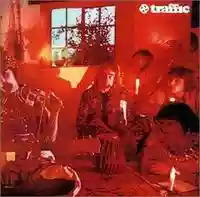
A completely different music, however, in their dazzling debut "Mr. Fantasy", one of the masterpieces of the magical 1967. Here we don’t find endless solos, but a treasure trove of ideas, each more inspired than the last; and there are no conventional verses and choruses, but little gems with an average length of three minutes, changeable, unpredictable, imaginative, and surreal, as only Barrett could do at the time. Certainly, compared to the contemporary "The Piper At The Gates Of Dawn" (to which however "Mr Fantasy" should be paired, for the surrealism inspiring both works), it lacks a good dose of lysergic acid, intergalactic journeys are absent, as well as that sense of latent madness that Barrett camouflaged in graceful scores; in return, we find a great clarity, an uncommon ability to consistently enclose the most bizarre harmonic inventions within narrow spaces.
This irresistible mosaic of sounds, colors, moods is composed of 10 miniatures that feed on the most varied genres circulating at the time: blues, folk, jazz, rock, pop, soul, psychedelia, classical. 10 small architectures as geometric as they are elusive, as solid as they are fleeting.
Traffic were all musicians of great talent, but their leader was Steve Winwood (the one from "Gimme Some Loving" with Spencer Davis). He came from rhythm'n'blues, like all the other British musicians who emerged in the UK in the mid-60s. When he founded Traffic, he brought this heritage into the group’s sonic economy, and the initial results were the sparkling relay of solos in "Giving To You" and, above all, "Dear Mr. Fantasy", perhaps the most celestial blues of the era. It feels like gliding above the clouds: the dominant tone in this serene flight of fancy is not blue, but azure. It is a track in which Traffic proves they no longer want to make the old Stonesian blues, so visceral and voluptuous, but use the "devil’s music" as one of the many ingredients of a sonic recipe that defies any classification. Traffic, after all, are also children of the "psychedelic" mentality, of an attitude to break the banks and barriers between genres. "Dealer" and "Utterly Simple" are their tribute to one of the most frequented territories of the time: raga-rock. Sitar, flutes, orientalisms, exoticisms: recalling the Baronetti of "Love You To".
The elasticity of the band is evidenced by the ease with which they move from the obsessive "Heaven Is In Your Mind", torn by the syncopations of the inimitable Jim Capaldi (one of the most original drummers of the decade) to the sad, impalpable "No Face No Name No Number", a ballad of despondency that, however, gains pathos and redemption in the heartfelt refrain. Pathos that instead floods from the start to the end of the track in "Coloured Rain". But the most delightful Traffic are the fairytale, Barrett-esque, childlike ones of "House For Everyone" and "Hope I Never Find Me There", innocent, Disney-like watercolors capable of anticipating by a year the medievalism of Family.
However, the masterpiece is "Berkshire Poppies": Traffic has arrived at the dessert of their Christmas dinner, they are beautifully full, some are smirking, some are chatting, some are burping... meanwhile, a waltz begins, someone offers to sing, and the others accompany by clinking cutlery on glasses... suddenly, the rhythm changes and a tavern chorus starts, the kind that requires blood alcohol levels above a certain threshold... then everything stops, and a sprawling sax solo bursts forth... and the mayhem ends in general euphoria... Fantastic. If the Butthole Surfers had been born 20 years earlier and had been kept away from the most degenerate life situations (allowing themselves, at most, a little drink every now and then), they would have played exactly like in this song.
Loading comments slowly
Summary by Bot
Traffic's debut album Mr. Fantasy is praised as a 1967 psychedelic masterpiece, defined by imaginative, diverse miniatures instead of lengthy solos. The album showcases a blend of blues, folk, jazz, rock, and psychedelia with uncommon clarity and invention. Steve Winwood's leadership and the band's genre-bending style shine throughout, offering a fresh, unpredictable listening experience. Highlight tracks include 'Dear Mr. Fantasy' and the lively 'Berkshire Poppies'. The album is favorably compared to Pink Floyd's early psychedelic works.Tracklist Lyrics Videos
Traffic
Traffic are a British rock band formed in 1967 by Steve Winwood, Jim Capaldi, Chris Wood and Dave Mason. Blending psychedelia, soul, jazz and folk, they issued landmark albums including Mr. Fantasy, John Barleycorn Must Die and The Low Spark of High Heeled Boys, disbanded in 1974, and reunited in 1994 for Far From Home. The group was inducted into the Rock and Roll Hall of Fame in 2004.10 Reviews
