
 •
Rating:
•
Rating:
THE REVIEW
Townes Van Zandt never invented anything.
He is the miner who gently carries on the work of his fellow brethren, the gold seeker who insists on extracting from the earth the last remnants of extinct precious metals.
But he is also a heretical miner, devoted to that demonic god who sells eternal songs at the price of life itself. And, as a gold seeker, he lacks the pragmatism of someone who has not found wealth but has not lost the ability to smile and walk on the earth; rendered blind and almost insane, abandoned in his cabin, he continues to dream of rivers whose sands are gold, lead, blood, skulls, and suffering tibias.
The tools of the trade are always the usual: a river of inspiration from whose source one can distinguish, in the mist, the mouth; a six-string pickaxe with which to extract lost dreams, loves burned too quickly or left too long to infect the soul; and pianos with healthy and tartar-stained teeth, half-drunk slide guitars that slip weeping like narrators of the spirits of distant lovers, discreet and solitary fiddles or gathered in violent armies.
Townes' songs have the rare ability to console the afflicted, even in their absolute lack of hope ("Well, many of the songs, they aren't sad, they're hopeless"); their strength is the same as valleys at the onset of winter: the search for a form of beauty difficult to see, buried among leaves chasing each other through crevasses and hidden in the bones of deer resting after misfortune, can only lead to wanting to trim away the superfluous, to work the soul like flint and rid it of too much stone, of too much difficulty in loving, of too much ignoble spiritual misery.
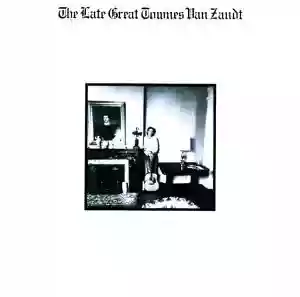
With "The Late Great Townes Van Zandt" Townes has left at least three immense songs. "Snow Don't Fall", a ballad about the death of a beloved woman, soaked in tears in its heart-wrenching sincerity; "Pancho and Lefty", where the ancient friendship between two outlaws is mixed with betrayal, narrated with pity and delicacy, without the arrogance of the fierce moralist inquisitor; one glimpses, distant but clear, the asymmetrical friendship between Townes and Steve Earle and the two paths they then found themselves on: success and fame for Earle, despair, poverty, alcoholism, loneliness, and unwavering dedication to music for Townes.
And finally "Silver Ships Of Andilar", the perfect counterpart to "Snow Don't Fall": while the latter, an intimate poem, is based on few words and the relationship between two lovers separated by the grave, "Silver Ships Of Andilar" is a song of epic collective breath, similar to "The Rime of the Ancient Mariner" in its literal structure and to the Soviet epics of Mario Rigoni Stern regarding its subject.
"Her eyes did laugh
Her lips did sing
Her legs did roll
My soul to bring
Her hair did curl
And her thoughts unfurled
Like birds upon
The wings of spring"
( from Snow Don't Fall)
A poet with pierced hands, a craftsman with a soul strewn with painful wooden splinters, a miner who pays with his life the attempt to bring himself to life: Townes Van Zandt.
Fort Worth, March 7, 1944 - January 1, 1997
Loading comments slowly
Summary by Bot
This review celebrates Townes Van Zandt as a deeply emotional and poetic songwriter whose album 'The Late Great Townes Van Zandt' captures the fragile yet haunting beauty of human experience. It focuses on his ability to find hope within hopelessness through masterful lyrics and melodies. The review highlights three standout songs—'Snow Don't Fall,' 'Pancho and Lefty,' and 'Silver Ships Of Andilar'—and connects his personal struggles with his musical legacy. It portrays Van Zandt as a soulful miner of lost dreams and pain.Tracklist Lyrics Videos
Townes Van Zandt
American singer-songwriter born March 7, 1944 in Fort Worth, Texas; died January 1, 1997. A cornerstone of modern folk and country, known for stark, poetic songs and intimate performances.06 Reviews
