
 •
Rating:
•
Rating:
THE REVIEW
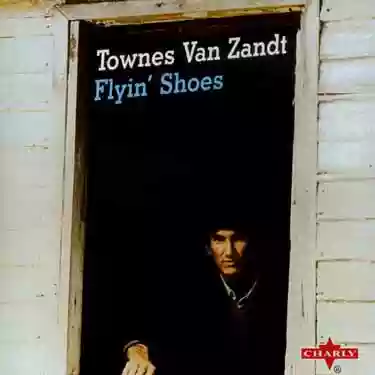
Ten years after the absolute masterpiece Our Mother The Mountain, Van Zandt pleasantly surprises us with this splendid album. Flyin' Shoes arrives unexpectedly: a last-minute stroke capable only by the greatest (Dylan, Young, Cohen, Lou Reed). Although a long time has passed since that splendid Our Mother The Mountain, nothing has changed: we still face a depressed artist, tremendously melancholic, isolated from the world around him, incapable of enduring the harsh daily confrontation with life. Considered without a shadow of a doubt among the ten absolute masterpieces of American songwriting, this album finds its strength in the depth of its content, in the simple poetry of the lyrics, in the untainted style adopted by our artist: country, indissolubly linked to the lessons of Hank Williams. It is surprising how listening to Flyin' Shoes, one can vividly imagine the desolate Texan landscape: listening to this album is like watching a film; by closing your eyes, a distant old pioneer house appears, immersed in an infinite, boundless land of solitude made of reddish dust and scorching sun. And meanwhile, Townes Van Zandt appears to us as a pure spirit flying over Texas with wings of Jack Daniels and amphetamines.
Flyin' Shoes manages to marvelously encapsulate and condense the entire glorious tradition of American music: as already mentioned, there is the country in its most crystalline and clear vision, but there is also the folk of Woody Guthrie and the blues of Robert Johnson, Muddy Waters, and John Lee Hooker. A collection of past sounds extraordinarily intertwined, suspended in an artistic balance that has few equals in the history of American songwriting.
The album opens with the splendid Dollar Bill Blues, an absolute masterpiece that rightfully enters among the greatest pieces Van Zandt has ever written. Unexpectedly electric blues, it stands out for its harsh lyrics and the felicitous melodic weave that remains etched in the listener's memory. Hardly forgettable.
Rex's Blues and Pueblo Waltz paint a brilliant and shiny fresco of a vast American landscape. A distant and mournful harmonica stirs consciences, resonates with souls: a thrill, an unspeakable shiver runs through the veins and down the spine. There is genuine wonder in savoring the innate beauty of the barest simplicity.
With a heart suspended and full of emotion, you encounter Brother Flower, not a true masterpiece, yet it gains enormous benefit and its own artistic dignity thanks to the perfect placement it finds within the album. Brother Flower is a soft, light, graceful song, characterized by a strangely calm, almost laid-back beautiful melody.
The moment of apparent serenity is immediately contradicted by the gloomy Snake Song, one of the undisputed masterpieces of the album. With its obsessive rhythm, this piece resonates hypnotically within the soul and mind. The atmosphere is one of anxiety, anguish, almost fear; the listener is tense, alert, distinctly perceiving the menacing hiss of the snake.
This beautiful first side ends here, yet what follows makes it seem only an appetizer.
The trio of songs that opens the second side is of sublime level: high quality of the lyrics and authentic musical genius. What nevertheless makes these tracks unforgettable and great is Van Zandt's continuous search for simplicity, for the purity of country style, for the essence of music. This search for essentiality is consciously witnessed in the choral Loretta, beautiful without explanations, beautiful without unnecessary flourishes. It reaches directly the listener's heart with its slightly sweet, slightly melancholic melody. In the end, on the horizon, even for Van Zandt, a faint glimmer of hope that warmed-up softens the soul is visible.
Next is No Place To Fall. A sad slide guitar resonates from afar: a caressing, melancholic lament creates despondency; the inevitable tears rise to the throat. One of the saddest songs in the history of modern music. The joy of the pain of living.
The song that gives the album its title closes the trio. Once again, all the relentless despair of one who has looked too long into the abyss of life returns. Heartbreaking and dreamlike, it is undoubtedly one of the greatest depictions of depression. The lysergic opening of this piece is one of the best ever heard in the history of American music.
Townes Van Zandt demonstrates once again to be one of the most intense songwriters of his generation, certainly the most fragile and defenseless.
We just need to listen and understand with the help of this music because truly, sometimes "to live is to fly".
Loading comments slowly
Summary by Bot
Flyin' Shoes by Townes Van Zandt is a profound and melancholic album that continues the legacy of American songwriting. Combining country, blues, and folk influences, it paints vivid musical landscapes marked by emotional depth and pure lyrical poetry. Outstanding tracks like Dollar Bill Blues and Snake Song showcase Van Zandt's unique ability to convey despair and hope simultaneously. This album stands as a testament to Van Zandt's fragile genius and timeless artistry.Tracklist Lyrics Videos
Townes Van Zandt
American singer-songwriter born March 7, 1944 in Fort Worth, Texas; died January 1, 1997. A cornerstone of modern folk and country, known for stark, poetic songs and intimate performances.06 Reviews
