
 •
Rating:
•
Rating:
THE REVIEW
Every self-respecting musician tries to "exorcise" their fears through their songs. Some of them manage to achieve a certain balance that allows them to definitively defeat these "demons" that, after all, lurk, ready to harm at the most unexpected moments, in everyone's soul. Others are not able to establish this balance on their own and, therefore, fall into the abyss of self-destruction. Townes Van Zandt undoubtedly belongs to this latter category. His selfless dedication to the art of music, the recognition of critics and insiders (today, the names of musicians who hold this solitary songwriter in high regard are numerous), and the affection of a small but loyal audience were not enough for him. Depression and drugs wore him down and contributed to accelerating his premature disappearance in 1997.
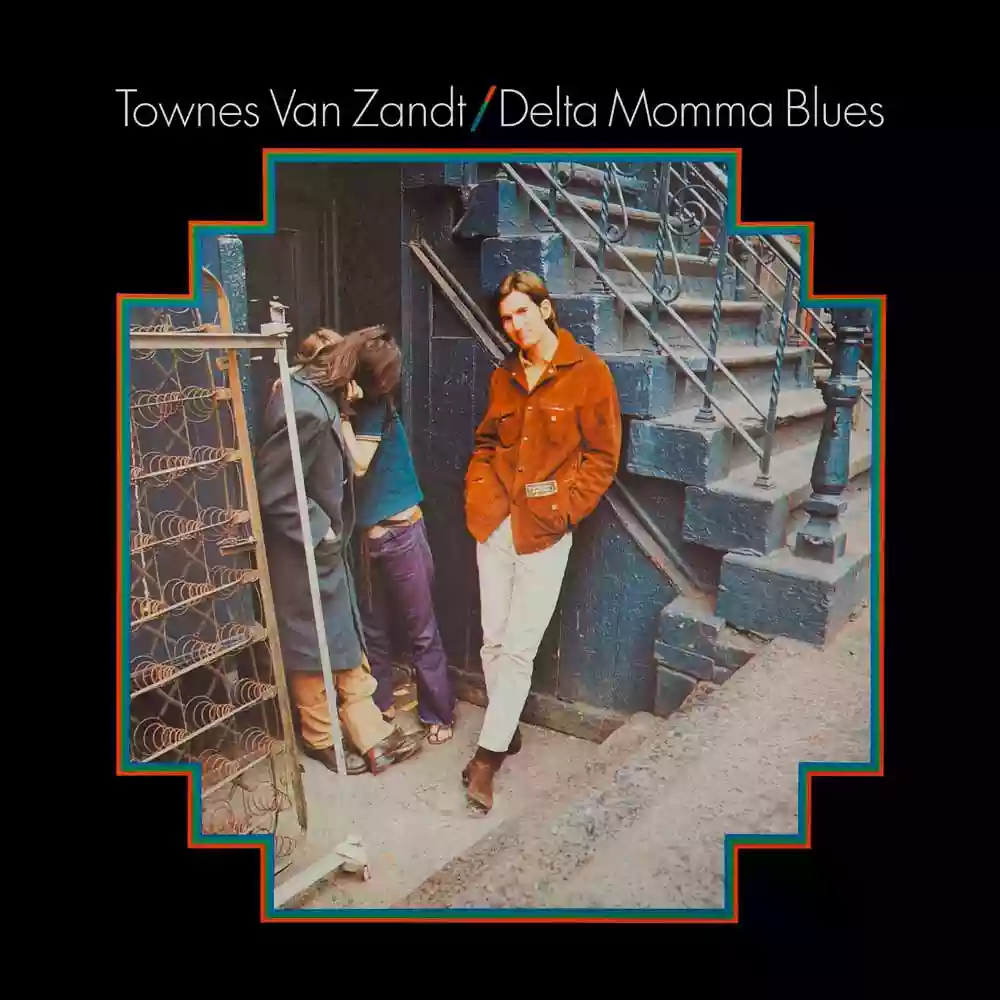
This duality of his music, suspended between timid lightheartedness and radical melancholy, emerges unambiguously in "Delta Momma Blues," a dense and poetic album released in 1971 (two adjectives that, for me, can be attributed to any of his creations). Hope pervades the titular song, an optimistic narrative marked by the duet between the clear arpeggio of the acoustic guitar and the fiddle, the ramshackle blues of "Where I Lead Me" and "Turnstyled, Junkpiled," the latter with a joyful instrumental framework. One of the most significant tracks on the album is "Come Tomorrow," an open-hearted prayer where the protagonist confesses to his beloved that he is unable to face life's difficulties alone ("A thousand bridges sadly burning, And light the way I have to walk alone, Come tomorrow"), communicating the need to fight together against external adversities ("it's only That I ain't used to being lonely Like I'm gonna be without you, Come tomorrow"). The contradictory nature of Van Zandt's music becomes evident in "Only Him or Me," a calm song about a betrayal that leaves a wound never to heal. The same applies to "Tower Song," (objectively) a poignant masterpiece, a bittersweet arrow that leaves the listener petrified. Here, the vicissitudes of separation are faced with quiet resignation, without room for feelings like anger and resentment. However, the ever-present disillusionment unsheathes its claws and engraves its effigy in the last two songs (of undeniable depth): "Rake" and "Nothin'." The first is a parable (with dramatic pathos conferred by the interventions of strings and horn, which serve as counterpoint to the usual, yet always "emotional" narration entrusted to Van Zandt's guitar and deep voice) about a young man who decides to abandon himself to a dissolute life to escape the harsh reality that will later reveal itself, making him unfit for life. The second is a "bluesy" song that states that, from birth, man is exposed to suffering ("As brothers our troubles are, locked in each other's arms; and you better pray they never find you"), and ends with a "cold" and paradigmatic statement of this author's poetics ("Sorrow and solitude these are the precious things and the only words that are worth rememberin'").
Regarding Van Zandt's songs (simple yet profound artistic expressions that deserve greater exposure), there is little, very little to say (and I have spoken more than enough... so I'll stop here) and much to listen to.
Loading comments slowly
Summary by Bot
The review explores the emotional depth and poetic nature of Townes Van Zandt’s 1971 album Delta Momma Blues. It highlights the artist’s struggle with inner demons mirrored in his music's duality of hope and melancholy. Key tracks like "Come Tomorrow" and "Tower Song" are praised for their emotional resonance. The album’s mix of blues and folk elements is recognized as profoundly expressive and deserving wider recognition.Tracklist Lyrics Videos
Townes Van Zandt
American singer-songwriter born March 7, 1944 in Fort Worth, Texas; died January 1, 1997. A cornerstone of modern folk and country, known for stark, poetic songs and intimate performances.06 Reviews
