
 •
Rating:
•
Rating: THE REVIEW
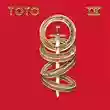
Upon the release of Toto IV in the spring of 1982, Lukather, Paich, and the Porcaro brothers were busy with a singer who was relatively well-known at the time, recording a rather insignificant album of his, destined for quick oblivion. Meanwhile, I was busy stabbing myself to death in my room over the thought of any blonde bombshell. Understand, I was sixteen, and there was a monster in my pants.
Like when I clung to a honey hair at the Saturday night parties, dancing (so to speak) to the slow beat of Toto's I won’t hold you back, mumbling some nonsense in her ear, while the floor reeked of vomited Ballantine, and Steve Lukather spread treacle with the worthy accompaniment of keyboards, guitars, strings, trumpets, and trombones from his mates.
The fact is I didn't buy Toto IV for I won’t hold you back, even though I was deeply pondering in my room whether this song was more suitable for the purpose of panty-dropping compared to the other slow jam Hard to say I’m sorry by Chicago, which came out around the same time, vying for the title of planetary tile song.
Moreover, I didn't buy Toto IV even for Africa, despite appreciating its perfect rhythm and the song's momentum, lively but not too much, which classified it in the well-known category of "slow figurate."
[for the few unaware of this fundamental dance, the category of slow figurate included certain pop ballads from the early eighties (Time after time by Cyndi Lauper, for example), particularly feared by teenage boys attending Sunday afternoon dancing, like myself, as they prevented a firm and close grip on the chick typically enveloped in 69ers shoulder pads but forced one to sway like fools, and not infrequently, it was necessary to split up pairs of girls who, riding the wave of a slow figurate, sailed along the dance floor, swaying their hips while glancing around to intercept the arrival of predators, sporting smiles of false innocence to counteract our predatory approaches, and I draw a pitying veil over the arguments used to separate the unfortunate girls, I only remember that a friend of mine always carried around a bumper car token, and that says it all].
The fact is I didn’t buy TOTO IV even for all the other superhits it contained, starting with Rosanna, Grammy and not Grammy, and records of any kind. Or rather, yes, in the end, it was only the fault/merit of Rosanna. not for the song itself but more simply for the name: Rosanna!
Yes, indeed, I was struck simply by the name Rosanna because Lukather, repeating it ad nauseam in the chorus, extracted from my rotten sixteen-year-old brain the memory of her who had initiated me six years earlier to the innocent pleasures of a hard lemon. Rosanna! How could I have forgotten her after just six years? Rosanna! The evocative power of Lukather and company! Thanks to TOTO IV, I returned to the memory of that little girl with Battisti-like blonde braids, whom I dated when I was ten, in my pilgrimages among the courtyards and buildings of my neighborhood.
I lived in a condo opposite to her building. Hers in a literal sense, in that the building was owned by Rosanna's father, along with the adjoining small factory and warehouses of the products marketed by Rosanna's family. We often gathered in the lobby, with Rosanna's little friends, where the blonde braids insisted on playing Dame and Knight, an infantile version of the Noble Bottle Game.
The modes of the Game Dame and Knight are forgettable; I only remember bowing several times before the chosen female, who could respond with a positive reverence or with a dismissive gesture. A genius game, I admit, but I justify it with the crush I had on Rosanna, incredibly reciprocated. The fact is that after a certain number of returned bows, the lemon bonus would activate, and with Rosanna, I would retreat to the basement stairs to indulge in a wholesome making out.
So, six years later, I listened enraptured to the song Rosanna, grateful to Toto for having resurrected the eponymous significance of she who opened her soft little mouth, before the tongue became a spinning lathe.
What a nostalgia for the time of pure but hard lemon, of that chaste pleasure, with no monsters in the pants, no groping, no urgencies to progress to the next stages.
[I would close it here, but no, because a final digression is a must on the social distribution of housing in Rosanna's Family building, in a strict ascending order depending on the rank of the tenant. That is, aside from the lemon basements and the lobby of Dame and Knight:
- GROUND FLOOR: administrative offices of Rosanna's Family business
- FIRST, SECOND, AND THIRD FLOORS: housing occupied by the warehouse workers and employees of the company
- FOURTH AND FIFTH FLOORS: housing occupied by the office staff of the company
- SIXTH FLOOR: master penthouse of Rosanna’s Family
Stuff to make Perec turn pale.]
Loading comments slowly
Summary by Bot
The reviewer fondly recalls the iconic 1982 album Toto IV, focusing on its memorable songs and the personal nostalgia they evoke. While appreciating hits like 'Africa' and 'I Won’t Hold You Back,' it was 'Rosanna'—and the name itself—that unlocked vivid teenage memories. The review mixes musical admiration with heartfelt stories from youth, underscoring the album's lasting emotional impact.
Toto
Toto is an American rock band formed in Los Angeles, known for polished pop-rock/AOR craftsmanship, high-level musicianship, and major hits such as “Africa” and “Rosanna.”21 Reviews
Other reviews
By Torre Ste
The album immediately kicks off with great hits like 'Rosanna' and 'Make Believe', catchy melodies that showcase Bobby Kimball’s exceptional vocal ability.
'Africa'... a melody where keyboards and drums accompany David Paich’s deep voice, with great choruses by Kimball, Lukather, and Paich in the refrains.
