
 •
Rating:
•
Rating:
THE REVIEW
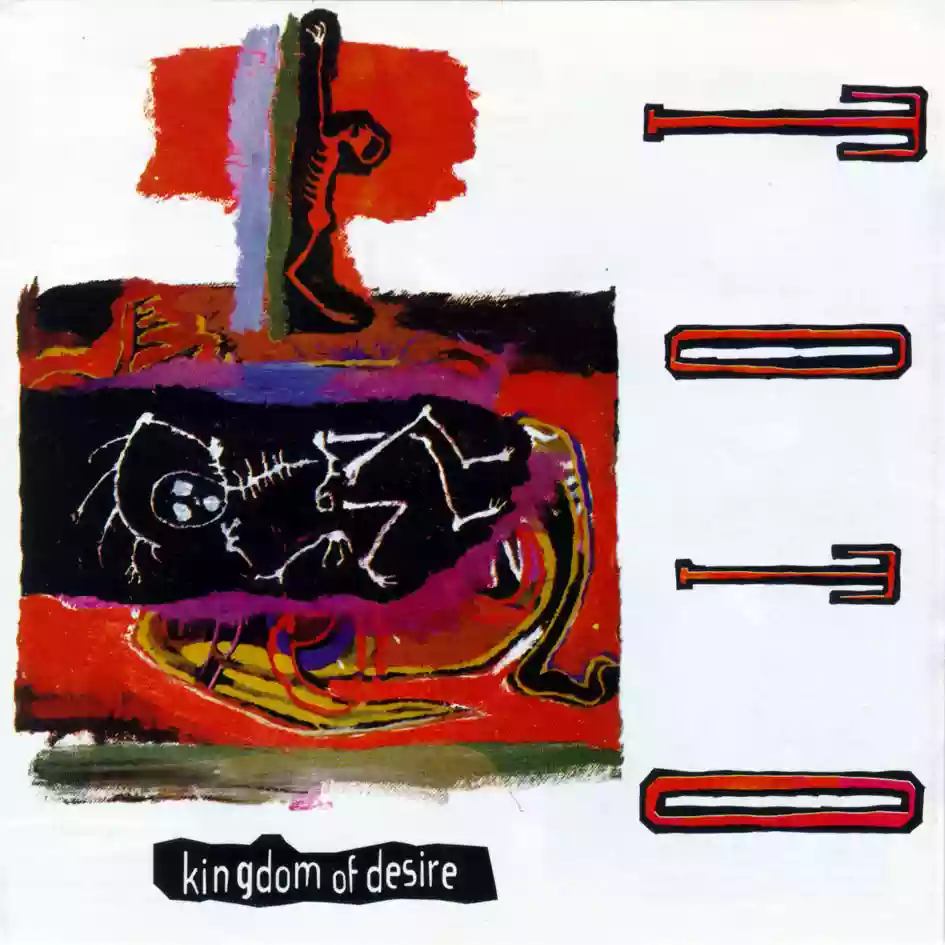
The album is the eighth in their discography, released in 1992. Sitting behind the drums for the last time is the late Jeff Porcaro... when the album hits the market, he had tragically just left this world: a heart attack (induced by cocaine abuse) claimed him at only thirty-eight years old.
The Toto are thus left with only three members to face (and overcome!) the darkest moment in their career. At that time, they were also without a lead singer, after the unceremonious booting of the vacuous Jean Michael Byron, a mulatto who had initially enchanted them with his talent but quickly proved unreliable and opportunistic, only interested in his own career. Therefore, the album is played by a quartet, and the usual guest appearances are at an all-time low... it had never happened before and would never happen again.
Guitarist Steve Lukather thus takes on the role of lead singer for the entire album; alongside the ballads, which were already typically his domain, this time he also interprets the rock pieces, without even the contribution of keyboardist David Paich, who had always reserved a couple of episodes per album for himself (after all, he is the singer of "Africa").
And it's not the ideal solution... Luke's decent but nothing more voice works well as an alternative to the more significant and sonorous voice of a regular frontman, much less when it has to lead an entire twelve-track album of excellence, such as a Toto production.
Moreover, the compositional choices for "Kingdom Of Desire" lean heavily towards hard rock, perhaps because the guitarist at that time was fully cultivating his friendship with Eddie Van Halen, who was at the peak of popularity and commercial success during those years, so there was a strong desire to crank the amp up to the max. The bandmates went along with his moods, and the album sounds rough, immediate, simple (for Toto's pop rock standards, of course): the rockers are grateful, the detractors of the group's AOR and commercial side lend an ear for once, but the sales diminish.
It's also the way the tracklist is organized that contributes to the overall "grunge effect", so to speak... the album opens with a quartet of episodes all grit and no frills, especially the opener "Gypsy Train", characterized by a lean bass/drums/guitar base that sounds like the Extreme, or even Steve Morse (another Lukather idol/friend) in Deep Purple mode. The following boogie "Don't Chain My Heart" at least makes some concessions to pop with a chorus adorned by backing singers, but "Never Enough" again exudes roughness and spareness from start to finish, while "How Many Times" features a Zeppelin-esque blues riff, unfortunately compromised by a melodically predictable and uninspired development.
When, at the fifth and sixth track, the pace eases, instead of some aesthetic pop rock flirtations you get first a heavy, pure power ballad ("2 Hearts") à la Bon Jovi/Aerosmith, supported and thick, the opposite of this band's usually agile and enveloping outings in the realm of romance and slow songs, and then immediately after a mournful and insignificant "Wings Of Time", which rolls its mid-tempo without surprises from beginning to end.
Also emblematic is the next "She Knows The Devil", a funky hard once again centered on distorted guitar, pounding bass, and stiff drums... keyboardist Paich continues to be absent, here arriving just with the piano to doodle the rock'n'roll solo and then disappears again. The Toto orchestra, with its synth fanfares, multifaceted voices, piano leading the dance, is absent this time. There's infinite space between the few active instruments, it always seems like a trio is playing, as if they were The Police... For fans of "raw" music and detractors of all that is elegant and sophisticated, this is the right Toto album to have in their collection.
The classically pop songs in Toto-style arrive only at this point of the album: "The Other Side" is a Lukather-style love ballad, warm and enveloping, with the usual neglectable lyrics, but the "sung" solo that starts after the bridge is simple, deep, and beautiful. The following "Only You" is its first cousin: equally romantic, not exactly indispensable, well-crafted.
"Kick Down The Walls" blatantly recycles the rhythmic groove of the epochal "Dance Hall Days" by Wang Chung (who?... pop stuff from 1984, of good lineage). The album concludes first with the cadenced and chiming title track and finally with the usual funky/fusion instrumental digression called "Jake To The Bone", very textbook and didactic but brilliant and sincere... you can feel it emerged spontaneously in the studio, with fun and verve.
Thus a very spartan work by Toto, the least over-structured in their career: few synthesizers, only occasional choirs, no brass section, the poor Porcaro engaged in pounding hard and straight all the time, without indulging in virtuosity, the hoarse and somewhat depressed tone of the singer declaiming verses completely subservient to the music (as always), while from his ever-knowledgeable and robust guitar come particularly masculine and essential sounds and phrases.
Loading comments slowly
Summary by Bot
Kingdom Of Desire is Toto's eighth album and the last featuring drummer Jeff Porcaro before his untimely death. With Steve Lukather stepping in as lead vocalist, the band embraced a raw, hard rock sound, diverging from their usual polished pop rock style. The album features minimal guest contributions and fewer synthesizers, resulting in a stripped-down and direct production. Though it appeals to fans of 'raw' rock, the album saw diminished sales and mixed reactions.Tracklist Lyrics Videos
Toto
Toto is an American rock band formed in Los Angeles, known for polished pop-rock/AOR craftsmanship, high-level musicianship, and major hits such as “Africa” and “Rosanna.”21 Reviews
