
 •
Rating:
•
Rating:
THE REVIEW
At the moment, this is still the latest release of unreleased material from the Los Angeles supergroup, which remains energetic and lively as they are still touring the world (even in Italy last June) for a noble cause: to raise money to help the family of bassist Mike Porcaro, who is on his deathbed due to a terrible degenerative disease. The typical definition, by the most distracted and superficial detractors, of "studio session men for hire" regarding the band’s musicians doesn’t quite line up with the fact that these guys, at sixty, consistently bid farewell to their families, leave their beautiful Californian homes for quite a while, ignore the comfortable recording studios nearby and hit the road for months, performing on stages, taking flights, bouncing here and there by bus, and sleeping in hotels.
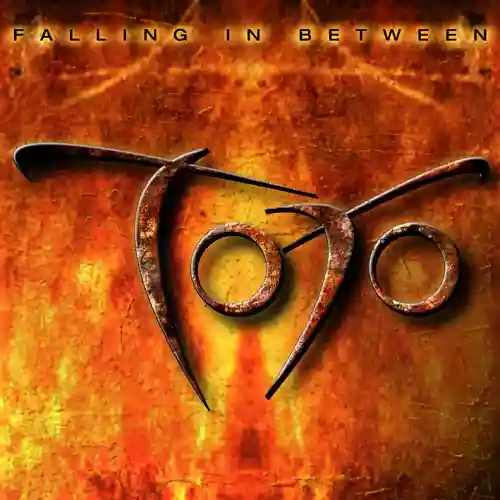
"Falling In Between" should be counted among one of the most substantial and enjoyable works of the fifteen more or less released since 1978 until today. For a long time (let's say since "Kingdom Of Desire," 1992), the music of Toto has stopped paying misleading dues to commercial laws, meaning to the greed of the multinational record label. The accessibility of digital techniques and vast experience allow them to happily do without a contract: they recorded, produced, and financed this album themselves, later relying on the Neapolitan Frontiers for international distribution. In this way, 100% of their inspiration is pursued without interference, allowing the work in question to faithfully represent the tastes, inclinations, and enjoyment of the brilliant musicians involved in the project.
This representation consists, for those who don’t know, of a refined yet energetic blend of hard rock, rhythm&blues, jazz&fusion, progressive pop, and more. In these eleven tracks, one can hear and relish bold yet harmonious juxtapositions of a variety of moods: Latin percussion traveling alongside heavy metal guitars, anthemic and choral refrains emerging cleanly from spontaneous, elaborate odd-time verses, fusion solos that lean on rhythms inspired by Africa, Elton John-like pianos that soften granite-like guitar/bass riffs, horn sections that split rock situations in two and give them a big band scent, etc., etc.
Living and working in Los Angeles, a musical hub of the world if there ever was one, allows for an enormous mindset and performing experience if you are intelligent and talented musicians like they are. Toto, on top of that, add a lot of friendship, mutual respect, and genuine pleasure in enjoying each other's talents together. It is indeed evident how these songs appear to be the result of group work, the supreme pleasure derived from starting with a single idea brought by an individual, or born spontaneously in the rehearsal room while hanging out freely, to finally land, contribution after contribution, on the final structure and arrangement: almost all the tracks are in fact collectively signed by three, four, up to five members of the band.
The roles, after so many years, are well defined but even more accepted: the chubby pianist David Paich is the main composer with a vivid and ironic voice, fitting for the sunniest verses; the curly-haired Englishman Simon Philips, worthy heir of the late Jeff Porcaro, is the perfect rhythmic machine, particularly imaginative in using the toms; the unfortunate Mike Porcaro, here in his final performances, is the usual reliable and balanced bassist; guitarist Steve Lukather, the "boss" given the meritorious, inexhaustible energy in keeping the group together, is many things... he sings his melancholic ballads as well as some verses here and there on the more lively tracks, while he continues to eagerly experiment with sounds, amplifiers, and his guitar's role in the band (fewer solos this time, or rather quite short, with an increasingly dry and hefty tone, however not towards hard rock but rather in the fusion direction or, if there’s any chaos, towards boastful progressive metal); the screamer Bobby Kimball is the usual hammer, pushing full-voice earsplitting highs and knows no power decline... and to think he was kicked out of the group, something like thirty years ago, because he ruined his voice among drinks and various powders!
If that weren't enough, a whole host of fine people add their contribution, including some ex-members of the group and other aspiring new entrants: Greg Phillinganes plays the organist and fourth (!) singer; Steve Porcaro inflates the sonic spectrum with his beloved synth fanfares, without fear, despite that endless reflux that led rock bands to rely only on pianos and organs, as if all the development of synthesized sounds of the seventies and eighties was trash; the prodigal son Joseph Williams (who resumes contact here but is the lead singer in current concerts) gives a substantial hand in the successful single "Bottom Of Your Soul"; jazz trumpeter Roy Hargrove lays a delightful Davis-esque solo over a jam session snippet, a real tribute to the Weather Report, titled "The Reeferman" and placed at the album's end; the entire horn section of Chicago, arranged by their brilliant trombonist James Pankow, cooks up delicacies in the fusion/funky instrumental portion of "Dying On My Feet" (my absolute favorite of the lot); Ian Anderson of Jethro Tull sticks a slightly anachronistic flute solo on the Purple-esque hard rock "Hooked"... and so on, in a true celebration of beautiful sounds and great depth and pull that makes this work multi-faceted, compelling, clear and admirable.
Loading comments slowly
Summary by Bot
This review praises Toto's album 'Falling In Between' as one of their most substantial and enjoyable works, highlighting its rich blend of genres. The band’s decision to self-produce without label interference allowed authentic expression. The review emphasizes the members' dedication, musicianship, and heartfelt collaboration, while acknowledging contributions by guest artists. The album shines as a tribute to bassist Mike Porcaro and reflects the band’s continued vitality even decades into their career.Tracklist Lyrics Videos
Toto
Toto is an American rock band formed in Los Angeles, known for polished pop-rock/AOR craftsmanship, high-level musicianship, and major hits such as “Africa” and “Rosanna.”21 Reviews
Other reviews
By Torre Ste
The album opens with the title track, a surprise for the band’s fans: distorted guitars and a majestic rhythm unlike anything they have done before.
Give us a chance by listening to this album, and you won’t regret it.
