 •
Rating:
•
Rating:
THE REVIEW
In 1996 Tori Amos had a piglet to nurse and an album to present around the world. Intimate and, at the same time, shouted to the world. An album that followed a memorable debut and a perfectly centered second goal. An album that did not intend to be a masterpiece but became one effortlessly. Two years later, the use of electronic tinges and "plugged" arrangements seemed necessary to overcome the trauma of a miscarriage; the following year, the same musical formula was taken to the extreme in the journey (and return) to Venus. The exercise in style that was giving voice to "voices" born "male" and turned into "female" in 2001, seemed a leap towards something that "dared" even more, and indeed it happened, but not as one would have expected.
Scarlet's journey begins in 2002, a journey as fascinating as it is cathartic, misunderstood by many, poorly appreciated by others, adored by me for its magical and transcendental ability to tell, with an indie-acoustic approach and linear and sinuous melodies, a story that is the story of a land, a mother, a human being like many others, who loves to bask in their experiences, torn between "drowning" completely in their own world (or better yet, in someone else's unknown world) or "keeping afloat, floating" in the best way, calculating weights and measures, rationalizing.
America is long, and that album will take time to be truly understood and loved.
Three years later, filled with routine projects like DVDs, live performances, compilations, a surprising EP of unreleased tracks, the Little Chicken seeks help from the Great Beekeeper (or the Great? The doubt continues to torment) to vent personal and universal injustices: the musical writing is affected by underlying weakness, despite shining in various episodes for originality and inspiration. The bitterness of Treason, whether possible or true, is told with folk and poppy tones, with more or less successful results.
And then? The EFW generally say they are disappointed by the latest tour, by many artistic -nonartistic- choices-no choices-, "it seems there will be a string quartet," "it seems a MILF is being described," "it seems she's gone Emo that so appeals to American long bangs," "there are five hookers accompanying her," "but how can a woman be named Pip?", and so on. A piece of advice? Screw it.
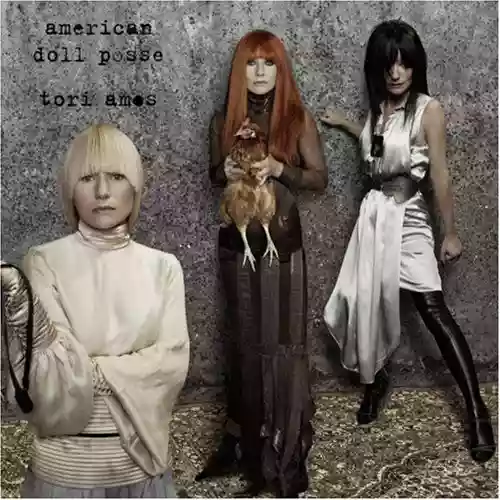
"American Doll Posse" is an album with attitude, this time blatantly on display. Sure, it has some (large) flaws, for instance, in the overabundance of arrangements in some tracks (after two albums with guitars essentially absent, here suddenly hubby Mac Aladdin heavily vents his testosterone) or a production approach sometimes redundant and self-referential. But there's a pro even in the con; 23 tracks (for now, but they could become 25 with various special editions) that range from references to the mood of Choirgirl Hotel (the fabulous "Code red," "Body and soul") to a new retro taste, at times bluesy ("You can bring your dog", with a terrifying finale that keeps reminding me of an updated version of Janis Joplin, "Programmable soda"), mid-70s (the folk of "Almost rosey," "Beauty of speed", the Stevie Nicks venting in "Secret spell," the much maligned "Big wheel"), nods to Author (and chamber) pop in "Digital ghost," "Roostespur bridge," "Bouncing off clouds," the Emo guitar burst (but quality Emo) that is "Teenage hustling."
And the best is yet to come. "Dragon" and "Smokey Joe" rightfully enter a hypothetical list of the Redhead's best tracks ever, "Velvet revolution" is a balalaika of a minute and a half that only makes you regret its short duration, "Yo George" and "Devils & ghost" are deeply inspired and well-structured interludes, "Father's son" is very close to the best moments of Scarlet's walk and "Girl disappearing" wouldn't be out of place in Under the Pink.
I specify that all this is written on the fly. Time will change the judgments, highlight defects (which, I remind you, even if you want to be picky, do not escape the attentive eye) and further merits (live performances will give new clothes to the tracks); above all, it will forge preferences. But listening to this album for now is detrimental: the Northern Lights of Amber Waves should serve as an example, but here you are completely captured, and you drown in it, with no escape.
Loading comments slowly
Summary by Bot
This review explores Tori Amos’ 2007 album American Doll Posse, praising its boldness and musical diversity despite some flaws. The album is described as rich in attitude and experimentation, drawing on a broad range of influences from indie and folk to 70s retro styles. Highlighted are standout tracks that resonate with fans of Amos’ previous work. Though complex and sometimes overwhelming, the album captivates listeners with its emotional depth and artistic ambition.Tracklist Lyrics Videos
01 Yo George (01:25)
06 You Can Bring Your Dog (04:04)
07 Mr. Bad Man (03:18)
09 Girl Disappearing (04:00)
11 Devils and Gods (00:53)
12 Body and Soul (03:56)
13 Father's Son (03:59)
16 Roosterspur Bridge (03:58)
17 Beauty of Speed (04:08)
19 Velvet Revolution (01:19)
20 Dark Side of the Sun (04:19)
21 Posse Bonus (01:45)
22 Smokey Joe (04:19)
23 Dragon (05:03)
Tori Amos
American singer-songwriter and pianist Myra Ellen 'Tori' Amos (born 1963 in Newton, North Carolina) rose to prominence with piano-driven, confessional albums beginning with Little Earthquakes (1992).37 Reviews
Other reviews
By cptgaio
A bold album that can leave one flabbergasted, where the American pianist follows her inspiration in an integralist manner, leaving nothing behind, gambling it all with a fearlessness that’s almost moving.
It was difficult for me to grasp the meaning of yet another concept and, above all, I had serious doubts about whether my beloved could sustain 80 inspired minutes of music at this historical moment.
By dannii
These five women have different personalities and looks, but all five want to make their voices heard!
Only some tracks are saved while the remaining songs are low-level experiments by Tori Amos.
