
 •
Rating:
•
Rating:
THE REVIEW
You try your hardest, with an old personal musical idol, to sift through his more mature works hoping to find even a trace of the familiar talent, a groundbreaking moment like in his youth, a cluster of chords worthy of the finest classical music, a song that justifies an entire album…
But with Anthony Banks it’s a lost cause: he was a magical composer and performer from the days of “Trespass” with Genesis through to the twilight, never sufficiently appreciated first solo album “A Curious Feeling,” at the close of the seventies. After that, an artistic decline showed up swiftly, and the sorry decision to put himself in the hands and moods of that (talented) rhythm & blues, American-inspired drummer of his, choosing to play “simple” and thus banal music.
For nearly fifty years now, the only exception I know to the melancholy downsizing of such talent, which began before he’d even reached thirty, is the wonderful ten minutes of “Fading Lights,” an unusual and unexpected ending to a 1991 Genesis album that is otherwise easily skipped. And that will stay the case, because Tony has long since reached retirement age, and it’s probably for the best.
This 1995 work of his contained one element that gave me hope: a final suite of over 17 minutes with the evocative title “An Island in the Darkness”... But no. I’ve listened and re-listened to it over the years, hoping I might change my mind, but in vain. It has never risen above the flatness that struck me from my very first listens: there’s no magic, not a single spark that might warm the heart of someone like me, who has enshrined in the noblest corners of memory everything this man created and played throughout the seventies.
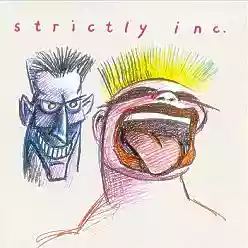
For your information, Banks in this work—and only this one—teams up with Jack Hues, the longtime singer of Wang Chung (those of “Dance Hall Days,” 80s new wave pop). In fact, technically the album should be credited to the group Strictly Inc. and not as a solo effort, but it makes little difference; the compositions, music and lyrics, are all by Banks. Hues, for his part, is a decent singer but nothing remarkable, certainly not able to add any special value to Banks’s music and performances.
The other musicians present are all professionals and professional in their playing but, damn, the tracks are missing, the memorable moments are missing—whether new or the same old but always beautiful ones... It’s a pop rock album with commercial intentions but no commercial potential; pointless, at all levels. And therefore, a logical flop, yet another for Tony Banks outside of Genesis, except for that already emphasized exception.
Tony Banks, the main and most talented composer of the longstanding Genesis trio... and yet, his two bandmates made more money than he did! Collins especially, in huge quantities, almost ridiculously so, but also Rutherford with his Mike & the Mechanics, at least for a few years. Banks was left on the sidelines, never bothering to look back, accepting that he was just not made for pop. It pains me that this man, likable enough, but with a mind and hands capable of producing romantic scores worthy of the golden years of the early twentieth century (and much of the one before), wasted himself this way. And fully convinced he’d made the right choice, at that.
It's right and proper to evolve over the course of a professional and artistic life, but when that evolution is just a step backwards, a trivialization, a trampling of one’s own talent, it would have been better to remain where it was safe, in familiar territory, in that “artistic” rock he practiced as a youth and which once left a deep mark on many music lovers.
Good for him... he has always poured forth explanations, justifications, and pride about this musical evolution/devolution. Not good for me; whenever my eye falls on this disc in my CD collection, I just move on in annoyance and look for something else to listen to.
Loading comments slowly
Summary by Bot
This review finds Tony Banks' Strictly Inc. to be a disappointing effort, especially given the artist's legendary status with Genesis. The album falls short in delivering memorable songs or innovative songwriting. Despite moments of musicianship, the project lacks the spark expected from Banks. The overall verdict is underwhelming, rating it only 2 out of 5.
Tony Banks
English keyboardist, songwriter and founding member of Genesis. Beyond the band, he released solo rock albums, film soundtracks, and orchestral works including Seven, Six, and Five.05 Reviews
