
 •
Rating:
•
Rating: THE REVIEW
A fucking grooves man.
When, in the year of our lord 1978, a group of rowdy and filthy punks were banging out three-note songs (because two were too few - it's true - but four were really too many), the fucking grooves man released "Blue Valentine," I turned 2 years old, and John Christy discovered Charon, a satellite of Pluto. No one noticed back then (and honestly neither did I, busy blowing out my birthday candles), but I would remember that year well.
In the year of our lord 1984, wrapped in the most beautiful album cover in music history (three theater agencies would use it for advertising purposes), "Rain Dogs" was released, I turned 8 years old, and the Russian probe Vega 1 set off for Venus. No one dared to predict it (and neither did I, busy in my communion outfit), but twenty years later that inhuman smile would sound the alarm of my mornings, nailed to the wall opposite my bed.
Finally, it was the year of our lord 1987, when the fucking grooves man sang "Hang on St. Christopher," I had stopped dabbling in astrology, and—still far from the idea of bitterly dealing with women—I bought my first cassette player.
Between these three pillars, a deluge of grace to drench the world, through an indefinite number of masterpieces ("Swordfishtrombones" is from 1983, "Mule Variations" from '99, "Bone Machine" from '92), half-mistakes ("The Black Rider" is from '93), theatrical works (the debut of "Frank's Wild Years" at the Steppenwolf Theatre in Chicago is from '86), and cinema appearances (Coppola's "Rumble Fish" is from '83).
The fucking grooves man was the bard of the desperate, the clown of crowded streets, the theatrical poet, the puppet stuffed with alcohol, the hardened and vulgar smoker, the dying genius who always resurrected.
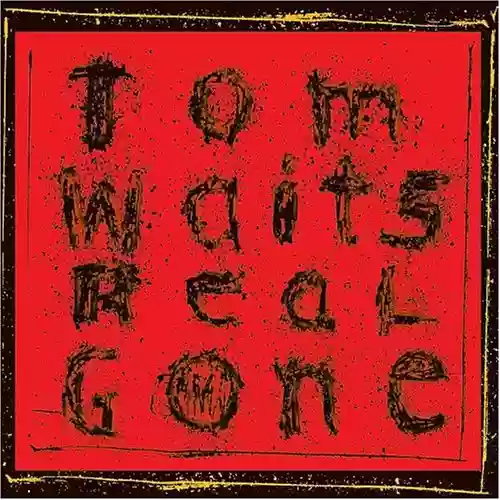
"Real Gone" is—after "Mule Variations"—the second album from which I suck the marrow without delay. And I devour it, in the usual frenzy of loves feared to end soon. The fucking grooves man is back to stir me with his miseries, his pains, and his hunger. He has returned to pound with his old fingers on anything, howling hymns of redemption ("Sins of the Father"); back to play with the devil, in furious blues a la John Spencer ("Shake It"); he is back to strum his guitar, beat chairs, tables, broken glass while vomiting his hoarse cries (the repetitive "Uh ah ah! Uh ah ah!" of "Don't Go into the Barn").
The pounding and sinuous double basses return ("How's It Gonna End"), the bubbly and sensual funk returns ("Metropolitan Glide"), and the usual, heart-wrenching, old love and death stories ("She was just a simple girl who thought she could endure the deepest end, but now she's really dead," he sings in "Dead and Lovely"; or again the tight, falling lament of "Green Grass"). The fucking grooves man returns—above all—to recite, spitting on the elementary rules of singing (the spoken word of "Circus"), returns to master folk and the damned musical tradition of the deepest guts of America ("Trampled Rose").
More than anything, the fucking grooves man returns with his blues: dark and repetitive blues ("Baby Gonna Leave Me"), or slow and mournful ("Make It Rain"). More than anything, the new album of the grooved man is "Day After Tomorrow": it is the violent accusation of an immense artist against the vulgar Iraqi war, against the vulgar lords of power and oil, seen through the impotent eyes of a soldier in the trench, and it is the song that closes the curtain in the theater. Enjoy the show everyone.
Loading comments slowly
Summary by Bot
The review celebrates Tom Waits' album Real Gone as a powerful return to raw, emotional blues and folk roots. It highlights his unique vocal style and dark storytelling, mixing theatrical elements with social critique. The reviewer appreciates the album's mix of pain, redemption, and gritty grooves. Songs like 'Day After Tomorrow' stand out for their political depth, closing the album with a strong statement.Tracklist Lyrics Videos
Tom Waits
Thomas Alan Waits (born 1949) is an American singer-songwriter, composer and actor known for his gravelly voice and eclectic blending of blues, jazz, rock and experimental music.51 Reviews
Other reviews
By Hal
Real Gone is a masterpiece.
I will listen to it until I make myself sick, until I reach exasperation... Because beauty must be lived to the spasm.
By vonhesse
Old Tom rolled up his sleeves and created from mud, sweat, and tears a record that will leave many followers behind.
"Real Gone" is a desperately 'blues' record in the most raw sense of the term and profoundly 'soul' in the true sense of the (black) soul.
By Testaverde
REAL GONE represents, however, yet another proof that Waits, when he wants to, knows how to make music.
Everything that the art of the note, since the time of the monks of the Middle Ages, has created and developed is found in that track.
