 •
Rating:
•
Rating: THE REVIEW
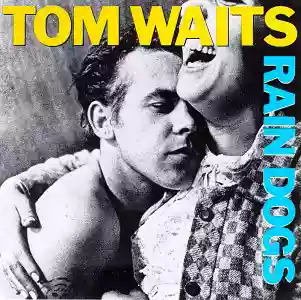
When Tom Waits released "Swordfishtrombones" in 1984, he gave a radical turn to his career: it is the masterpiece album, a natural evolution of an already extraordinary artistic journey, the culminating and seemingly unrepeatable moment of his creativity. Yet, a year later, "Rain Dogs" comes out; the album so beautiful and well-crafted that you don't believe it can exist until you've heard it, the album that, just one year after its already towering predecessor, makes you once again rethink your perspectives on this wonderful chansonnier, who had already produced many beautiful albums. And then you think: “Well, actually this masterpiece is it.”
Tom Waits is not an easy character, quite the opposite. He is one of those you either love or hate, with no middle ground, because he is so intense that he cannot leave you indifferent. He is the perfect incarnation of the cursed and restless figure, the genius who lives in a disordered manner, entirely absorbed by his art and his ideas; indeed, it’s as if Waits had turned his life into music. A life “lived on the wrong side” (as one of his songs on "Blue Valentine" is titled, "The Wrong Side Of The Road"), like Bukowsky, like Kerouac, like Miller. Tom Waits tells stories of outcasts, the marginalized, the homeless, and alcoholics: of all those excluded from the American dream. The Rain Dogs, indeed. Stylistically, the album is a mixture of genres skillfully blended by Waits and his band (we remember the great guitarist Marc Ribot, among others), who create an incredibly Waitsian sound that sounds bluesy at times, jazzy at times, rocky at times, although the formal solutions do not relate to any of these genres.
The rhythms of marches and fanfares already heard in "Swordfishtrombones" are also indispensable, and that Waits loves so much. The album opens with a formidable triple shot: “Singapore,” “Clap Hands,” “Cemetery Polka,” revealing Waits’ passion for unusual percussion, like the marimba. Then one of the best tracks on the album, “Jockey Full of Bourbon,” the track that Jim Jarmusch chose as the title-track for his film Down By Law, which magnificently synthesizes much of Waits' poetics: the lyrics talk about women, guns, trains, about someone who can’t stand because, indeed, he’s “full of bourbon.” After the wonderful screwy dance of “Tango Till They’re Sore,” the visceral blues of “Big Black Mariah,” a track about the prison van transporting inmates to jail, sticks in your head and it will take a long time before it lets go. But in this album, there’s also room for the ballads that made Waits famous, pieces you wouldn’t expect to come out of someone with a voice like a drunken werewolf, that rusty voice that has always been his most important and famous signature; slow, touching ballads like “Time,” or more rocking and in perfect American style like “Hang Down Your Head,” co-written with his wife Kathleen Brennan, the woman who managed to tame Tom the vagabond, or the slow and hypnotic “Gun Street Girl” or the engaging country rock “Downtown Train.” The title track “Rain Dogs” is the manifesto of this album: an unusual organ opening then gives way to typical Waitsian pacing, with beautiful lyrics painting nostalgic nights of excess.
It should be said that Waits’ lyrics are not always easily understandable, quite the contrary; often the Pomona singer-songwriter refers to entirely personal matters, like in the title track where Tralee, a small village in Ireland where Tom and his wife went for their honeymoon, is mentioned, or he executes collages of nursery rhymes and popular songs, as in the case of “Jockey Full Of Bourbon.” There is also room for a couple of instrumental interludes, indispensable from a certain point onwards in our artist’s career and especially in the so-called “Frank trilogy” composed of "Swordfishtrombones," "Rain Dogs," and "Frank’s Wild Years." “Walking Spanish” is a successful jazz-blues, a slice of life in prison, of a prisoner about to be executed. The album closes with a short but very intense track, “Anywhere I Lay My Head,” where Waits delivers a nostalgic song that seems sung by a rowdy drunkard shouting at the moon all the discomfort of a homeless person: “Anywhere I lay my head, that’s where I will call home.”
This is perhaps Waits’ truly perfect album, without missteps or smudges, without uncertainties. It’s one of those albums that can change lives and is difficult to describe in words.
Loading comments slowly
Summary by Bot
Rain Dogs is a stunning follow-up to Swordfishtrombones, showcasing Tom Waits' continued artistic evolution. The album blends blues, jazz, and rock with unique percussion and haunting lyrics about outcasts and life on the fringe. Notable tracks like "Jockey Full of Bourbon" and the evocative title track highlight Waits' mastery of storytelling and sound. A perfect and influential album capturing the restless spirit of its creator.Tracklist Lyrics Videos
Tom Waits
Thomas Alan Waits (born 1949) is an American singer-songwriter, composer and actor known for his gravelly voice and eclectic blending of blues, jazz, rock and experimental music.51 Reviews
Other reviews
By StefanoHab
It is simply impossible not to shed a small tear listening to his voice, a cigarette lasting years, the voice of all the hobos in the world.
To be listened to, assimilated, understood, and loved: and this is said by a metalhead.
