
 •
Rating:
•
Rating:
THE REVIEW
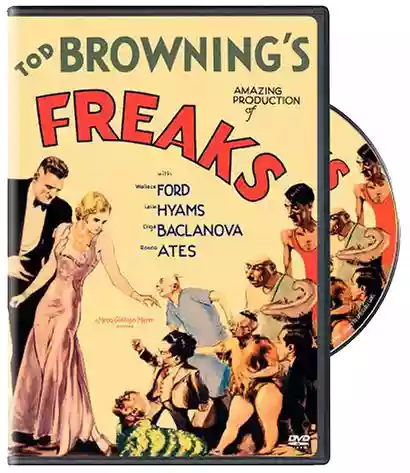
The viewing of this "Freaks", the very first example of a sui generis horror film from 1932, can still be a rather alienating and certainly disturbing experience, not easily digestible. Director Charles Albert "Tod" Browning, the visionary author of the 1931 "Dracula" with Bela Lugosi, decided to set up a somewhat experimental story, featuring truly deformed beings (in English: freaks, indeed) to analyze from various perspectives the concept of normality/monstrosity applied to common human vicissitudes. It is thus revealed (as the film's thesis) that freaks tend to have a golden and pure soul (except when attacked) while the real monsters are the "normals", blinded by hatred, envy, malice, and other known malevolence.
The story goes that in a traveling circus, the beautiful Cleopatra (actually engaged to the handsome Hercules) decides to marry the dwarf Hans only because he inherited a great fortune, intending, however, to kill him at the first opportunity to seize the inheritance. The horrible plan, however, will be discovered by the other "monsters," Hans' friends, who will organize their equally cruel revenge, mutilating the two beautiful lovers and reducing him to an obese eunuch and her to a "chicken woman."
A slender plot but overall quite functional in narrating the psychological undergrowth that the film feeds on. Freaks is disenchanted and leaves no respite for anyone. The monsters have their own behavioral and ethical rules that hardly align with "the other" (both beautiful and terrifying at the same time is the surreal wedding scene between a deformed being and a normal one, under the chant of the alienating lullaby "We accept you! Now you are one of us!" in a role reversal where the "different" is accepted by the community of the deformed).
Not even in the final manhunt scene, when the monsters chase (each as they can, some crawling, some hopping, others on their arms in a truly impressive showcase of raw reality) the two "normals," is there a moment of forgiveness or redemption (in the "extended" version, scenes of torture and mutilation of the two are even shown, obviously cut in the officially edited version in 1932!). It's a ruthless survival war where the strongest always wins, and a splendid direction (terse and never invasive) supported by excellent photography (certain blacks & whites have set the standard) and a strict and relentless screenplay contribute to making this film a true CULT-Movie, drawing its vital essence from the "raw reality" of the characters for a timeless masterpiece.
A film that, upon release, was a true flop (as one might imagine) and dragged along a series of curses that first hit the director (branded with the stigma for deviance and the unsanitariness of the tale) and secondly the artists involved, who were immediately "branded with infamy" for the mere fault of daring to represent THEMSELVES to the mass audience. Different times, I would say. Today, on the contrary, the more one is deviant, strange, toxic, and different, the closer they are to the "winning" and "cool" model—just look at the articles or interviews with certain damned and absurd singers or writers in various trend magazines... have you noticed?
Loading comments slowly
Summary by Bot
Tod Browning’s 1932 film Freaks is a foundational horror masterpiece that challenges conventional ideas of normality and monstrosity. Featuring real circus performers with deformities, the film presents a dark tale of betrayal, revenge, and raw humanity. Though initially a commercial failure and controversial, its stark direction, powerful storytelling, and haunting visuals have secured it cult status. The movie explores deep psychological and social themes with a relentless, unflinching approach.
Tod Browning
Tod Browning (born Charles Albert Browning Jr.) was an American film director best known for Dracula (1931) with Bela Lugosi and the controversial cult classic Freaks (1932). A pioneer of horror and dark melodrama, he collaborated extensively with Lon Chaney in the silent era and worked primarily during 1915–1939.03 Reviews
Other reviews
By Fidia
"The Freaks are not accomplished actors or the result of brilliant make-up, but absolutely real."
"The viewer finally realizes that the Freaks are normal people and with equal dignity to those without deformities."
