
 •
Rating:
•
Rating:
THE REVIEW
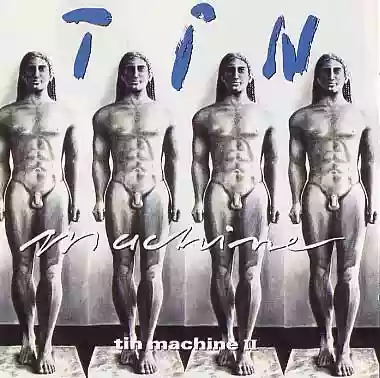
It was 1991 when this album was released, 1989 when this new invention of David Bowie came out. David Bowie was one of the most acclaimed pop-rock artists, everything he did was gold, anything. It was enough for him to sing some cheap tune in falsetto, and it immediately turned into thousands upon thousands of sold copies. This was beginning to get old for Bowie, who decided to reinvent himself with this new project, the "Tin Machine", after his collaboration with the EMI record label ended, and after meeting a great guitarist, Reeves Gabrels (not to diminish the skill of the Sales brothers).
The first album, even if not completely convincing, managed to make the critics smile with excellent tunes and memorable riffs. Bowie had found himself; a simple hard rock, no new invention, no reinterpretation, nothing eclectic, nothing at all; but maybe this was exactly what he wanted.
This second album follows the same line as the first, but with worse results. It was already evident from the first album that Bowie was not used to these heavier rock bands, but here the gaps carried along by the White Duke are more noticeable. For instance, a very compelling "Heaven's in Here", present in the first Tin Machine album, with fascinating riffs and the passion in Bowie's voice is replaced in the second album by a duller "Baby Universal" where they try to give a slightly more melodic touch, abandoning that pleasant booming rock characterizing the first song.
In fact, it seems that Bowie is trying to return to being the old hit pop maker that defined the pre-Tin Machine era: the ballad "Amlapura" that seems to go back to "Ashes To Ashes", and a "Betty Wrong" that seems to echo the atmospheres of "China Girl". Songs that are not ugly but suggest Bowie wants to close this hard rock experiment and return to what he was before, without wanting to erase the good things he learned from this experience. There are good songs, and beyond the aforementioned "Baby Universal", noteworthy are "You Can't Talk", a nice rock piece from the album where Bowie also gives us some rap hints, the sweet "Shopping For Girls" within which Bowie encourages the audience to turn up the volume on Michael Jackson's songs, and the decent "One Shot". The rest deserves to remain forgotten, where unfortunately the group has already ended up long ago, despite the presence of the legendary Bowie, and despite flashes of great music.
Loading comments slowly
Summary by Bot
Tin Machine II follows David Bowie's experimental hard rock project but fails to match the energy and impact of the first album. While some songs like "Baby Universal" and "You Can’t Talk" show effort and variety, the album overall feels dull and inconsistent. Bowie appears to struggle adapting fully to this heavier rock style and hints at returning to his earlier pop sound. Despite a few bright moments, this album is largely seen as a weaker follow-up in Bowie's discography.Tracklist Lyrics Videos
Tin Machine
Tin Machine was a hard-rock band formed by David Bowie with guitarist Reeves Gabrels and the Sales brothers, Tony (bass) and Hunt (drums). Active from 1988 to 1992, they released two studio albums—Tin Machine (1989) and Tin Machine II (1991)—and the live album Tin Machine Live: Oy Vey, Baby (1992), pursuing a heavier, band-centric sound.03 Reviews
