
 •
Rating:
•
Rating:
THE REVIEW
Let's be honest: the ones who gave an electric shock to Italian rock between the '80s and '90s weren't just Marlene Kuntz, Afterhours, Massimo Volume, C.S.I. (like CCCP), and Litfiba (especially at the beginning). There was also another band, unfortunately not fully understood at the time, which some might now consider "over-the-top" back then. That band was called Timoria. And unless proven otherwise, they were the authors of several respectable albums in my opinion.
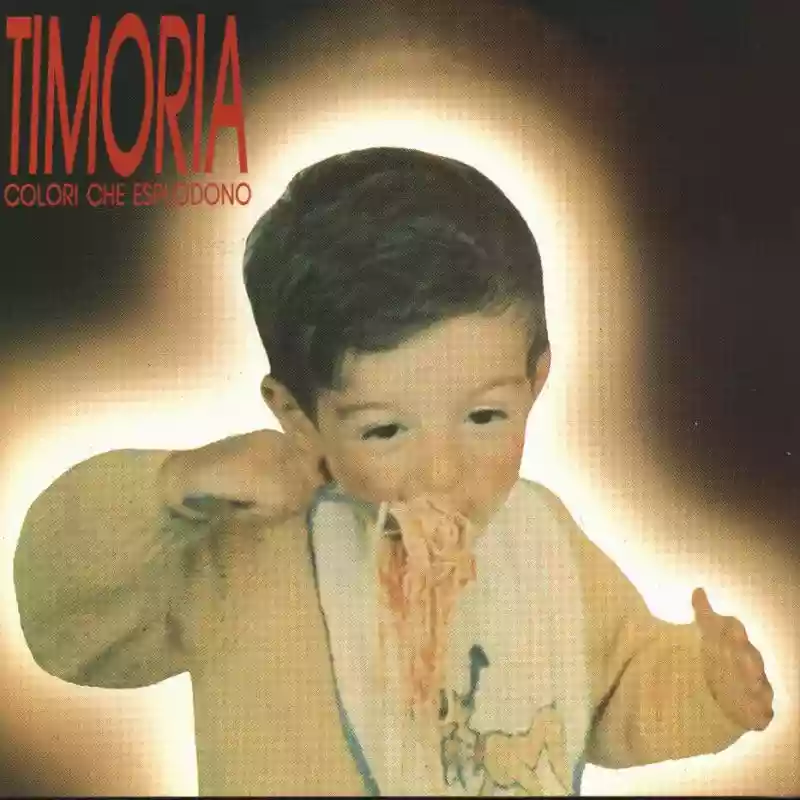
The core of Timoria formed in the mid-'80s in Brescia, thanks to the meeting of Omar Pedrini and Francesco Renga, a singer gifted with one of the most beautiful voices here in Italy. Initially, they were called "Precious Time" (even recording a demo), but shortly thereafter they decided to change their name to Timoria, adding drummer Diego Galeri, bassist Davide Cavallaro, and keyboardist Roberto Bandello. After the successful debut EP "Macchine e Dollari" in 1988, Cavallaro and Bandello left the band to make way for Carlo Alberto Pellegrini (known as Illorca) and Enrico Ghedi. 1990: finally "Colori Che Esplodono" was born. Produced by none other than that genius (in every sense of the word) Gianni Maroccolo, assisted in recording by Giorgio Canali as well.
Already from this album, it's clear what Timoria's style will be with Renga at the helm. Music that hits the heart, thoughtful, particular, never trivial lyrics. And above all, the desire to always be varied in sounds.
This is an album characterized by a certain freshness, rock ballads alternating with more driving tracks: "Sogno Americano", as the title suggests, is pure American-style, and perhaps those who heard it might have felt a bit "teleported" into settings deserving of "Easy Rider". The same goes for the intimate "Forse Un Giorno".
"Bianca sposa giovane età
Ma il tuo inverno come sarà?"
But the masterpiece of the CD (and one of the singles with a related video) is called "Milano (Non E' L'America)", introduced by a soft piano played by one of the album's guests, Francesco Magnelli, before ending in a sort of nostalgic and melancholic ride.
Harsher sounds can already be heard in "Confine", complete with harmonica by Bertrand Cantat (do Noir Desir ring a bell?). Then continue down this path (along with the previous acoustic style) with "Walking My Way" (another single), an anthem to freedom.
Another guest is Antonio Aiazzi, who in the title track (dedicated, like the entire work, to Van Gogh, Mussorgsky, and Kandinsky, precisely because they had the particularity of creating those "exploding colors", that is, emphasizing the connection between various artistic expressions, especially painting and music) brings (of course always following the Timoria style) those dark sounds that we had already heard in Litfiba's "Desaparecido" and "17 Re".
"Non Sei Più Tu" is 100% rock'n'roll, perhaps one of the tracks that best link to future works, with a Renga immersed in doubts after a love disappointment.
"Se tutto il mondo era casa mia,
ora il mondo non so dove sia?"
Then converse with an "Old Professor", who according to the band has "aged too quickly without living".
In contrast, "Siempre Nacer" inspired by the namesake poem by Pablo Neruda, is another ballad with a bit of a western style, also featuring Cantat on harmonica and Aiazzi on keyboards.
But with the last three songs, you can once again breathe those rock'n'roll atmospheres mentioned above. The Hammond organ played by Enrico Ghedi, alternating with the piano once again played by a euphoric Magnelli, has a certain effect while listening to "Io Non Ho". The phenomenal "Hey Giò" seems to be a sort of prequel to the story of Joe that will be born in "Viaggio Senza Vento". Noteworthy are Cantat's greetings at the end, in Italian!
The melancholy returns in "Rincorro Pensieri", the final track with Magnelli's contribution (in the finale), which is the right way to conclude this "show" before the curtain falls.
"Rivedi quei volti che scorrono forti
Puoi solo guardare
Vivendo il tuo tempo ma oggi vorresti
Cambiare canale
Cosa c'è, ero bambino
Ma perché, essere uomo?
E puoi solo guardare..."
Not a masterpiece, but certainly an excellent work, important and very underrated, unfortunately. Recommended especially for those who want to rediscover the more varied side of the Brescia band.
Loading comments slowly
Summary by Bot
Timoria's 1990 album 'Colori Che Esplodono' is a noteworthy but underrated classic in Italian rock. With heartfelt lyrics and a mix of rock ballads and dynamic tracks, it showcases the band's versatility and emotional depth. Produced by Gianni Maroccolo and featuring guests like Bertrand Cantat, the album blends artistic influences with powerful performances. This work deserves recognition among fans of varied, thoughtful rock music.Tracklist
Timoria
Timoria are an Italian rock band from Brescia, frequently cited in these reviews as one of the key Italian rock acts between the late 1980s and 1990s. Reviewers often describe Omar Pedrini as the group’s leader and highlight the classic lineup with vocalist Francesco Renga, especially around the 1993 concept album “Viaggio senza vento”.13 Reviews
