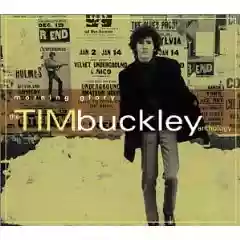

 •
Rating:
•
Rating:
THE REVIEW
For those who are not yet familiar with him (a more than likely possibility), it is necessary to say a few words about the artist. Tim Buckley is undoubtedly one of the most important musicians of the late '60s and, probably, the greatest rock singer ever. In addition to an exceptional vocal range, he combined extraordinary technique and a poignant and intense interpretation.
Often anthologies do not gather the best of a singer or group's artistic output. Even in this case, more could have been done. It must be acknowledged, at least, that this is a representative anthology, as it features tracks from his entire artistic career (from the 9 studio albums and the 2 most famous live ones).
The first 5 tracks, in order "Wings," "She is," "Song Slowly Song," "It Happens Every Time," and "Aren't You the Girl," are taken from the first album. These are typically folk songs, with still "adolescent" lyrics, in which the voice appears timid (compared to future performances). The most interesting song (and the only one to remember, in my opinion) is certainly "Wings," notable for both melody and arrangement. It's a shame that the beautiful "Song of the magician" and "Valentine Melody" aren't included in the anthology.
From the second album come the anguished "Pleasant Street," the visionary "Hallucinations," the dramatic "No Man Can Find the War," the more classic "Once I was" and "Morning Glory," and finally the long and psychedelic "Goodbye and Hello." An album with perhaps excessively baroque arrangements, it contains some of Buckley's best compositions, which still remain in the canonical song form (except for "Goodbye and Hello"). The only regret is the absence of "Phantasmagoria in Two," my favorite Buckley song, which will still be featured on the anthology in a live version.
From "Happy Sad" the airy "Buzzin' Fly," the jazzy "Strange Feelin'," and the famous "Sing a Song for You" are featured. The three more experimental tracks of the album are not included in the anthology, perhaps considered too difficult for easy listening. In my opinion, this is the artist's best album, where he found the perfect balance between technique, melody, and avant-garde.
From the 1968 live in London, the already mentioned "Phantasmagoria in Two" and the two unreleased tracks "I've Been out Walking" and "Troubadour" are taken. The live context and, especially, the simplicity of the accompaniment, highlight Buckley's unique voice. Even in this case, it's truly a shame that the medley "Pleasant Street" - "You keep me hangin' on" and the dreamy cover "Dolphins" by Fred Neil are not present.
The second CD opens with six tracks from "Blue Afternoon": the melodic "Happy Time" and "I Must Have Been Blind," the very sad "Chase the Blues Away" and "River," and the jazzy "So Lonely" and "Blue Melody." The mood of the songs is generally sadder and more melancholically empty compared to previous albums, but it does not yet reach the depression of the next records.
"I Had a Talk with My Woman" is taken from the live at The Troubadour in 1969. The track is also featured in the subsequent studio album "Lorca," a true manifesto of human depression. The track in question is, however, the least sad of the lot, and certainly the only one that retains the song format. Buckley's interpretation is spine-chilling (especially in the whistled section).
From "Starsailor," considered by many his masterpiece, come the playful nonsense "Moulin Rouge," the dreamlike "Song to the Siren," and the hard "Monterey." In this album, the most experimental along with the previous "Lorca," Buckley's voice draws free flights and becomes a true musical instrument. For obvious commercial reasons, the other tracks of "Starsailor" are not included in the anthology, starting from the bewildering title track to the funky-jazz (?!) "Down by the Bordeline."
At the peak of his career, Buckley, humiliated by the lack of commercial success and devastated by drugs, radically changes musical genre and, in fact, ends his career as an artist. He releases three albums, each worse than the last, which are represented in the collection by the rhythmic "Sweet Surrender," "Hong Kong Bar," and "Make It Right"; the appreciable "Sally Go 'Round the Roses" and the dull "Who Could Deny You." If I had to choose some songs from the last three albums, I would have chosen "Get On Top" and "Devil Eyes" from "L.A." and the covers "Martha" (by Tom Waits) and "Dolphins" from "Sefronia," while I would have pretended that the last album "Look at the Fool" had never been released...
Loading comments slowly
Summary by Bot
This review offers a thorough look at Tim Buckley's anthology 'Morning Glory,' praising his exceptional vocal skills and highlighting career milestones. The reviewer notes the anthology covers all phases of Buckley's work but points out some notable track omissions. Early folk influences, psychedelic experimentation, and live recordings are discussed. Although the later albums show decline, the collection remains a valuable representative of Buckley's legacy.Tracklist Lyrics
Tim Buckley
Timothy Charles Buckley III (1947–1975) was an American singer-songwriter known for an exceptional vocal range and for expanding folk into jazz, psychedelia, and avant-garde forms across late-1960s/early-1970s albums. He died in 1975 at age 28.24 Reviews
