
 •
Rating:
•
Rating: THE REVIEW
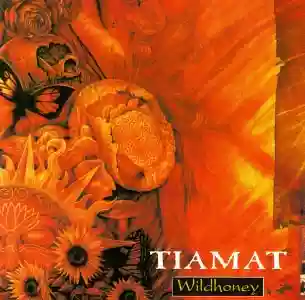
This album, if Gothic has ever had a meaning, represents, along with a few others, the pinnacle and the unreachable summit.
When it was released, hordes of detractors rushed to tear it down in every part; they said it was too "confusing," "devoid of real songs," "hybrid and blurred," "unorthodox," "not fierce enough," and yet today, years after its debut in print, one can give a judgment that, for those who love the genre, can only be of exceptional vigor regarding its artistic, musical, and subjective stature.
Alright, there is already a review of this album in the database that I invite everyone to read, but, if you'll allow me, I'd like to pay my personal tribute to the Tiamat that played in these grooves, my personal thanks for having opened the doors to certain things that I could never have imagined before.
If Paradise Lost are universally recognized as the founders of the genre, Tiamat certainly, regarding their rarefied atmospheres, "clear" passages, decadence and symphonic sound, are certainly a hardly imitable pillar and not at all negligible. And "Wildhoney," in the opinion of the writer, is the absolute synthesis, the masterful quality of what has been said so far, the mood that the same Tiamat will no longer be able to perpetuate in their future, near and far.
Masterpieces like "Gaia," "Whatever That Hurts," "The Ar," "Kaleidoscope," will remain etched in the memory of anyone who listens to them, even distractedly, indeed, especially in that manner, because this was also a characteristic of the Swedish band: the ability to capture and ensnare with a simple combination of a few, captivating notes.
However, if one delves deep into the multiple meanings and myriad facets and kaleidoscopic landscapes inherent in the entire work, then one discovers how immense and powerful is the feeling that united into a single and multiple composition, instruments, voices, side-splittingly tragic and complex moods, tedious ghosts of a past that is always beyond the return and beyond annihilating, once again, everything certain and meaningful a man can build.
The smell of beautiful and sweet memories, suffocated by sad and lost memory, and therefore more suffocating, which makes them anthropomorphic organisms in alien slumbers of reason and the darkness of empiricism. That's what the songs of "Wildhoney" are. Nothing can be precisely and optimally separated, nothing can be listened to or assimilated in a sudden and pleasant way, but in a way that cannot be controlled, outside of every scheme, without any direction.
There seems to be no way to compare the different episodes with each other, because, simply, it is useless: every piece stands in its place because it has to be there, because it's part of a strange and mephistophelic design that we cannot comprehend or divide into any part that belongs to us. Absolutely nothing. Just a transcendental transport, which cradles the listener between the plucked notes of "Kaleidoscope" and "Do You Dream of Me?," leading to closing one's eyes, curling up into oneself, reflecting, feeling unique, involved, and weightless in the Universe.
This is "Wildhoney." There is no point in talking about the instrumental parts, the technique, Johan Edlund's particular growl and his whispers derived from the love for the Seventies and for Pink Floyd in particular, nor the Industrial passages that contribute to exponentially referring every atmosphere to something inconvenient and claustrophobic.
It only serves to tell you, even if you are skeptical and unconvinced, that this album certainly deserves the fame and prestige it has built over the past years and in the present ones, much more than what Tiamat will later compose over time, and therefore, to anyone who buys it or procures it, I certainly wish a dive into the dreams that this work can generate.
Loading comments slowly
Summary by Bot
Wildhoney by Tiamat is hailed as a pinnacle of gothic music, blending rarefied atmospheres, symphonic elements, and progressive moods. Initially criticized, it is now recognized as a timeless masterpiece with unforgettable tracks and deep emotional resonance. The album's complex, haunting soundscapes create a unique, transcendental listening experience. Johan Edlund's voice, alongside the band's experimentation, cements Wildhoney's legacy as a groundbreaking work in gothic metal.Tracklist Lyrics Videos
Tiamat
Tiamat are a Swedish band led by Johan Edlund, frequently described in the reviews as influential in the evolution of gothic metal, with early roots in Swedish extreme metal and later moves into psychedelic-tinged gothic and goth rock.13 Reviews
Other reviews
By Gale
The notes of Wildhoney... unexpectedly cradled me... an atmosphere that brought to mind epic landscapes, made of castles and moors.
Johan Edlund’s voice is torn, sometimes morbid, but never excessive, managing to alternate parts with more 'angelic' singing to others that are hoarse and raw.
By stargazer
We can see the work as a single majestic suite, in which every "movement" becomes indispensable for the overall structure of the work.
"Whatever That Hurts" is a majestic gothic/doom piece where growled chorus contrasts with whispered vocals in a psychedelic and dark atmosphere.
