
 •
Rating:
•
Rating:
THE REVIEW
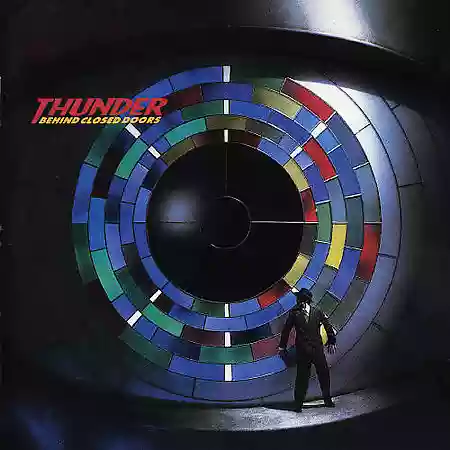
The third album from this classic English hard rock quintet is among their best. At the time (1995), grunge was still raging among fashionable rockers worldwide, but staunch Great Britain still intended to hold its ground, and the record reached fifth place on their charts. In Italy, only a few of us paid attention to them, way too few... the band was simply phenomenal, but British Blues had long stopped "taking off" down here, let’s say since Led Zeppelin gave it up over thirty years ago. A pity.
The album's start is almost disorienting; the first riff from Luke Morley's guitar seems to mimic (completely unintentionally, of course) our anthem "Fratelli d'Italia"! Then the rhythm section kicks in, and "Moth to the Flame" proceeds in a completely different direction, that of ultra-solid rock blues, in which the phenomenal singer Danny Bowes unleashes his superb voice, full of warm soul and angry blues, competing in skill and emotion with the legendary voices in the field (Coverdale, Rodgers...).
The following track, "Fly on the Wall", is an upbeat, bouncing number that injects moderate doses of funk (including a subtle horn section) onto the usual rock foundation, preparing the ground for the heartfelt and inspired blues ballad "I'll Be Waiting": Morley's detailed work on his instrument, with the amplifier set to a beautiful clean and warm tone, cannot help but remind us of the master Jimi Hendrix. Afterward, his partner Bowes puts his soul into the interpretation, and the other guitarist (and keyboardist) Ben Matthews ties it all together with a skillful Hammond organ, revealing a truly outstanding song.
A new peak of appreciation comes with the fifth track, perhaps the album's absolute highlight: "Future Train" has the tense and lyrical edge of the toughest Southern rock (think Blackfoot, or Point Blank), and it's great to see how, by playing with typical minor chords, well-placed backing vocals, and a couple of contrasting solos (Matthews clean and relaxed, Morley distorted and fierce), such convincing and satisfying music can emerge. It's a matter of class, and Thunder has plenty of it.
"Stand Up", which also moved as a single in the UK charts at the time, is a classic dual-rhythm guitar construction: the first (Morley) rocks syncopated and almost funk, while the second (Matthews) languidly slides in a psychedelic manner. The whole is rendered at least explosive by the vigorous drumming of Gary James (Harry to his friends, a real joker in appearance and character, but also a musician with impeccable technique and drive) on his snare drum.
There is virtually nothing to discard in this album, a trait of many "five-star" records (or at least those proposed as such). In "Till the River Runs Dry", the tearful lyrics, acoustic setup, and a string quartet a'la Beatles do not prevent a virile approach by Bowes. "Preaching from a Chair" is instead a spirited semi-ballad with a particularly fiery performance from the vocalist, not at all unsettled by the blaring amplifiers.
But the finale offers, if possible, a further crescendo with a trio of tracks that exemplifies the manifold pages of rock cleverly read and re-read by Thunder: "Too Scared to Live" surprises with its super funky arrangement, including female choir vocals, while the eclectic Harry feels perfectly at ease hitting cymbals and drums with the right groove, brilliantly supported by Swedish bassist Mikael Höglund.
"Ball and Chain" delivers torrential hard rock, with massive guitars in staccato over a bass pedal, in the manner of AC-DC, but followed by a chorus with a lyricism the famous Australian band cannot afford. The lengthy "It Happened in This Town" finally manages to combine the electric ballad's atmosphere with a mighty Deep Purple-like riff, once again describing the typical dynamic arc of many Thunder songs: peaceful and acoustic prologue and epilogue, contrasted with the central inferno, with all five musicians fully indulging.
Loading comments slowly
Summary by Bot
Thunder's 1995 album 'Behind Closed Doors' stands as one of their best works, delivering powerful blues-based hard rock despite the grunge dominance of the era. The review highlights standout tracks featuring intense vocals, guitar mastery, and diverse stylistic touches, from funk to psychedelic. The album's depth and musical class make it a hidden gem, especially appreciated by British rock enthusiasts. Overall, it is praised for consistency and exceptional musicianship.Tracklist Lyrics
01 Moth to the Flame (05:28)
02 Fly on the Wall (04:21)
03 I'll Be Waiting (04:24)
04 River of Pain (03:40)
05 Future Train (05:26)
06 'Til the River Runs Dry (04:20)
08 Preaching From a Chair (06:17)
09 Castle in the Sand (04:43)
10 Too Scared to Live (04:25)
11 Ball and Chain (04:48)
12 It Happened in This Town (05:57)
13 Low Life in High Places (live) (05:07)
Thunder
Thunder is a British hard rock/blues rock band formed in London in 1989 by vocalist Danny Bowes and guitarist–songwriter Luke Morley. Known for 70s-influenced riffs, soulful vocals, and punchy songwriting, their catalog runs from the hit debut Back Street Symphony to recent releases like Dopamine.10 Reviews
